
Chhattisgarh’s Hasdeo Arand Coal Mining Approvals: Ecological Crisis and Tribal Resistance

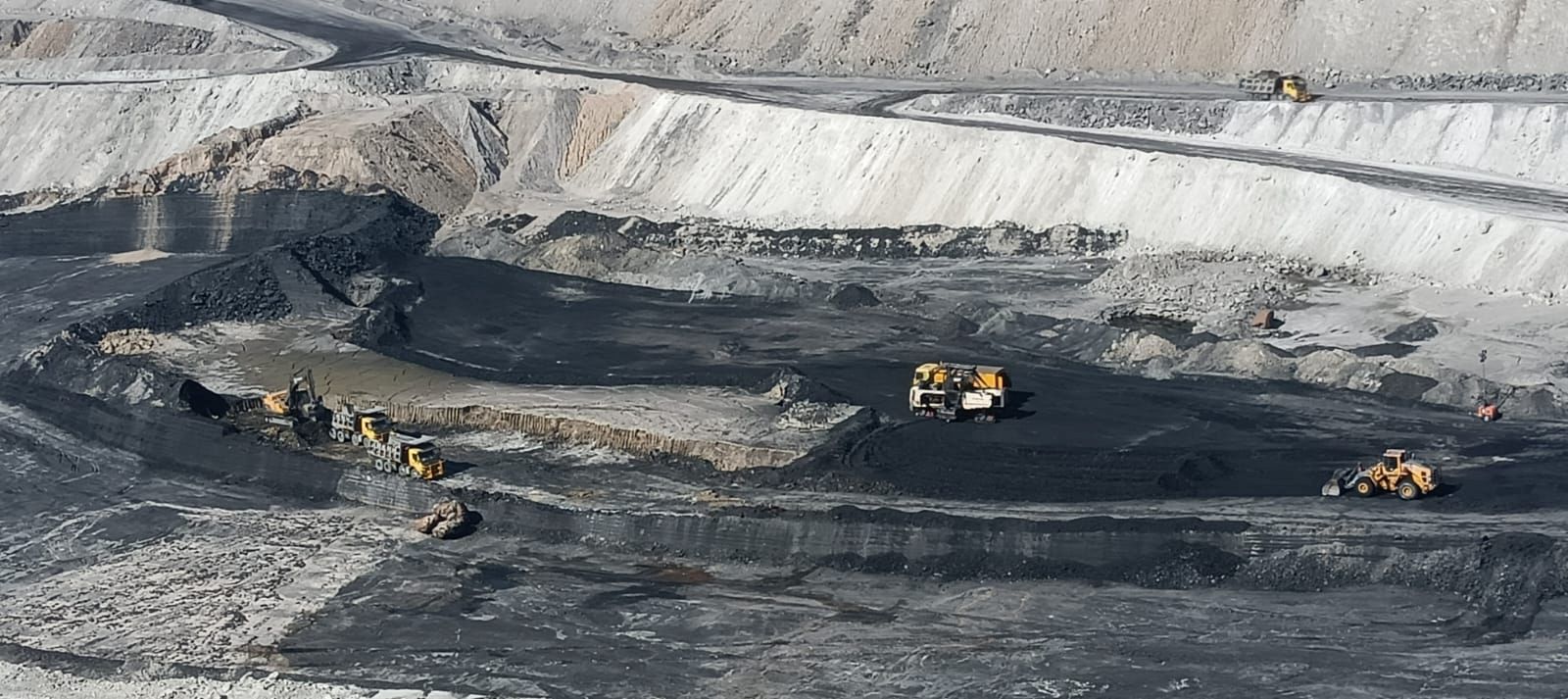
The Hasdeo Arand forest in Chhattisgarh, often called the “lungs of Central India,” is one of the country’s last unfragmented old-growth forests, spanning 187,800 hectares across Surguja, Surajpur, and Korba districts. Beneath its dense canopy of sal, teak, and mahua trees lies a treasure trove of 1.37 billion tonnes of coal reserves across 23 coal blocks, making it a focal point for India’s energy ambitions. In recent years, approvals for coal mining in this biodiversity-rich region, particularly for the Parsa East and Kanta Basan (PEKB) and Kente Extension coal blocks, have sparked intense controversy. The latest approval on June 26, 2025, for diverting 1,742.6 hectares of forest land for the Kente Extension block has reignited protests from tribal communities, environmentalists, and opposition leaders, raising critical questions about ecological destruction, tribal rights, and India’s energy priorities. This article examines the approvals, their implications, and their parallels with global mining challenges and India’s industrial landscape.
The 2025 Approval: Kente Extension Coal Block
On June 26, 2025, the Sarguja Divisional Forest Officer recommended diverting 1,742.6 hectares of forest land in the Hasdeo Arand region for the Kente Extension coal block, allotted to Rajasthan Rajya Vidyut Utpadan Nigam Limited (RRVUNL) and operated by Rajasthan Collieries Limited, a subsidiary of Adani Enterprises. This decision, reported by Hindustan Times on August 5, 2025, could lead to the felling of over 450,000 trees in a region critical for biodiversity and tribal livelihoods. The move has triggered a political and environmental firestorm, with critics arguing it violates a 2022 Chhattisgarh Assembly resolution to halt coal mining in Hasdeo and undermines tribal rights under the Forest Rights Act (FRA) 2006 and Panchayats (Extension to Scheduled Areas) Act (PESA) 1996.
Key Details of the Approval
-
Location: The Kente Extension block lies within the Chornai River’s catchment area, approximately 3 km from the Lemru Elephant Reserve, a critical migratory corridor for elephants.
-
Scale: The diversion involves 99% dense forest, threatening 9 Schedule I species under the Wildlife Protection Act, 1972, including elephants, leopards, and sloth bears.
-
Operator: RRVUNL, with mining operations contracted to Adani Enterprises, aims to meet Rajasthan’s coal needs for thermal power plants, despite claims that existing mines like PEKB can suffice for 15 years.
-
Environmental Impact: The proposed mining could disrupt the Hasdeo River, a major tributary of the Mahanadi, and the Hasdeo Bango reservoir, which irrigates 300,000 hectares of double-cropped land in Chhattisgarh, the “rice bowl” of India.
Former Chief Minister Bhupesh Baghel of the Congress party condemned the BJP-led state government, accusing it of prioritizing corporate interests over ecological and tribal welfare. Baghel highlighted the contradiction with the BJP’s “One Tree in Mother’s Name” campaign, noting that the approval threatens water sources, tribal communities, and forest deities revered by locals. Environmental groups like Chhattisgarh Bachao Andolan and Hasdeo Aranya Bachao Sangharsh Samiti, led by activist Alok Shukla, have demanded the decision’s withdrawal, citing forged gram sabha consents and violations of constitutional protections.
Historical Context: A Decade of Controversy
The Hasdeo Arand region has been a battleground for coal mining since 2010, when the Ministry of Environment, Forest and Climate Change (MoEFCC) briefly designated it a “no-go” zone due to its rich forest cover. However, this policy was never finalized, and clearances for mining resumed in 2011 under pressure from the Coal and Power Ministries. Key milestones include:
-
2011: Then-Environment Minister Jairam Ramesh granted Stage I forest clearance for the Parsa East and Kanta Basan (PEKB) and Tara coal blocks, despite objections from the Forest Advisory Committee (FAC). These blocks, operated by Adani for RRVUNL, marked the first breaches of the no-go policy.
-
2015: The National Green Tribunal (NGT) halted mining licenses, directing the Wildlife Institute of India (WII) and Indian Council of Forestry Research and Education (ICFRE) to assess environmental impacts. Their 2021 reports recommended against mining in 14 of Hasdeo’s 23 coal blocks, citing ecological crises and human-wildlife conflict.
-
2020–2022: The Parsa coal block (1,252 hectares, 5 MTPA capacity) received Stage I clearance in 2020, Stage II in 2021, and final state approval in April 2022, despite protests alleging forged gram sabha consents. Approximately 200,000 trees were slated for felling, with 41 hectares cleared by 2022 and 93 hectares approved in 2023.
-
2022–2023: The PEKB Phase II (1,136.328 hectares) received approval in March 2022, leading to the felling of 242,670–300,000 trees by 2023. Protests, including a 300-km march to Raipur in October 2021, highlighted illegal land acquisition and environmental destruction.
-
2025: The Kente Extension approval escalates deforestation, with an estimated 450,000 trees at risk, prompting renewed protests and allegations of fraud by the Chhattisgarh State Scheduled Tribes Commission (CGSTC).
Since 1980, Chhattisgarh has diverted 171,000 hectares of forest land for non-forest use, with 67% for mining, per the Committee of Land Reforms and State Agrarian Relations (CLSR) report of 2009. The recent approvals reflect a 81.7% approval rate for mining projects between 2000 and 2015, often criticized for lax Environmental Impact Assessments (EIAs) and a “neo-liberal agenda” favoring corporate interests.
Ecological and Social Impacts
Environmental Consequences
-
Deforestation: The Kente Extension and PEKB projects threaten over 600,000–850,000 trees collectively, fragmenting one of India’s last contiguous forests. Since 2012, 81,000 trees have been felled, with activists estimating 399,000 more at risk.
-
Biodiversity Loss: Hasdeo hosts 350 animal species, including elephants, leopards, and sloth bears. Mining disrupts the Lemru Elephant Reserve corridor, increasing human-elephant conflicts, which already cause 60 human fatalities annually in Chhattisgarh despite its small elephant population (<1% of India’s total).
-
Water Security: The Hasdeo River, a lifeline for irrigation and drinking water, faces pollution and reduced flow due to mining in its catchment area, threatening 300,000 hectares of agricultural land.
-
Climate Impact: Deforestation undermines India’s National Forest Policy, 1988, which aims for 33% forest cover to mitigate climate change. Hasdeo’s loss could exacerbate carbon emissions, conflicting with India’s net-zero by 2070 goal.
Social and Tribal Impacts
-
Displacement: The Parsa and PEKB projects are estimated to displace 700–2,000 people, primarily Adivasi communities reliant on forests for food, fodder, and cultural practices. Villages like Salhi, Hariharpur, and Fatehpur report forged gram sabha consents, violating FRA 2006 and PESA 1996.
-
Cultural Loss: Adivasis worship trees as deities and depend on forest produce like mahua and tendu. Mining threatens their spiritual and economic survival, as voiced by villagers like Ramlal Karyam: “The forest is our bank account.”
-
Legal Violations: The CGSTC found evidence of fraud in gram sabha records for the Parsa block, with mining proposals added post-meeting. This echoes broader concerns about weak implementation of PESA and FRA, as noted in the 2009 Planning Commission report.
Political and Corporate Dimensions
The approvals have fueled a political slugfest:
-
Congress Opposition: Former CM Bhupesh Baghel and Congress leader Rahul Gandhi have criticized the BJP-led state and central governments, alleging favoritism toward Adani Enterprises. Baghel claims his government withheld clearances, while Gandhi called the protests “justified” in 2023.
-
BJP Defense: BJP spokesperson Sacchidanand Upasane accused Baghel of deflecting from his government’s failures, claiming the approvals address Rajasthan’s energy needs. RRVUNL officials argue that without Hasdeo’s coal, Rajasthan faces a power crisis, as power exchanges are 2.5–3 times costlier.
-
Adani’s Role: Adani Enterprises, as the Mine Developer and Operator (MDO) for PEKB and Kente, owns 74% equity in Parsa Kente Collieries Ltd (PKCL), despite RRVUNL’s public ownership. Critics, including Aam Aadmi Party (AAP), allege that Prime Minister Narendra Modi prioritizes corporate interests over tribal rights, citing his 2019 promise to protect “jal, jangal, and zameen” (water, forests, and land).
The Chhattisgarh Bachao Andolan and activists like Alok Shukla have faced intimidation, with reports of kidnappings and police arrests during protests in December 2023.
Parallels with Global and Indian Contexts
The Hasdeo controversy mirrors global and domestic challenges:
-
Global Mining Safety: The El Teniente mine collapse in Chile (August 2025), which killed six workers, highlights the risks of mining in ecologically sensitive areas. Like Hasdeo, El Teniente faced scrutiny for inadequate safety and environmental oversight, underscoring the need for robust audits.
-
India’s Mineral Strategy: The Mangampeta baryte deposit in Andhra Pradesh, supplying 95% of India’s baryte, demonstrates the economic value of mineral wealth but also the need for sustainable practices, as seen in APMDC’s adoption of zero-liquid-discharge systems. Hasdeo’s coal mining could adopt similar technologies to mitigate environmental damage.
-
Industrial Precision: The precision in gold smelting flux ratios (borax, sodium carbonate, silica, sodium nitrate) parallels the need for careful planning in coal mining to balance economic gains with ecological costs.
-
Entrepreneurial Resilience: India’s teen tycoons, like Kaivalya Vohra of Zepto, navigate systemic gaps with innovation, a model for addressing Hasdeo’s governance failures, such as forged consents and weak EIAs.
-
Civic Governance: The Gurugram garbage crisis, driven by governance breakdowns, reflects the systemic issues in Hasdeo, where lack of tribal consultation and environmental accountability fuels conflict.
Challenges and Opportunities
Challenges
-
Ecological Destruction: The loss of 450,000–850,000 trees and disruption of the Hasdeo River threaten biodiversity and water security, with long-term climate impacts.
-
Tribal Rights Violations: Forged gram sabha consents and non-compliance with FRA and PESA undermine Adivasi autonomy, risking legal challenges in the NGT or Supreme Court.
-
Human-Wildlife Conflict: Mining near the Lemru Elephant Reserve could escalate human-elephant conflicts, already a significant issue in Chhattisgarh.
-
Political Backlash: Continued approvals risk alienating tribal voters, a key demographic in Surguja, where the BJP won all 14 seats in 2023.
Opportunities
-
Sustainable Mining: Adopting technologies like real-time environmental monitoring and afforestation, as mandated in the Parsa approval, could mitigate damage. The NCMM’s Centres of Excellence (e.g., IIT Hyderabad) could develop eco-friendly coal extraction methods.
-
Tribal Empowerment: Ensuring genuine gram sabha consent and fair compensation, as per FRA and PESA, could rebuild trust and support livelihoods through forest-based enterprises.
-
Energy Transition: Investing in renewable energy, as Rajasthan explores with Adani Green Energy, could reduce reliance on Hasdeo’s coal, aligning with India’s net-zero goals.
-
Global Lessons: Codelco’s response to the El Teniente tragedy, including international audits, offers a model for transparent investigations into Hasdeo’s clearances.
Future Outlook
The Hasdeo Arand controversy will likely intensify as mining operations expand. The CGSTC’s November 2024 report on forged consents has prompted plans by Chhattisgarh Bachao Andolan to distribute findings to 10,000 villages, amplifying resistance. Legal challenges in the NGT or Supreme Court could delay or halt projects, as seen in the 2014 coal scam ruling that revoked PEKB allocations. Meanwhile, India’s coal demand, projected to peak at 1.5 billion tonnes by 2030, drives approvals, but global shifts toward renewables could reduce Hasdeo’s strategic importance.
The NCMM, launched in January 2025, emphasizes sustainable mineral extraction, offering a framework to balance Hasdeo’s coal wealth with environmental and social priorities. Collaborations with global experts, as in Codelco’s audit, could enhance safety and transparency. Community-led initiatives, like those addressing Gurugram’s garbage crisis, could inspire local solutions, such as tribal-led afforestation or eco-tourism to preserve Hasdeo’s cultural and ecological value.
The 2025 approval of 1,742.6 hectares for the Kente Extension coal block in Hasdeo Arand, alongside prior clearances for Parsa and PEKB, underscores India’s tension between energy needs and environmental preservation. Threatening 450,000–850,000 trees, biodiversity loss, and Adivasi displacement, these projects face fierce opposition for violating FRA, PESA, and ecological safeguards. The involvement of Adani Enterprises and allegations of forged consents fuel accusations of corporate bias, echoing global mining controversies like Chile’s El Teniente tragedy. Yet, opportunities exist for sustainable mining, tribal empowerment, and renewable energy transitions, drawing lessons from Mangampeta’s baryte operations and India’s teen tycoons. As Hasdeo’s fate hangs in the balance, robust governance, transparent audits, and community engagement are critical to reconciling India’s mineral wealth with its ecological and cultural heritage.