

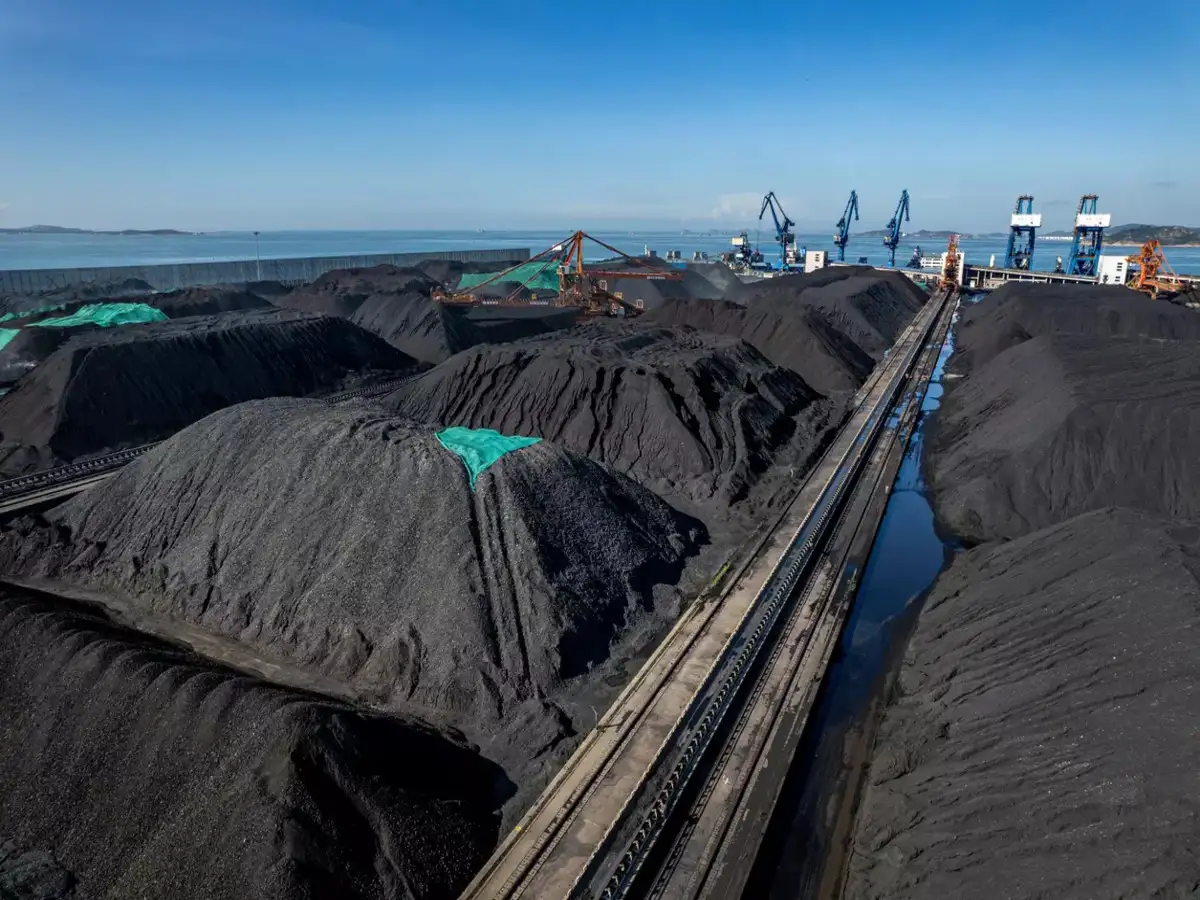
China and India—the world’s top thermal coal importers—are increasingly turning to higher-calorific value (CV) coal, favoring suppliers like Mongolia, South Africa, Kazakhstan, Colombia, Mozambique, and Australia. This shift is primarily driven by the superior energy efficiency of high-grade coal. Although higher in price per tonne, it delivers more energy per dollar spent, making it a better value proposition in the current market conditions.
Import Patterns and Trade Data
China reduced its Indonesian coal imports by 12.3% in the first five months of 2025. India cut its Indonesian coal purchases by 14.3% during the same period. Consequently, Indonesia’s total coal exports fell 12% to 187 million tonnes during January to May 2025.
Meanwhile, Asia’s overall thermal coal imports reached 74 million tonnes in May 2025, the highest in five months, though still 7% lower compared to the same period in 2024.
Countries Gaining from the Shift
Mongolia has emerged as a key beneficiary with its higher-grade coal exports to China. South African coal has gained prominence in India. Other countries like Kazakhstan, Colombia, Mozambique, and Australia are also increasing their market share with superior-grade coal offerings.
Decline of Indonesian Coal
Indonesian coal is typically of medium- to low-calorific value, making it less attractive amid current pricing structures. Buyers in China and India are opting for energy-dense alternatives that provide greater output efficiency. Additionally, countries like Russia are offering similar grades of coal at more competitive prices, adding further pressure on Indonesian suppliers.
Indonesia’s Strategic Domestic Focus
With declining exports, Indonesia is redirecting its coal toward the domestic market, particularly nickel smelters where prices are not subject to government caps. Domestic consumption is expected to account for nearly 49% of total output in 2025, the highest level in a decade. Industrial buyers such as smelters are becoming more lucrative than state-regulated utility contracts.
Outlook and Implications
Price Sensitivity
If high-grade coal prices rise due to geopolitical tensions or supply disruptions, Indonesian coal may regain competitiveness in global markets.
Long-Term Risks
Experts warn that Indonesia must diversify into cleaner energy alternatives to remain viable in a transitioning global energy landscape.
Global Coal Dynamics
Both China and India are expanding domestic coal production and increasing renewable energy investments. These trends could further reduce the reliance on imported coal over the long term.
China and India’s shift toward higher-grade coal is reshaping global thermal coal trade. While suppliers like Mongolia and South Africa are gaining market share, Indonesia is facing shrinking exports and turning to domestic demand for stability. This realignment is likely to continue, driven by price dynamics, evolving energy policies, and long-term sustainability goals.