

Support CleanTechnica’s work through a Substack subscription or on Stripe.
Or support our Kickstarter campaign!
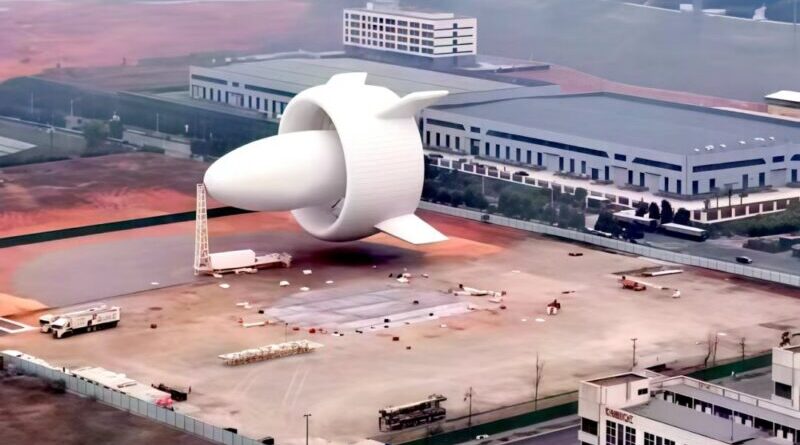
China’s S2000 Stratosphere Airborne Wind Energy System (SAWES) has crossed an important threshold. This is an update on a report CleanTechnica featured 5 months ago.
Last month, the megawatt-class airborne wind platform, operated by Beijing Lanyi Yunchuan Energy Technology Co., completed a grid-connected test flight in Yibin, Sichuan Province, confirming that the technology is no longer confined to conceptual renders or short-duration mechanical trials. It has now generated electricity at altitude and delivered that power into the local grid.
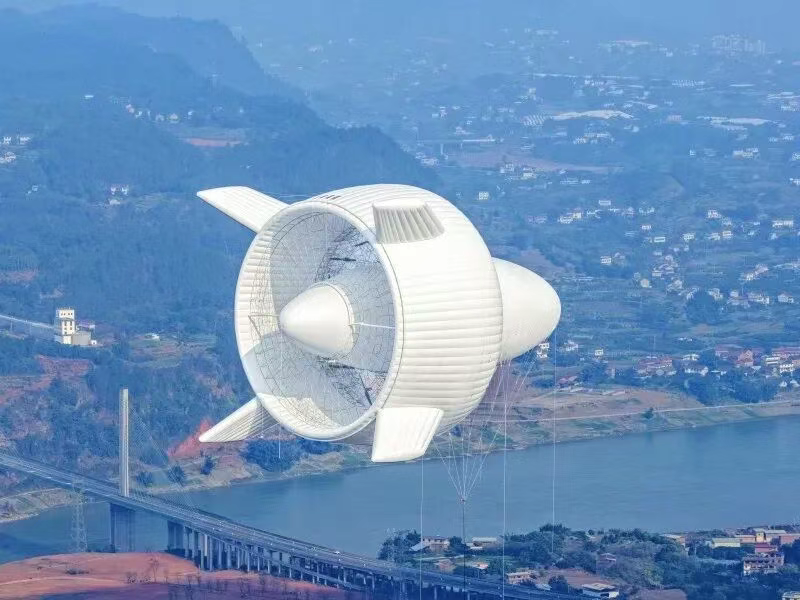
The S2000 is built around a helium-filled aerostat that lifts multiple turbine-generator units to approximately 2,000 meters above ground level. At that altitude, winds are typically stronger and more consistent than those accessible to conventional tower-mounted turbines. Electricity generated onboard is transmitted to the ground through a conductive tether, which also provides structural anchoring and communication links for flight control and system monitoring.
During the January test, the system reportedly produced about 385 kilowatt-hours of electricity. While that figure reflects output during a limited demonstration window rather than sustained rated operation, the more significant milestone is that the energy was successfully synchronized and fed into the grid. That confirms the presence of functional power conditioning systems, frequency matching, and voltage control capable of integrating variable airborne generation into terrestrial infrastructure.
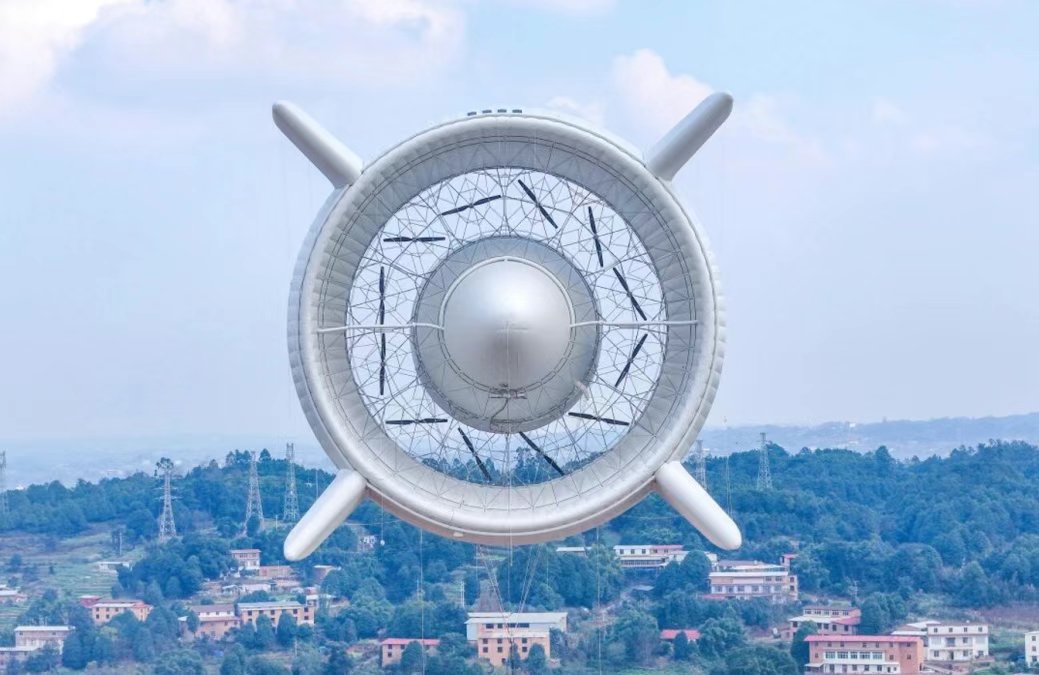
The S2000 is described as having a nominal design capacity of up to 3 megawatts under optimal conditions. However, there has been no public release of extended performance data, multi-hour output curves, or verified capacity factor measurements. For now, the system remains in a validation phase rather than commercial service.
Technically, the S2000 differs from crosswind kite-based airborne systems that rely on dynamic aerodynamic lift. Instead, it uses static buoyancy from its aerostat envelope to maintain altitude. This reduces continuous control complexity but introduces other engineering challenges, particularly long-term envelope durability, helium retention, and resistance to ultraviolet exposure and temperature cycling. The tether must also withstand continuous tensile loading and oscillatory stresses from high-altitude wind shear, making materials science central to long-term reliability.
Airspace integration represents another hurdle. Sustained operation at roughly 2,000 meters intersects with regulated aviation corridors in many regions, meaning that large-scale deployment will require coordination with civil aviation authorities and robust tracking systems.
Despite these open questions, the January 2026 test marks a clear progression. Earlier Chinese airborne systems, including the S1500 prototype, demonstrated lower-capacity operation. The S2000 moves the concept into megawatt-class territory with confirmed grid delivery. That transition from experimental lift demonstration to real electricity injection is a key step that earlier reporting sometimes understated.
The remaining issues are economic and operational. Long-duration flight stability, lifetime operating costs, helium logistics, maintenance intervals, and levelized cost of energy comparisons with conventional onshore and offshore wind will determine whether airborne wind becomes a niche solution or a meaningful contributor to renewable generation portfolios.
For now, the S2000 should be viewed as an advanced engineering demonstrator that has achieved verified grid-connected output. It has proven that high-altitude wind can be harvested and delivered into the power system under controlled conditions. Whether that proof evolves into scalable infrastructure will depend on performance transparency and sustained operational data in the months and years ahead.
Support CleanTechnica via Kickstarter

Sign up for CleanTechnica’s Weekly Substack for Zach and Scott’s in-depth analyses and high level summaries, sign up for our daily newsletter, and follow us on Google News!
Have a tip for CleanTechnica? Want to advertise? Want to suggest a guest for our CleanTech Talk podcast? Contact us here.
Sign up for our daily newsletter for 15 new cleantech stories a day. Or sign up for our weekly one on top stories of the week if daily is too frequent.
CleanTechnica uses affiliate links. See our policy here.
CleanTechnica’s Comment Policy