
Coal India’s Critical Minerals Foray: ₹16,000 Crore Capex Push for FY26 and Strategic Diversification

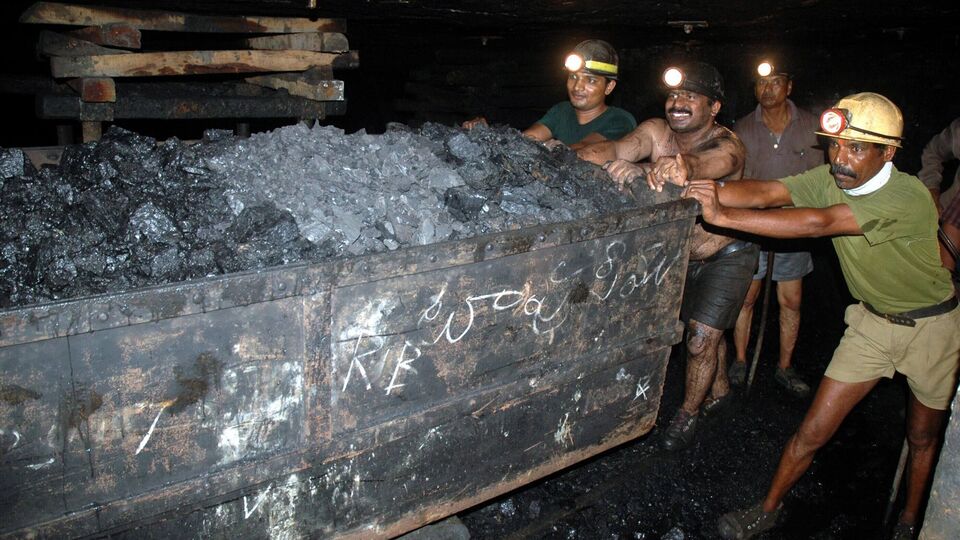
Coal India Limited (CIL), the world’s largest coal producer and a Maharatna PSU under India’s Ministry of Coal, is intensifying its diversification into critical minerals as part of its ₹16,000 crore capital expenditure (capex) plan for FY26. This strategic pivot, detailed in CIL’s FY24–25 Annual Report, aims to secure minerals like lithium, cobalt, nickel, and rare earth elements (REEs), essential for electric vehicles (EVs), renewable energy, and defense technologies. With a 900.24 million tonne (MT) coal supply target for FY26 and a long-term goal of 1 billion tonnes (BT) by FY29, CIL’s foray into critical minerals aligns with India’s National Critical Mineral Mission (NCMM) and Atmanirbhar Bharat initiative to reduce import dependency. This article explores CIL’s capex strategy, critical minerals focus, challenges, and parallels with industrial and governance issues, such as the Hasdeo Arand coal mining controversy, Mangampeta’s baryte operations, and the Sona Comstar succession dispute.
CIL’s ₹16,000 Crore Capex Plan for FY26
CIL’s ₹16,000 crore capex for FY26, down from ₹20,000 crore in FY25, reflects a strategic allocation to sustain coal production while diversifying into critical minerals and clean energy. The plan supports India’s energy security and transition goals, with key investments outlined in the FY24–25 Annual Report:
-
Coal Production and Infrastructure (65%, ₹10,400 crore):
-
Coal Evacuation (₹5,622 crore): Investments in rail sidings, corridors, coal handling plants, and silos to ensure seamless supply, especially during monsoons. CIL collaborates with the Ministry of Railways and Indian Port Rail & Ropeway Corporation Ltd to enhance logistics, addressing bottlenecks seen in Hasdeo Arand.
-
Land Acquisition (₹2,382 crore): Securing land for new mines and expansions, critical for projects like the Kente Extension block in Chhattisgarh, despite environmental and tribal concerns.
-
Heavy Equipment (₹1,952 crore): Procurement of high-capacity mining machinery (e.g., 360 units worth ₹3,700 crore) to boost production efficiency, as seen in the 2 MTPA Dugda Coal Washery monetization in Jharkhand (₹504 crore).
-
-
Diversification into Critical Minerals and Clean Energy (35%, ₹5,600 crore):
-
Critical Minerals Exploration: CIL is targeting lithium, cobalt, nickel, and REEs through domestic exploration and overseas acquisitions. The company amended its Memorandum of Association (MoA) in 2023 to include non-ferrous and critical minerals, with advanced discussions for assets in Australia, Chile, and Argentina.
-
Coal Gasification: Joint ventures with BHEL (Odisha, 6.6 lakh tonnes ammonium nitrate), GAIL (West Bengal, 633.6 million cubic meters synthetic natural gas), and BPCL (Chandrapur, Maharashtra), each backed by ₹1,350 crore, to produce cleaner fuels.
-
Renewable Energy: Aiming for 3,000 MW solar power by FY28 through JVs with NLC India Ltd, NTPC, and Solar Energy Corporation of India. CIL’s 2×800 MW thermal power plant in Odisha (₹16,000 crore) and a JV with Damodar Valley Corporation (₹16,500 crore) enhance energy diversification.
-
Coalbed Methane (CBM): Investments in CBM extraction to tap unconventional energy sources, reducing environmental impact.
-
CIL’s Q1 FY26 capex performance, alongside NLCIL and SCCL, achieved 114% of the target, reflecting operational agility. The company’s long-term plan includes a cumulative ₹2.85 trillion capex by 2030 with NLCIL, with ₹15,000 crore earmarked for mining activities, including critical minerals.
Critical Minerals Strategy: Reducing Import Dependency
Critical minerals like lithium, cobalt, nickel, and REEs are vital for India’s EV, renewable energy, and defense sectors, with 55% of global supply concentrated in 15 countries, including China. India, the world’s third-largest energy consumer, imports 90% of its critical minerals, per the Ministry of Mines. CIL’s foray, aligned with the NCMM (launched January 2025 with ₹34,300 crore funding), aims to bridge this gap:
-
Domestic Exploration: The Geological Survey of India (GSI) is conducting 368 exploration projects, with 195 underway in FY25 and 227 planned for FY26. CIL’s subsidiary, Central Mine Planning & Design Institute Ltd (CMPDIL), will establish a pilot REE extraction plant in Madhya Pradesh coalfields by FY26, following discoveries of neodymium and yttrium.
-
Overseas Acquisitions: CIL has signed non-disclosure agreements (NDAs) in New South Wales, Australia, for lithium and cobalt assets and plans to send a team to Chile, the world’s largest copper and second-largest lithium producer. Discussions are ongoing for Argentina’s lithium-rich regions, targeting mergers and acquisitions.
-
Partnerships: MoUs with Hindustan Copper and IREL (India) Ltd focus on copper, REEs, and mineral sands, enhancing CIL’s value chain integration. The Khanij Bidesh India Ltd (KABIL) JV with NALCO and HCL supports global asset acquisition.
-
Policy Support: The Union Budget 2025 eliminated customs duties on 12 critical minerals and introduced a policy for recovering minerals from mining tailings, boosting CIL’s efforts.
CIL’s strategy aligns with the NCMM’s goal of increasing domestic production and recycling, with ₹16,300 crore from the Union government and ₹18,000 crore from PSUs like CIL.
Challenges in Critical Minerals and Coal Operations
CIL’s ambitious plans face significant hurdles:
-
Environmental and Social Resistance: The Hasdeo Arand coal mining approvals in Chhattisgarh, including the Kente Extension (1,742.6 hectares, June 2025), threaten 450,000–850,000 trees and Adivasi communities, with allegations of forged gram sabha consents violating the Forest Rights Act (FRA) 2006. Critical minerals mining could face similar backlash if not managed sustainably.
-
Investor Hesitancy: The Ministry of Mines canceled auctions of several critical mineral blocks in December 2024 due to insufficient exploration data, deterring investors. CIL must invest in detailed geological surveys to attract partnerships.
-
Technical and Financial Risks: Overseas acquisitions and technologies like coal gasification require significant expertise and capital. CIL’s JVs with BHEL, GAIL, and BPCL aim to mitigate these risks, but scaling remains challenging.
-
Global Competition: China’s dominance in critical minerals (e.g., 60% of global REE supply) poses pricing and supply chain challenges. CIL’s ventures in Chile and Australia must navigate geopolitical risks.
Parallels with Industrial and Governance Contexts
CIL’s critical minerals push intersects with broader industrial and governance dynamics:
-
Mangampeta’s Sustainability: The Mangampeta baryte deposit in Andhra Pradesh, supplying 95% of India’s baryte, exemplifies sustainable mining with zero-liquid-discharge systems and afforestation. CIL can adopt similar practices to mitigate Hasdeo’s environmental impact.
-
Sona Comstar’s Governance Lessons: The Sona Comstar succession dispute, involving Rani Kapur and Priya Sachdev Kapur, highlights the risks of weak succession planning in family businesses. CIL, as a PSU, must ensure transparent governance in its diversification to avoid similar conflicts.
-
Global Mining Safety: The El Teniente mine collapse in Chile (August 2025) underscores the need for robust safety audits, critical for CIL’s operations in seismically active regions like Chile.
-
Civic Governance: The Gurugram garbage crisis reflects systemic governance failures, akin to Hasdeo’s forged consents. CIL’s stakeholder engagement must prioritize transparency to avoid such breakdowns.
-
Entrepreneurial Resilience: India’s teen tycoons, like Kaivalya Vohra, navigate systemic gaps with innovation, offering a model for CIL to address exploration and regulatory challenges.
Opportunities for Growth
CIL’s critical minerals foray presents significant opportunities:
-
Energy Transition: By securing lithium and cobalt, CIL can support India’s 500 GW renewable energy target by 2030, reducing reliance on China’s 90% control of EV battery minerals.
-
Revenue Diversification: Critical minerals and gasification projects, like the BHEL JV, could generate ₹5,000 crore annually by 2030, per industry estimates, offsetting declining coal demand.
-
Technological Innovation: The NCMM’s Centres of Excellence (e.g., IIT Kharagpur) can develop AI-driven exploration and processing, mirroring Mangampeta’s XRF technology.
-
Global Leadership: Successful acquisitions in Chile and Australia could position CIL as a global player, akin to Rio Tinto’s $10 billion critical minerals capex.
Future Outlook
CIL’s FY26 ₹16,000 crore capex is a critical step toward 1 BT coal production by FY29 and a robust critical minerals portfolio. The NCMM and Union Budget 2025 provide policy support, but success hinges on overcoming environmental, social, and technical challenges. By FY30, India’s coal demand is projected at 1.4–1.58 BT, with critical minerals demand rising at a 20% CAGR for EVs and renewables. CIL’s plans include:
-
20 new coal mines with 80 MT capacity in FY26.
-
Pilot REE plants in Madhya Pradesh by FY26.
-
Overseas acquisitions in Chile and Argentina by FY27, targeting 10% of India’s lithium needs.
-
3,000 MW solar and 3,200 MW thermal capacity by FY28.
Adopting Mangampeta’s sustainability model, El Teniente’s safety audits, and Sona Comstar’s governance lessons will ensure CIL balances economic growth with social and environmental responsibility.
Coal India Limited’s ₹16,000 crore capex for FY26 marks a transformative shift into critical minerals, targeting lithium, cobalt, nickel, and REEs to support India’s energy transition and Atmanirbhar Bharat. With a 900.24 MT coal supply target, CIL remains pivotal to India’s energy security while diversifying through coal gasification, solar power, and overseas acquisitions in Australia and Chile. Challenges like Hasdeo Arand’s environmental conflicts, investor hesitancy, and global competition mirror governance issues in Sona Comstar and civic failures in Gurugram. By leveraging NCMM’s framework, Mangampeta’s sustainability, and global lessons from El Teniente, CIL can lead India’s critical minerals revolution, securing economic and strategic resilience by 2030