

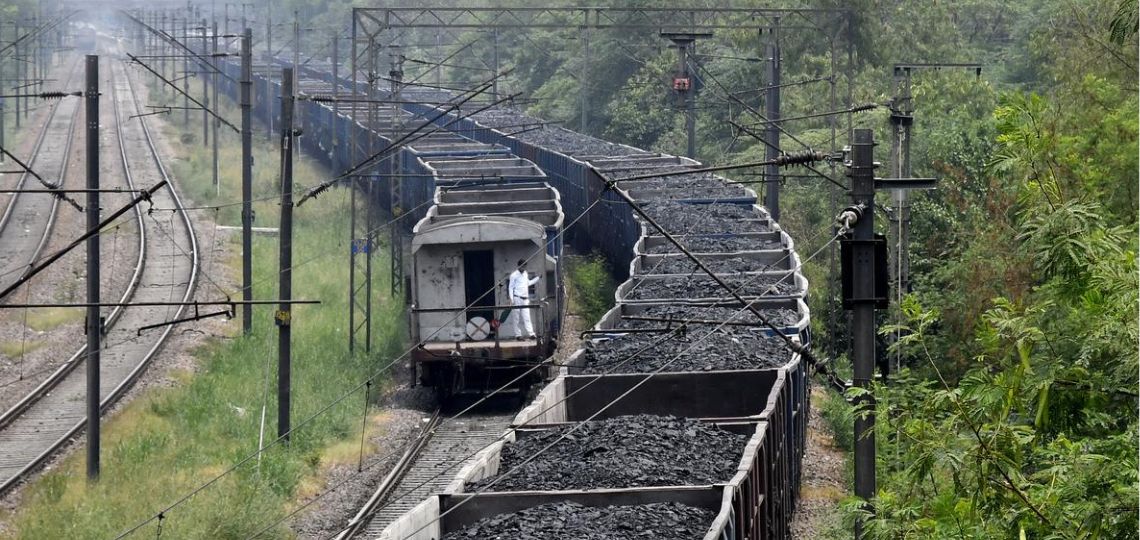
In a pivotal move to strengthen India’s energy supply chain, Coal India Limited (CIL), the state-owned coal mining giant responsible for over 80% of India’s coal production, is accelerating its rail infrastructure expansion to fast-track coal transport. On June 5, 2025, CIL signed a non-binding Memorandum of Understanding (MoU) with Indian Port Rail & Ropeway Corporation Ltd (IPRCL) to develop and upgrade rail infrastructure, aiming to enhance coal evacuation efficiency and meet rising energy demands. This strategic collaboration, coupled with ongoing First Mile Connectivity (FMC) projects, underscores CIL’s commitment to modernizing logistics, reducing environmental impact, and supporting India’s energy security. This article explores the details of CIL’s rail infrastructure initiatives, their impact on coal transport, and their broader implications for India’s resource and energy sectors.
Courtesy:- Ministry of Coal
Coal India’s Rail Infrastructure Push: The 2025 MoU with IPRCL
On June 5, 2025, in Kolkata, Coal India signed a non-binding MoU with IPRCL, a joint venture comprising 11 major ports under the Ministry of Ports, Shipping and Waterways (90% equity) and Rail Vikas Nigam Limited (RVNL) under the Ministry of Railways (10% equity). The agreement aims to modernize rail infrastructure for CIL and its subsidiaries, focusing on improving connectivity between coal mines, railway sidings, and key ports. This collaboration is designed to address logistical bottlenecks, reduce delays in coal supply to power plants, and enhance operational efficiency.
IPRCL’s expertise in developing rail evacuation systems for major ports will be leveraged to assess, design, and execute railway infrastructure projects, including sidings, connectivity corridors, and port linkages. With CIL transporting over 600 million tonnes of coal annually, primarily via Indian Railways, this partnership is critical to ensuring uninterrupted and timely delivery to power plants and industrial hubs. The MoU aligns with India’s broader infrastructure goals, aiming to bolster supply chain resilience and reduce logistics costs, which could positively impact CIL’s operational efficiency and share price, as noted in posts on X and industry reports.
First Mile Connectivity: A Game-Changer for Coal Transport
A cornerstone of CIL’s strategy is its investment in First Mile Connectivity (FMC) projects, which involve mechanized coal handling plants equipped with crushers, rapid loading systems, and piped conveyor belts. These systems replace traditional truck-based transport and manual loading, reducing dust, noise, vehicle emissions, and road congestion while improving safety and wagon turnaround times. In FY25, CIL reported a 34% year-on-year increase in eco-friendly coal transport, moving 102.5 million tonnes (MT) through 20 FMC projects connected to Indian Railways, up from 76.5 MT via 17 projects in FY24. By May 2025, coal dispatch via FMC projects rose by 36.7%, reaching 20.5 MT compared to 15 MT the previous year.
CIL plans to commission 19 additional FMC projects in FY26, adding nearly 150 MT per annum to its coal evacuation capacity. These projects are strategically located in coal-rich states like Jharkhand, Odisha, Chhattisgarh, and Madhya Pradesh, where subsidiaries like Central Coalfields Ltd (CCL), Mahanadi Coalfields Ltd (MCL), and South Eastern Coalfields Ltd (SECL) operate. By FY29, CIL aims to achieve 1 billion tonnes of coal production, with nearly all transport conducted sustainably through FMC systems. The shift to silo-based mechanized loading, which accounted for 29% of coal loading in FY25, has reduced underloading charges by 5% and improved coal quality, benefiting power plants and industrial consumers.
Key Rail Projects Supporting Coal Evacuation
CIL’s rail infrastructure expansion builds on earlier investments, including three major railway lines funded by CIL at a cost of ₹7,994 crore, with a capacity to transport 170 MT per annum, and four rail joint ventures with Chhattisgarh, Jharkhand, and Odisha, costing ₹11,656 crore for an additional 160 MT per annum. Notable projects include:
-
Tori-Shivpur New BG Double Line (43.7 km, Jharkhand): Operational since December 2019, this line transports 65 MT per annum, with a third line under construction (expected completion by March 2024) to increase capacity to 100 MT per annum.
-
Jharsuguda–Barpali–Sardega New BG Line (52.41 km, Odisha): Operational since April 2018, this line is being doubled to boost capacity to 65 MT per annum by December 2023.
-
East West Rail Corridor (Chhattisgarh): Partially commissioned, this corridor will evacuate 65 MT per annum by December 2024.
-
Shivpur–Kathautia Rail Connectivity (Jharkhand): A joint venture 55% complete, set to add 25 MT per annum by March 2025.
-
Kharsia–Dharamjaigarh Rail Corridor (74 km, SECL): Already operational, supporting 160 MT per annum through joint ventures.
These projects, combined with the 38 priority rail initiatives identified by the federal coal ministry, aim to optimize coal logistics, reduce transport costs, and ensure a stable supply to power plants. The completion of the Eastern Dedicated Freight Corridor (EDFC) in 2024 has decongested trunk routes like Pt Deen Dayal Upadhyay Junction, enabling faster coal movement and freeing mixed-use tracks for passenger and other freight services. The EDFC currently handles 65–70 coal rakes daily, with long-haul trains doubling output during peak demand.
Impact on India’s Energy and Resource Sectors
The rail infrastructure expansion has far-reaching implications for India’s energy and resource sectors, particularly in the context of its growing steel industry, as discussed in the earlier article on iron ore giants. India’s coal production rose 6.2% year-on-year to 79.5 MT in May 2025, with CIL contributing 62.1 MT. This growth supports record coal stockpiles at power plants, reaching 61.3 MT in 2025, sufficient for 25 days of consumption. The improved logistics have also reduced coal prices, with delivered coal (4,200 kcal/kg GAR) dropping to $66.80 per metric ton between April and July 2025, down from $73.15 the previous year, lowering reliance on imports.
The rail upgrades benefit not only coal but also iron ore transport, critical for India’s steel industry, which consumes 160 MT of coking coal annually, much of it imported. Enhanced rail connectivity in coal-rich states like Chhattisgarh and Odisha, where iron ore mines like NMDC’s Bailadila are located, could streamline iron ore evacuation to ports like Visakhapatnam, supporting India’s ambition to triple iron ore production to over 950 MT annually. CIL’s “Mission Coking Coal,” aiming for 140 MT by 2029–30, further aligns with steel sector growth, despite a 9% drop in coking coal output to 4.53 MT in May 2025.
Challenges and Opportunities
Despite these advancements, CIL faces challenges in its rail infrastructure expansion:
-
Rail Network Congestion: Indian Railways faces competition between freight and passenger services, with non-suburban trains at their slowest speeds since 2015 (38.6 km/hr in September 2023). Coal freight prioritization, as seen in the 2022 crisis when 1,900 passenger trains were canceled, strains network capacity.
-
Project Delays: Railway projects are India’s second-most delayed infrastructure category, with timely completion of the 38 priority projects uncertain.
-
Seasonal Disruptions: Monsoons and peak summer demand exacerbate rake shortages, with industries like steel and aluminum facing deficits of 50 trains daily in 2023.
-
Environmental Concerns: While FMC projects reduce emissions, India’s coal reliance conflicts with renewable energy goals, potentially risking stranded assets in coal evacuation infrastructure.
Opportunities include leveraging India’s broader railway modernization, with ₹5,400,000 crore allocated by 2030 for electrification, high-speed lines, and freight corridors. The planned introduction of 4,500 Vande Bharat trains by 2047 and track upgrades for 160–220 km/hr speeds could free up freight capacity. CIL’s focus on sustainability, with conveyor belts and silos, aligns with global trends toward greener resource transport, potentially setting a model for iron ore logistics.
Future Outlook
CIL’s rail infrastructure expansion, driven by the IPRCL MoU and FMC projects, positions India to meet its energy demands, with a projected peak power demand of 270 gigawatts in summer 2025. By FY26, CIL aims for 875 MT production and 900 MT offtake, with rail infrastructure playing a pivotal role. The modernization efforts could reduce logistics costs, enhance supply chain resilience, and support India’s steel industry by improving coal and iron ore transport. However, balancing coal freight with renewable energy goals and addressing network congestion will be critical to sustaining this momentum.
Coal India’s rail infrastructure revolution, marked by the 2025 MoU with IPRCL and the scaling of FMC projects, is a transformative step toward swift coal transport and strengthening India’s energy security. By modernizing rail connectivity, reducing environmental impact, and aligning with national infrastructure goals, CIL is not only addressing immediate logistical challenges but also supporting India’s broader resource sector, including iron ore and steel production. As India navigates its energy transition, these initiatives will play a crucial role in ensuring a resilient and efficient coal supply chain, with ripple effects across the economy.