
Codelco’s El Teniente Tragedy: Investigation Launched After Deadly Mine Collapse

Chile’s state-owned copper giant Codelco concluded a harrowing rescue operation at its El Teniente mine, the world’s largest underground copper mine, after a devastating tunnel collapse claimed the lives of six workers. Triggered by a 4.2-magnitude seismic event on July 31, 2025, the accident in the mine’s new Andesita section marked Chile’s deadliest mining disaster in decades. As the nation mourns, Codelco has vowed to investigate the cause, convening a panel of international experts to audit operations and determine what went wrong. This article examines the incident, the rescue efforts, the factors contributing to the tragedy, and the broader implications for Codelco and Chile’s mining industry, drawing parallels with industrial and entrepreneurial challenges in India.
The Incident: A Seismic Collapse
On Thursday, July 31, 2025, at approximately 5:30 p.m. local time, a 4.2-magnitude tremor struck the El Teniente mine near Rancagua, Chile, causing a tunnel collapse in the Andesita section, a new development project aimed at boosting production. The seismic event, one of the largest recorded at the mine, trapped five workers and killed one instantly, bringing the total death toll to six. Nine other workers sustained injuries but were reported out of serious danger. The collapse blocked 90 meters of underground passages, severing radio communication and complicating rescue efforts due to ongoing aftershocks.
Codelco, the world’s largest copper producer, immediately suspended mining operations at El Teniente, which accounts for about 25% of the company’s 1.4 million tonnes annual output. The incident disrupted Codelco’s goal to restore pre-pandemic production levels of 1.7 million tonnes, raising concerns about global copper supply amid rising demand for the metal used in construction, electronics, and renewable energy.
The Rescue Operation: A Race Against Time
Rescue efforts began in earnest on Friday, August 1, once aftershocks subsided, involving a team of approximately 100 rescuers, including Codelco employees and external specialists. Using remotely operated heavy machinery, the team cleared 25.5 meters (84 feet) of debris and removed 3,270 metric tons of material from the Andesita section’s passages. Despite hopes of finding survivors, the operation turned tragic:
-
Saturday, August 2: The body of one trapped worker, Gonzalo Núñez Caroca, was recovered, confirming the first fatality among the trapped group.
-
Sunday, August 3: Three additional bodies were found in the early hours, followed by the fifth later that afternoon, concluding the rescue phase after 70 hours.
Codelco’s General Manager of El Teniente, Andrés Music, expressed condolences and emphasized the operation’s dignity: “We managed to reach them and bring them back with the respect and dignity they deserve.” However, miner Abelardo Céspedes voiced initial hope for a miracle, reflecting the emotional toll on the mining community.
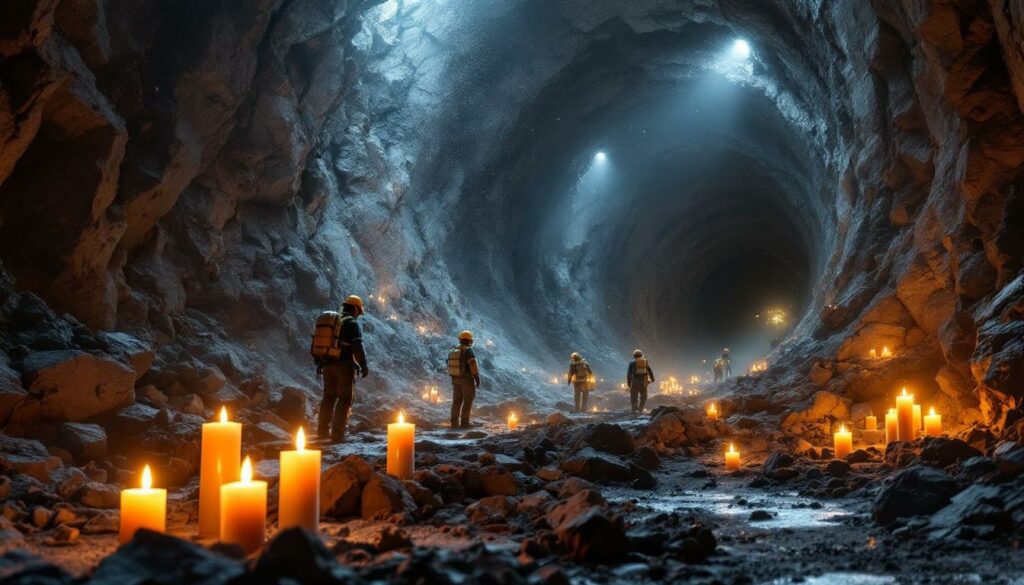
Throughout the weekend, a makeshift memorial outside the mine’s entrance in Maitenes saw dozens of people placing candles, Chilean flags, and photos of the deceased, including Jean Miranda Ibaceta, highlighting the community’s grief. Chilean President Gabriel Boric declared three days of national mourning, underscoring the disaster’s national significance.
What Went Wrong: Initial Questions
The collapse has raised critical questions about safety protocols and the interplay of seismic activity and mining operations. Key factors under scrutiny include:
-
Seismic Activity: The 4.2-magnitude tremor was unusually strong for El Teniente, which is designed to withstand higher-magnitude quakes common in Chile, a seismically active country. It remains unclear whether the tremor was a natural earthquake or induced by mining activities, such as blasting or excavation stress. Codelco’s investigation aims to clarify this distinction.
-
Safety Concerns: Reports surfaced that workers had flagged safety issues prior to the collapse, though Codelco Chairman Maximo Pacheco stated no official complaints were received. The involvement of contractors—five trapped workers were employed by Gardilic, and the initial fatality by Salfa Montajes—has raised questions about oversight and safety standards for third-party labor.
-
Structural Integrity: The Andesita section, a newer part of the 120-year-old mine with over 4,500 km of tunnels, may have vulnerabilities due to its recent development. The collapse of 90 meters of passages suggests potential weaknesses in structural reinforcement or monitoring systems.
-
Rescue Delays: Aftershocks delayed rescue efforts, preventing immediate access to the trapped workers. The team cleared only 25.5 meters of the 90-meter blockage, indicating the scale of the challenge and potential limitations in emergency protocols.
Codelco’s response includes commissioning an international audit with global experts to investigate the cause and assess whether operational failures, such as inadequate seismic monitoring or structural design, contributed to the tragedy. Pacheco emphasized accountability: “If any responsibility lies with our supervisors or executives, we will apply maximum measures.”
Codelco’s Response and Support Measures
Beyond the rescue, Codelco has prioritized support for the affected families and long-term safety improvements:
-
Family Support: Mary Carmen Llano, Codelco’s Vice-President of People Management, outlined comprehensive psychological and social support programs for the miners’ families, including ongoing counseling to address grief.
-
Investigation: The company is collaborating with Chile’s National Geology and Mining Service (Sernageomin) and the O’Higgins regional prosecutor, who has launched a criminal probe to determine if safety violations occurred.
-
Safety Overhaul: The audit’s findings will guide enhancements to Codelco’s safety protocols, potentially influencing global standards for mining in seismic regions.
The suspension of El Teniente’s mining operations, ordered by Mining Minister Aurora Williams, will continue until the investigation determines necessary structural reinforcements or changes to mining methods. This pause could impact Codelco’s output, with the Andesita section expected to produce 60,000–70,000 tonnes annually by the end of the decade.
Broader Implications for Chile and the Mining Industry
The El Teniente tragedy has far-reaching implications:
-
Economic Impact: El Teniente is critical to Chile’s economy, which supplies 25% of global copper. A prolonged shutdown could disrupt supply chains, especially as copper demand grows for renewable energy and electronics. Analyst Nicolas Munoz noted challenges in meeting Codelco’s year-end production targets due to the shutdown and prior output struggles.
-
Safety Standards: The disaster highlights the risks of underground mining in seismic zones, despite Chile’s stringent regulations. Innovations in structural engineering and early warning systems, as noted by industry experts, are critical to preventing future incidents.
-
Global Scrutiny: As Codelco sets benchmarks for the mining industry, the audit’s outcomes could influence safety practices worldwide, particularly in countries like Peru and Indonesia with similar seismic challenges.
Parallels with India’s Industrial and Civic Challenges
The El Teniente tragedy resonates with industrial and governance challenges in India, such as those seen in L&T’s Debari Smelter project and Gurugram’s garbage crisis. Like Codelco’s focus on precise engineering for zinc production, effective mining requires meticulous safety protocols, as seen in India’s National Critical Mineral Mission (NCMM), which emphasizes R&D for critical minerals like copper. The failure to address safety concerns at El Teniente mirrors Gurugram’s governance breakdown, where unaddressed waste management issues led to public outcry. Similarly, India’s teen tycoons, such as Kaivalya Vohra and Aadit Palicha of Zepto, demonstrate resilience in navigating systemic gaps, a quality Codelco must now emulate to restore trust and safety.
Challenges and Opportunities
Challenges
-
Seismic Risks: Determining whether the tremor was natural or mining-induced is critical, as it affects future safety protocols in Chile’s earthquake-prone regions.
-
Operational Delays: The suspension of El Teniente’s operations could delay Codelco’s production goals, impacting global copper prices.
-
Public Trust: Reports of prior safety concerns, even if unverified, may erode confidence in Codelco’s management, requiring transparent communication.
Opportunities
-
Safety Innovation: The international audit could lead to advanced seismic monitoring and structural designs, setting a global standard for underground mining.
-
Community Engagement: Codelco’s family support programs and transparent investigation could rebuild trust, much like India’s community-driven waste management initiatives in Gurugram.
-
Global Leadership: Implementing lessons from the tragedy could position Codelco as a leader in mining safety, akin to India’s tech-driven startups leading global innovation.
Future Outlook
Codelco’s investigation, expected to conclude by late 2025, will shape the restart of El Teniente’s operations and influence global mining practices. The audit’s findings could lead to investments in real-time seismic monitoring, reinforced tunnel designs, and automated rescue technologies, reducing risks in seismic zones. For Chile, the tragedy underscores the need to balance economic goals with worker safety, especially as copper demand surges for green technologies.
In India, similar lessons apply. The precision in gold smelting flux ratios (borax, sodium carbonate, silica, sodium nitrate) reflects the need for exacting standards in high-risk industries like mining. India’s Centres of Excellence under the NCMM could collaborate with global experts to adapt Codelco’s findings, enhancing safety in domestic mining projects like those of Hindustan Zinc. Meanwhile, addressing systemic issues, as seen in Gurugram’s crisis, could support India’s teen entrepreneurs by creating a stable environment for innovation.
The El Teniente mine collapse on July 31, 2025, which claimed six lives, marks a tragic chapter for Codelco and Chile’s mining industry. The failed rescue operation, despite clearing 25.5 meters of debris, exposed vulnerabilities in seismic preparedness and contractor oversight. Codelco’s commitment to an international audit, led by Chairman Maximo Pacheco, signals a resolve to uncover the causes—whether natural or operational—and prevent future tragedies. The disaster parallels challenges in India, where industrial precision (e.g., L&T’s Debari project) and civic governance (e.g., Gurugram’s waste crisis) demand systemic reform. As Codelco supports grieving families and investigates, its findings could redefine mining safety globally, much like India’s teen tycoons are redefining entrepreneurship through resilience and innovation.