
Copper’s Battery-Equipped Induction Range Makes Electrification & Storage Accessible


Support CleanTechnica’s work through a Substack subscription or on Stripe.
While exploring booths at New York Build Expo, Copper’s electric range stood out. In a show targeting professionals, there were not a lot of home cooking appliances. The design was simple and attractive. But the battery within the base of the range was what really makes it exciting.
Steve Hanley discussed this Copper range before with a focus on the induction cooktop. New York City is working to rapidly move away from natural gas, both for heat and cooking. However, many of our buildings are pre-war, with older wiring and only 110V outlets available in the kitchen. That would mean costly electrical upgrades to switch to the typical electric range. However, integrating a buffer battery means more homes can access the technology.
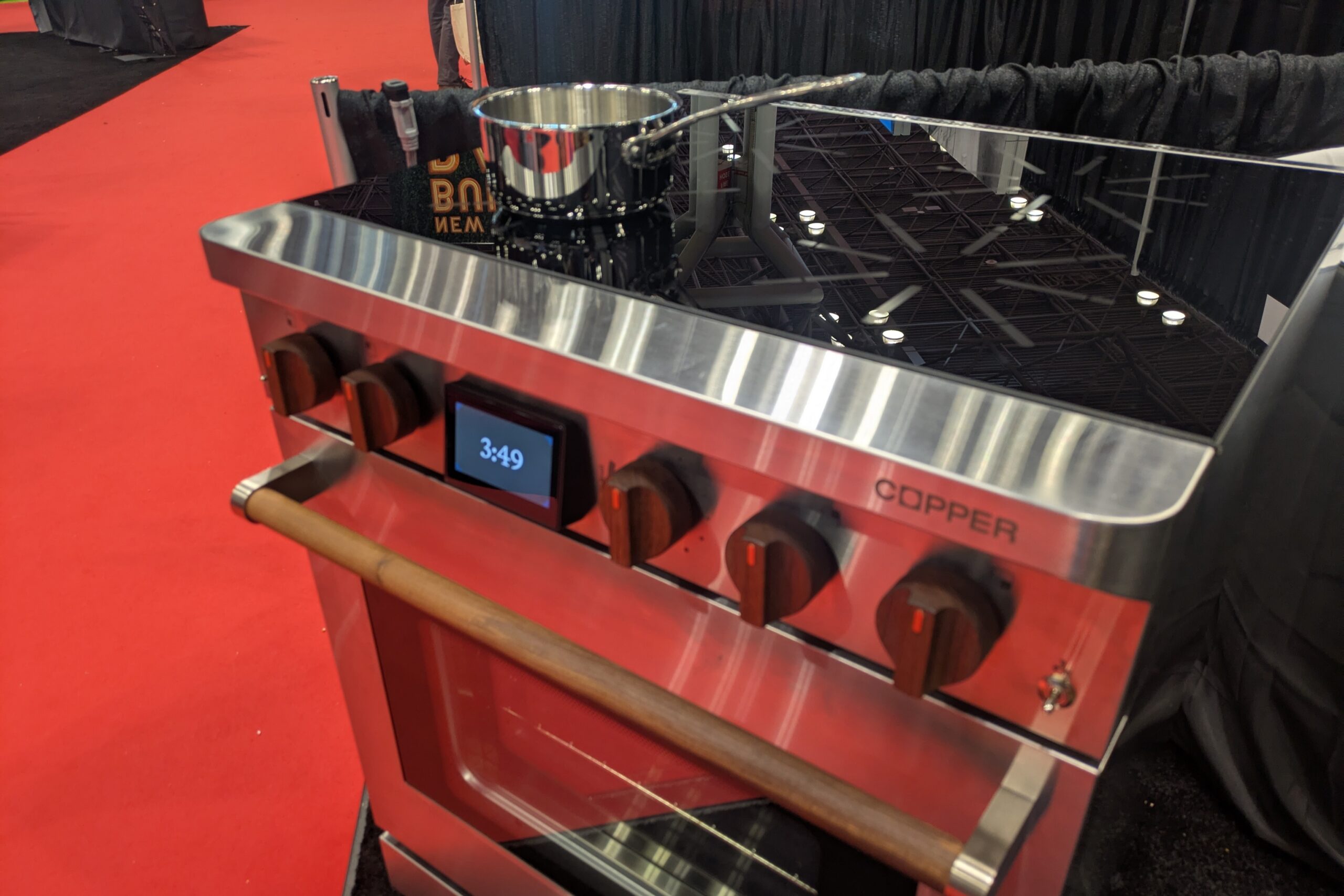
Copper’s “Charlie” range features a convection oven and induction cooktop. The case is heavy gauge stainless steel, not just cosmetic cladding. The oven has a blue enamel interior surface. Built-in vents keep the design sleek. Real wood knobs and handles are available. It feels like a premium product.
The performance of past electric ranges has made many people reluctant to switch from gas. I grew up in a house with an electric range. It seemed to take forever to preheat the oven or boil water on the cooktop. When I moved into an apartment with gas, the speed in delivering heat made me really like it. However, Copper’s induction cooktop brought water to a boil very quickly. Modern induction cooktops do that. In addition, the oven also seemed to preheat fast, cooking cinnamon rolls on the show floor. That makes the overall package very attractive for people coming from gas. However, heating up an oven quickly takes a lot of power.
Providing that power creates another challenge, especially for pre-war construction. Typically, it requires a dedicated 220V line to be run. That can be expensive, especially in markets like NYC with high labor costs, strict codes, and a lot of plaster or masonry walls. Then, the panel often needs to be upgraded, and sometimes the supply needs to be upgraded as well. That can easily add up to far more than the cost of the range. However, Copper’s range was working off just a 110V extension cord at the show (extension cords are not recommended for installed units). This gets to the most important part.
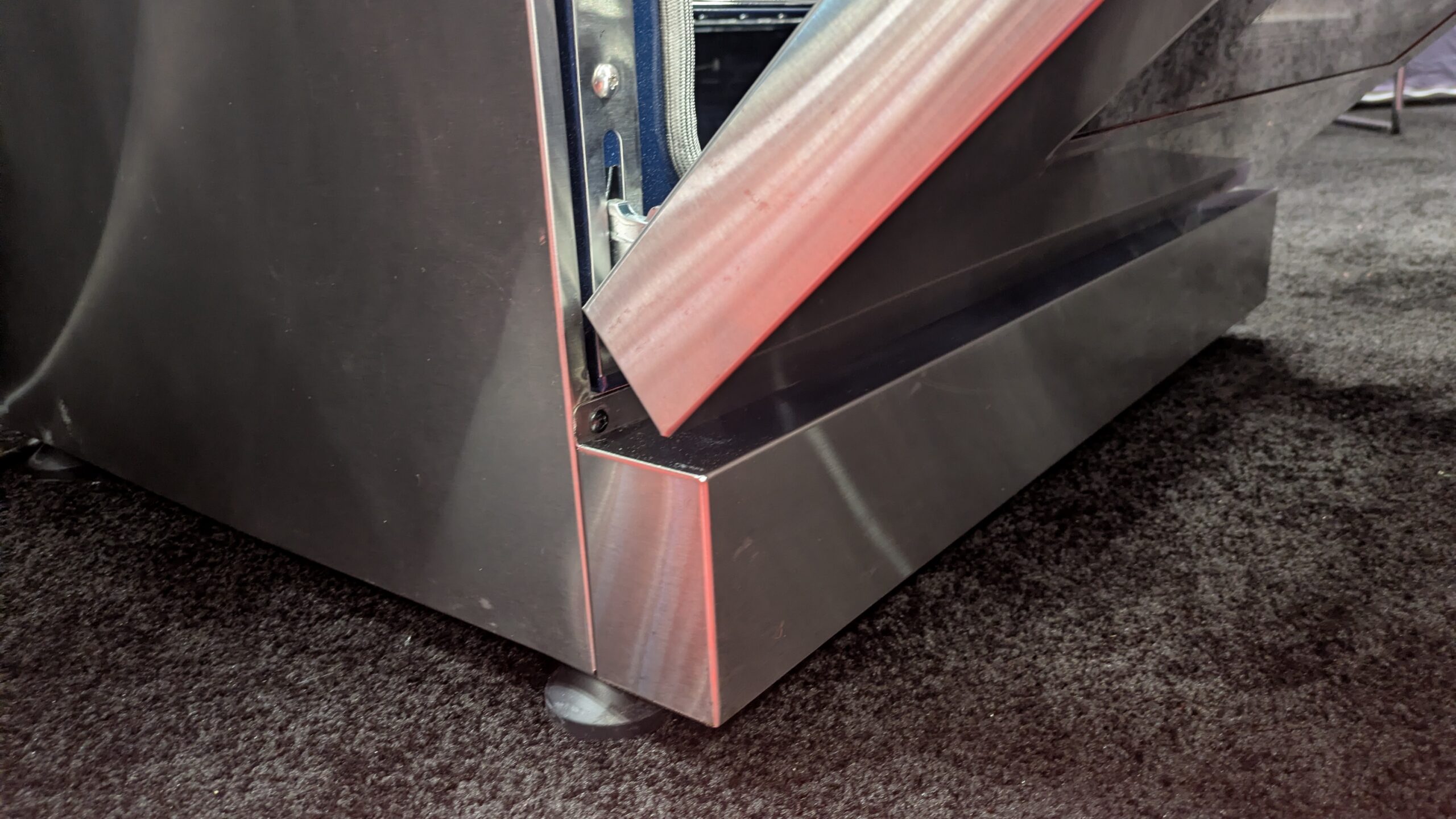
Charlie incorporates a 5 kWh LFP battery into the base of the range. This lets it charge over time and then discharge to provide the needed power. The system is programmable to take advantage of lower off-peak power or solar. Overall, this is a big battery, more than ⅓ of the capacity of a Powerwall 3. It is designed to be enough to cover extended oven use. If the battery ever depletes, half of the cooktop can still be used on 110V. A built-in circuit breaker and redundant protection systems add peace of mind.
Copper is also working on providing power from the battery for other needs. This could be used, for example, to power a refrigerator during an extended outage. If you have ever had to throw out a refrigerator full of spoiled food, you will recognize the value of that. However, it becomes a challenge to try to send electricity back into the grid from a wall plug, running into many of the same issues as plug-in balcony solar.

At $5,999, the range is not exactly cheap. However, it is not out of line with premium induction models. When you consider that it includes more than a third of the capacity of a Powerwall 3 and doesn’t require special installation, it starts looking better. Add in the health benefits of no longer having indoor combustion. Then remove the cost associated with upgrading the home electrical system. And then there are a wide range of subsidies available, reducing the cost further. That said, once the initial market is addressed, offering a lower-cost model with less premium finishes could help make the technology affordable to even more people.
Copper is also working on other battery-equipped appliances. As with the trend of the show, they mentioned a heat pump was under development, which could work with either 110V or 220V. This could open up heat pumps to a wider range of people and let them be used in more applications without needing electrical upgrades.
Batteries Make Electrification More Accessible
With LFP batteries coming down in price, we could see them proliferate within appliances. Refrigerators could clearly benefit from integrated batteries. I could also see battery-buffered Level 2 or Level 3 EV chargers in garages, like a scaled down version of BYD’s battery-buffered flash chargers.
Placing storage at the point of use also makes battery storage accessible to more people, especially in apartments. People can shift when they draw electricity from the grid to when it is the most cost effective. That could help stabilize the grid and increase renewable utilization. It may not be as effective as having a dedicated backup battery that can also feed energy into the grid, but it makes storage more available to more people.
Making the benefits of electrification and storage more accessible means greater adoption. While many products have focused on detached homes built in the past half century, that leaves a lot of people out. With the integration of a battery into appliances, more people can benefit from electrification.
Sign up for CleanTechnica’s Weekly Substack for Zach and Scott’s in-depth analyses and high level summaries, sign up for our daily newsletter, and follow us on Google News!
Have a tip for CleanTechnica? Want to advertise? Want to suggest a guest for our CleanTech Talk podcast? Contact us here.
Sign up for our daily newsletter for 15 new cleantech stories a day. Or sign up for our weekly one on top stories of the week if daily is too frequent.
CleanTechnica uses affiliate links. See our policy here.
CleanTechnica’s Comment Policy