

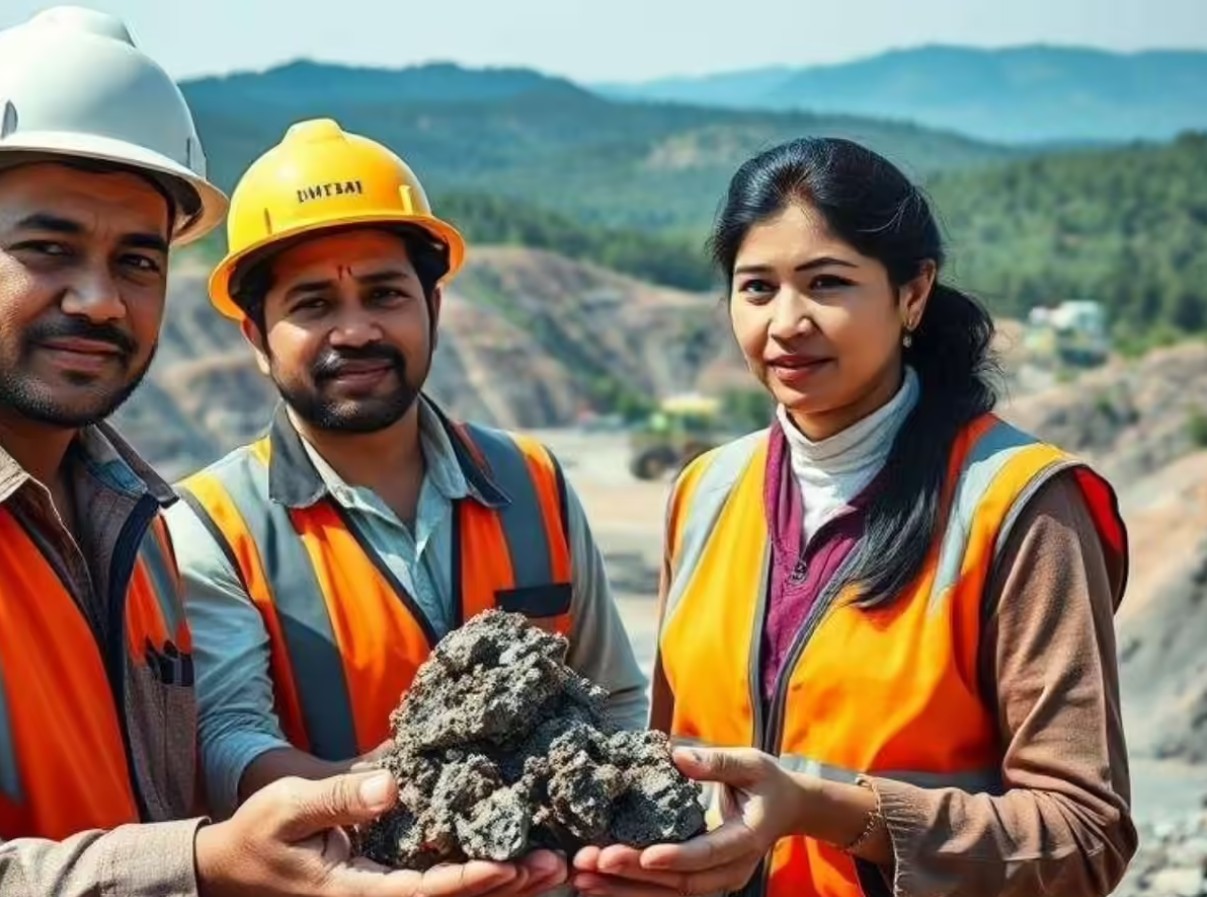
India is increasingly recognizing the strategic importance of critical minerals in achieving technological self-reliance. These minerals, including lithium, cobalt, nickel, and rare earth elements, are essential for advanced technologies such as electric vehicles, renewable energy systems, and high-tech electronics. However, global supply chains for these materials are concentrated in a few countries, leaving India vulnerable to import dependencies and supply disruptions.
To address this challenge, experts suggest that India must focus on recycling and reusing critical minerals from end-of-life products such as batteries, electronics, and industrial waste. By establishing robust recycling infrastructure, the country can reduce reliance on imports while simultaneously promoting sustainable resource management. Recycling not only conserves finite natural resources but also mitigates environmental impacts associated with mining and extraction.
Policy support, investment in research and development, and public-private partnerships are key enablers for building a domestic critical mineral recycling ecosystem. Several initiatives are underway to develop advanced recovery technologies, streamline collection systems, and incentivize businesses to participate in circular supply chains.
Industry analysts believe that scaling up critical mineral recycling could position India as a technological leader, secure raw material availability for its high-tech industries, and strengthen its long-term economic resilience. By combining strategic resource management with innovation, India has the opportunity to chart a path toward technological sovereignty while promoting environmental sustainability.