

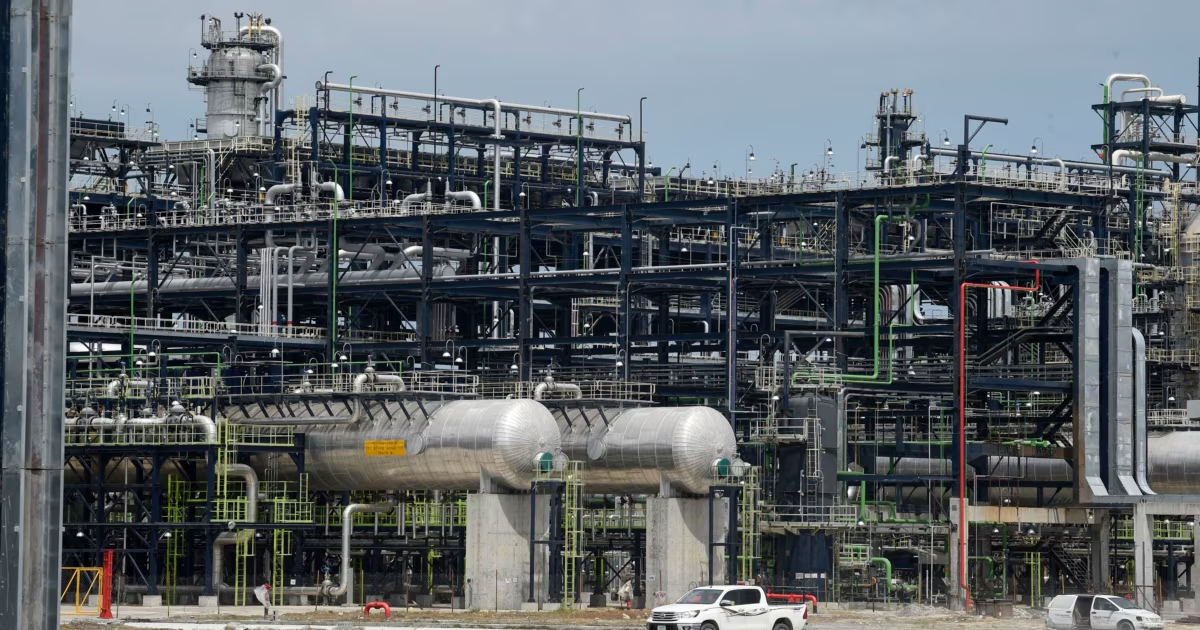
Africa’s richest man, Aliko Dangote, is on the verge of running the continent’s largest oil refinery at full power, with output reaching 610,000 barrels per day (bpd) in August 2025, just shy of its 650,000 bpd nameplate capacity, according to global energy insights. Located in Nigeria, the Dangote Petroleum & Petrochemicals Refinery has consistently exceeded industry expectations this year, emerging as a key gasoline price setter and reshaping regional fuel dynamics. This article explores the refinery’s performance, its broader implications, challenges, and opportunities for Africa’s energy landscape.
Context of the Refinery’s Performance
Output Milestone
-
Production Surge: The refinery’s output hit 610,000 bpd in August 2025, up from 440,000–450,000 bpd in June, reflecting a steady rise from above 400,000 bpd earlier this year (web:2, web:5).
-
Capacity Approach: Operating at 94% of its 650,000 bpd nameplate capacity, it nears full potential, a feat noted by Benedict George of the Argus European Products Report in the podcast Can the Dangote Refinery Declare Victory Over Doubters? (web:2).
-
Reliability: George highlighted, “The Dangote refinery has been running this year more reliably and strongly than ever before,” with crude receipts driving month-on-month growth.
Strategic Developments
-
Price Leadership: The facility has become Nigeria’s key gasoline price setter, undercutting rivals and forcing shifts in regional fuel flows across West Africa (web:5).
-
Export Milestone: In June 2025, it made its first gasoline export to Asia, shipping 90,000 metric tons, marking a global trade expansion (web:7).
-
Supply Shift: The refinery is pushing toward 100% reliance on Nigerian crude by year-end, up from 53% in June, phasing out imports from the U.S., Angola, Brazil, and others (web:2).
Financial Backing
-
Funding Boost: The African Export-Import Bank (Afreximbank) approved a $1.35 billion financing package as part of a $4 billion syndicated deal for Dangote Industries Limited, easing operating costs and strengthening the balance sheet (web:5).
Global Context
-
Industry Impact: The refinery’s success disrupts traditional European imports, redirecting cargoes to East and Southern Africa, as noted in trade analyses (web:0).
-
Economic Role: It supports Nigeria’s shift from a net importer to a potential net exporter, saving $1.4 billion in Q1 2025 fuel imports (web:6).
Implications of the Refinery’s Rise
Economic Impact
-
Revenue Growth: At 610,000 bpd, the refinery could generate $20–25 billion annually, bolstering Nigeria’s $89 trillion economy (web:5).
-
Job Creation: The expansion supports 135,000 permanent jobs, enhancing local employment (web:3).
-
Trade Balance: Export growth, including to Asia, could add $1 billion to foreign exchange reserves by 2026.
Environmental and Industry Impact
-
Energy Security: Reliance on Nigerian crude reduces import dependency, aligning with national energy goals (web:2).
-
Market Disruption: Displaced European cargoes shift 250,000 tonnes of gasoline flows, reshaping West African trade (web:0).
-
Refining Innovation: High operational reliability sets a benchmark for African refineries.
Social and Regional Impact
-
Price Stability: Competitive pricing benefits 200 million Nigerians, stabilizing fuel costs amid inflation (web:6).
-
Regional Influence: Supply to neighboring countries strengthens Nigeria’s economic dominance in West Africa.
Challenges
Operational Hurdles
-
Capacity Gap: Reaching the full 650,000 bpd requires overcoming bottlenecks, potentially delaying full output by 3–6 months (web:20).
-
Maintenance Risks: A single crude distillation unit’s downtime could disrupt 610,000 bpd, impacting markets (web:0).
Environmental Concerns
-
Emission Footprint: Increased production may raise CO2 emissions by 1–2 million tonnes annually, necessitating mitigation (web:6).
-
Water Usage: Refining 610,000 bpd demands significant water, straining local resources (web:3).
Market and Geopolitical Risks
-
Price Competition: Undercutting rivals could trigger trade disputes with Europe and the U.S. (web:10).
-
Supply Chain Volatility: Phasing out imports risks supply gaps if Nigerian crude falls below 100% by December 2025 (web:2).
Opportunities
Economic Advancement
-
Export Expansion: Further Asian exports could reach 200,000 metric tons monthly, adding $500 million annually (web:16).
-
Investment Magnet: The $1.35 billion financing could attract $2–3 billion more in energy investments (web:19).
Sustainability and Innovation
-
Green Refining: Adopting carbon capture could cut emissions by 20%, aligning with net-zero goals (web:14).
-
Local Sourcing: 100% Nigerian crude use by 2025 could save $2 billion in foreign exchange (web:5).
Global and Regional Leadership
-
Energy Hub Status: At 610,000 bpd, Nigeria could rival Saudi Arabia’s refining capacity, targeting 10% of Africa’s oil market by 2030 (web:4).
-
Trade Influence: Disrupting European flows positions Dangote as a global price influencer.