

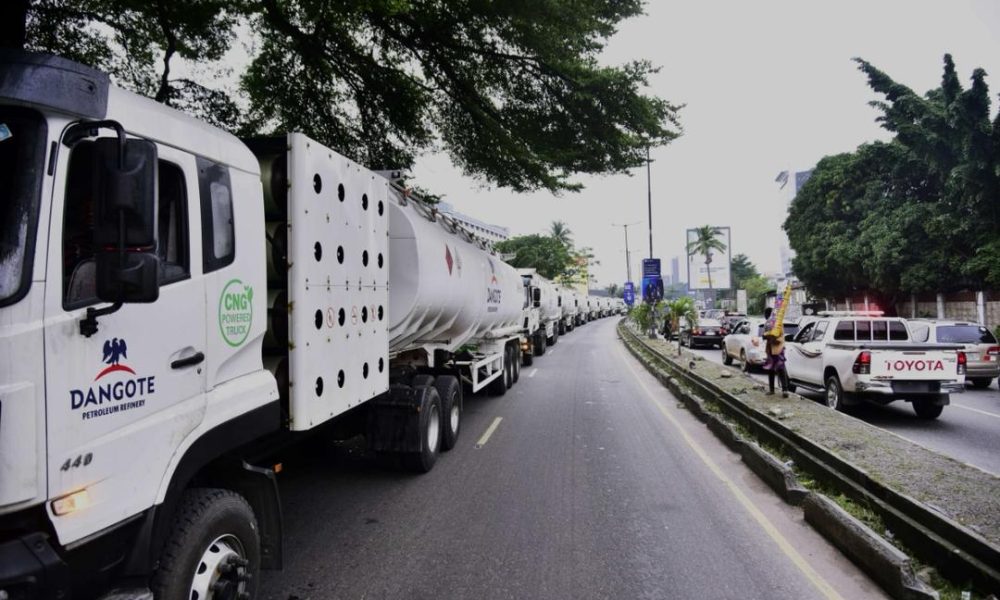
Dangote Petroleum & Petrochemicals is on the cusp of a major transformation in Nigeria’s fuel distribution landscape with the launch of its new Compressed Natural Gas (CNG)-powered truck fleet. The company has begun receiving 4,000 of these trucks as part of a substantial 720 billion naira ($469.89 million) investment. Scheduled to commence operations on August 15, this program is designed to dramatically cut logistics costs and improve supply efficiency for a wide array of customers, from fuel stations to major industrial consumers. This strategic initiative not only positions Dangote as a powerful force in the energy sector but also aligns with Nigeria’s broader economic shifts.
+
The Strategic Shift to Gas
The timing of this investment is no coincidence. Nigeria is currently in the midst of a significant national transition toward gas as a more sustainable and cost-effective alternative to petrol. This shift was largely catalyzed by the government’s removal of the petrol subsidy, which led to a sharp increase in pump prices and created a strong economic incentive for businesses and consumers to explore alternative fuels. Dangote’s new fleet of CNG-powered trucks directly leverages this new economic reality, positioning the company at the forefront of a growing market. However, the nationwide adoption of gas-powered transport has been slow, which makes Dangote’s move a bold step that could help accelerate the transition.
Disrupting the Traditional Fuel Network
This new logistics program is more than just a fleet upgrade; it’s a direct challenge to the established fuel distribution networks in Nigeria. The 650,000 barrels-per-day refinery, which is Africa’s largest, plans to bypass the traditional network of fuel traders and middlemen. Instead, it will directly supply fuel to a wide range of consumers, including retail stations, manufacturers, telecom operators, and other large-scale industrial clients. This “direct-to-consumer” strategy could fundamentally disrupt the existing market structure, leading to reduced costs and more streamlined supply chains for the end-user.
Economic and Operational Benefits
The investment in the CNG fleet is poised to yield significant economic and operational benefits. By using CNG, Dangote will reduce its own logistics costs, as gas is a more affordable fuel source than petrol. These savings can then be passed on to customers, making Dangote’s fuel products more competitive. The 4,000-truck fleet will also enhance the efficiency and reliability of the supply chain, ensuring that fuel reaches customers more promptly and consistently. This level of control over the entire supply chain, from production at the refinery to delivery at the point of use, gives Dangote a strategic advantage in the market.
The Broader National Context
The Dangote refinery’s move is a powerful example of how a private sector giant can drive national strategic goals. Nigeria’s government has been actively promoting gas utilization to harness its vast natural gas reserves. This push is not only aimed at reducing the nation’s dependence on petrol but also at creating a more environmentally friendly and economically stable energy sector. Dangote’s investment in gas-powered logistics aligns perfectly with this national agenda and has the potential to set a new standard for fuel distribution across the country.