

Support CleanTechnica’s work through a Substack subscription or on Stripe.
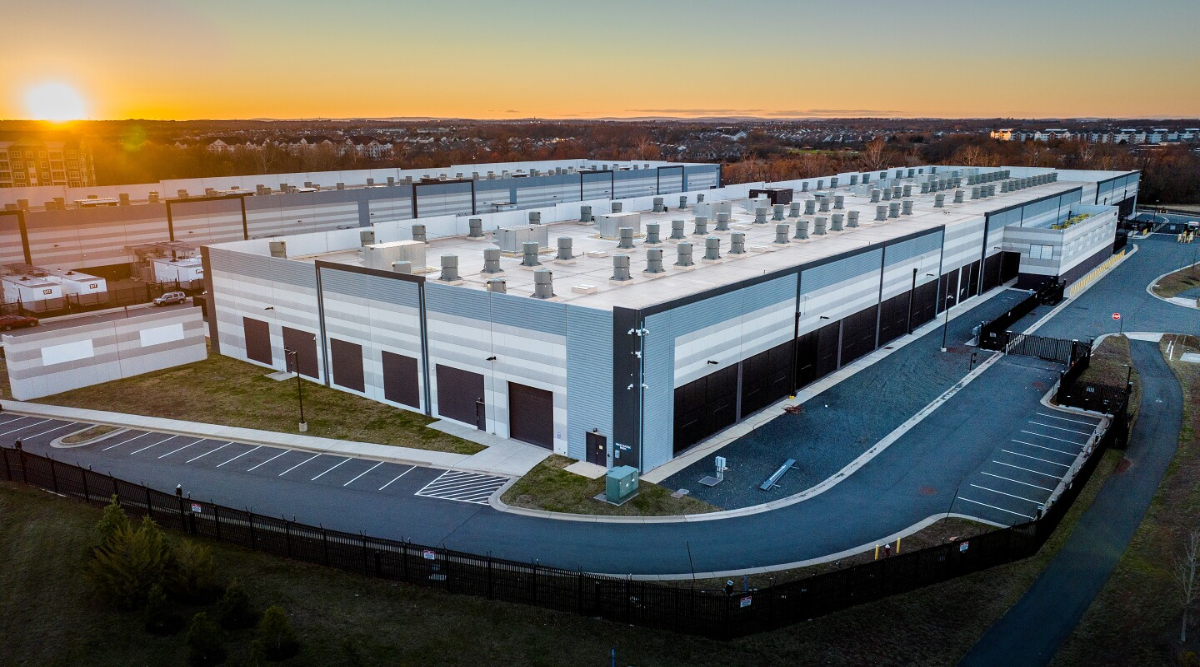
The state of Virginia prides itself on being the “data center capitol of America,” if not the world. It currently has more than 600 of them, with the majority crowded into the northernmost part of the stare that borders Washington, DC. Those data centers are voracious consumers of electricity, which is good if you are in the business of generating electrical power. It’s not so good if you are a homeowner struggling to pay your utility bill each month.
To meet the demand for electricity, Dominion Energy is planning to build a 944-megawatt methane-fired thermal generating station on the site of a former coal-powered facility in Chesterfield, Virginia. The new plant will be twice the size of the former generating station, which first went into service in 1944. At 944 megawatts, the new facility will be relatively large but not nearly as big as the top ten generating stations in the US, all of which are between 3,000 and 4,000 megawatts.
Push Back From Environmental Groups
Environmental groups are aghast at the prospect of such a large facility adding untold amounts of crud to the atmosphere. They have sued to stop the project from going forward, arguing in court filings that the project violates state laws passed in 2020 that mandate more renewable energy and prohibit burdening communities of color with air more pollution.
Some might say that a methane-powered generating station is cleaner than a coal-fired facility, and there is some truth to that. But burning methane — or anything for that matter — produces carbon dioxide and fine particulate matter, not to mention various oxides of nitrogen, which carries its own pollution risks. If you are so sure that methane combustion is such a wonderful thing, we invite you to build your home downwind of one of these facilities and breathe deeply of the airborne effluent for a decade or two.
Rachel James, a staff attorney with SELC, told Oil And Gas Watch this week, “Virginia law does not provide for the Virginia Department of Environmental Quality to abandon requirements of state law in the face of energy demand increases. In the past three years, residents have gotten to experience the cessation of coal plant pollution. Communities near the plant and beyond do not want more air pollution when there are cleaner alternatives to providing electricity to Dominion’s customers.
“The state’s Environmental Justice Act is meant to be followed and directs agencies and regulators on how to properly assess requests such as this one from Dominion,” James said. “It’s not just a box to be checked, but in this case, even that wasn’t attempted.”
The groups are also appealing the Commonwealth’s approval on the basis that the plant would violate the 2020 Virginia Clean Economy Act, whose purpose is to decarbonize Virginia’s electricity grid and retire nearly all gas and coal plants by 2045 — unless there’s a threat to power supply reliability. That last part opens the door to a whole set of negative consequences that undercut the intent of the legislation.
Renewables Are Not “Dispatchable”
In testimony before the Virginia State Corporation Commission last year, Dominion Energy argued that their computer modeling showed there is a risk to the reliability of the state’s electric grid unless additional dependable generation is built. Wind or solar units are not considered “dispatchable” as defined by the Virginia Clean Economy Act because they cannot always be activated since — wait for it — the sun doesn’t always shine and the wind doesn’t always blow!
Are we still riding the “dispatchable” hobby horse? Apparently so. Last year, Texas passed new legislation mandating that every renewable energy installation must have backup thermal generating capability because of how unreliable renewables are — these being the same renewables that are powering air conditioning systems in Texas in the summer and heating Texas homes in the winter when demand for electricity spikes. The dispatchability quibble is an ideological hoax designed to assuage the fears of fossil fuel companies that they may one day become irrelevant.
But of course, data centers are unique because their demand for electrons is constant, 25 hours a day, 8 days a week. We need them to provide nearly nude images of every woman on earth and to power autonomous weapons of war.
China Gives The Lie To Dispatchability Fears
To offset these complaints about dispatchability, we offer up the example of China, which is making great progress toward its goal of becoming an electro-state instead of a petro-state — a transition that has helped it weather the current hostilities in the Strait of Hormuz with little difficulty. In Florida, Duke Energy — a perennial rival of Dominion Energy — is crediting renewables with saving its ratepayers more than $1 billion.
SELC argues that Virginia needs more industrial-scale batteries added to the electricity grid during this time of uncertain growth in electricity demand. It clams batteries leverage existing resources better and will give Virginia time to better understand data center needs and take full advantage of alternative energy technologies.
Bear in mind, the prior coal plant was in operation for more than eight decades. Methane-powered generating stations are expected to operate for at least 30 years if not more. The fact that a generating station exists does not mean it is cranking out electrons all day every day. In fact, their “capacity factor” — the amount of time they actual produce electricity — is less than 67 percent on average. That means is it is necessary to build even more thermal generating stations to provide electricity when the primary facilities are offline, which kind of blows a hole in the “dispatchability” argument, doesn’t it?
New Legislation In Virginia
On March 2, 2026, the Virginia legislature unanimously passed a bill that would require Dominion and Appalachian Power to regularly assess how efficiently the electric grid is being used and to avoid expensive and under-used infrastructure upgrades. When signed by Governor Spanberger, Virginia will become the first state with a law attempting to quantify and reduce waste on the electric grid. The bill calls for the State Corporation Commission to work with the state’s two major utilities, and to give special attention to energy storage resources, such as batteries, among other technological options.
Virginia has become America’s hotspot for the construction of data centers because of its unmatched fiber connectivity, affordable electricity, proximity to demand, and business friendly environment, according to the state’s economic development agency. A recent report from the Electric Power Research Institute found that data centers could consume 41 percent to 59 percent of Virginia’s electricity by 2030, up from 25 percent today.
Evaluating Alternatives
In testimony to the Virginia State Corporation Commission, Sierra Club witness Devi Glick, from Synapse Energy Economics, accused Dominion of failing to evaluate alternatives beyond just building the gas plant or not. In her own modeling, she found that an energy portfolio without the Chesterfield gas plant could have similar, if not better, reliability compared to a system with the plant.
“I found that Dominion’s economic analysis was insufficient to support its application because the company did not look at a single optimized portfolio of solar, battery storage, and increased energy efficiency to replace [the Chesterfield generating station]. In my economic analysis, I modeled two alternative portfolios that are compliant with the company’s energy efficiency requirements and replace some or all of CERC with incremental quantities of solar and battery storage. I found only marginal cost differences relative to the portfolio with CERC.”
Steve Haner, a senior fellow for Environment and Energy Policy, said the common complaint by those in opposition “is that Dominion started with the assumption that it wanted to build a gas-fired plant and worked to reach that conclusion.”
Lucas Henneman, an assistant professor of civil, environmental, and infrastructure engineering at George Mason University, wrote that utilities like Dominion face a crossroads. “Should they boldly commit to a cleaner future or fall back on proven but more polluting technology that disproportionately affects some communities more than others?” Its proposal to build a methane-powered facility in Chesterfield will bind Dominion to “a piece of infrastructure that may pollute the air of Chesterfield for many decades and will continue driving a warming climate through CO2 emissions.”
“There is an opportunity for Dominion to be more forward-looking and give greater consideration to renewable alternatives that do not emit air pollution or CO2—our health, equity, and climate deserve more,” he said.
A Lack Of Transparency

Montana is another state seeing a surge in data center construction. There, the question is whether local utilities are cutting sweetheart deals with potential large customers like data centers that will raise the cost of electricity for other consumers. The rationale is strong. If you propose to buy a million widgets, you naturally expect to get a better price per widget than someone buying just one.
But when interested parties ask for information, they get reports as heavily redacted as the Epstein files. [See above.] According to Yale Climate Connections, “Secret agreements make it nearly impossible for residents and elected officials to understand the impacts of data center development in their communities — or whether their electricity bills will soon be subsidizing Big Tech.”
Ari Peskoe is the director of the Electricity Law Initiative at the Harvard Law School Environmental and Energy Law Program and an author of “Extracting Profits from the Public: How Utility Ratepayers Are Paying for Big Tech’s Power.” The report lays out tactics that data centers are using to offload their costs onto households, such as making secret deals with utilities. “These are monopolies,” Peskoe said. “They ought to be held to a standard about transparency. That requires they provide meaningful information about major deals that they’re a part of.”
The Montana Public Service Commission decided that “proprietary Letters of Intent information derives independent economic value or competitive advantage from its secrecy,” a conclusion that Peskoe finds delusional. “They’re claiming that this is a private business deal, but it’s kind of not when you’re a regulated monopoly. They ought to have a higher standard for the information they disclose to the public than other private companies. ‘Trust us’ doesn’t really cut it when you’re a monopoly provider,” he said.
There seems an obvious way out of this box — recognize that data centers are a new and unique entity with demands for power unlike any other. Let them build their own generating stations, put a premium on renewables, and allow them to sink or swim on their own. Ireland has adopted precisely this approach.
If a data center developer is not willing to assume the burden of powering it, perhaps that calls into question the need for it in the first place. No matter what, private individuals should not be on the hook for the power needs of these insatiable consumers of electricity. The fact that the industry wants to take the burden of powering them off their shoulders and put it on the community is all the proof we need that the general public is getting hosed in these deals.
Sign up for CleanTechnica’s Weekly Substack for Zach and Scott’s in-depth analyses and high level summaries, sign up for our daily newsletter, and follow us on Google News!
Have a tip for CleanTechnica? Want to advertise? Want to suggest a guest for our CleanTech Talk podcast? Contact us here.
Sign up for our daily newsletter for 15 new cleantech stories a day. Or sign up for our weekly one on top stories of the week if daily is too frequent.
CleanTechnica uses affiliate links. See our policy here.
CleanTechnica’s Comment Policy