


Support CleanTechnica’s work through a Substack subscription or on Stripe.
I did a series of three articles on this topic three years ago. What’s changed in the meantime?
“Electric Everything” depends on modern battery technology. 100 years ago, electric vehicles used lead-acid batteries. It’s the same technology that gas cars still use today to power their starter motors. Those early electrics only had a range of about 30 miles and a top speed of about 30 mph. The first improvement in battery technology that effected my life was the rechargeable nickel-cadmium batteries for my electronic flash for my camera in the 1970s. The next improvement in battery technology was lithium-ion cells that made practical compact cell-phones and laptop computers possible in the 1990s. Tesla put thousands of cellphone batteries to work in its first car, the Roadster, in 2011. The batteries they are using now are a little bigger, but it still takes thousands of batteries to power Tesla’s cars. Those of us owning electric cars are convinced that EVs are superior technology, and countries like Norway, Sweden, and China are well underway replacing their gas fleets with electric vehicles. Further improvements in performance and reduction in battery price has made electric vehicles and the whole range of battery electric applications that we enjoy today possible.
Electric Everything in my family (almost)
Three years ago, there were three electric cars in the family, my 2019 Tesla Model 3, my daughter’s 2018 Tesla Model X, and my brother’s 2017 Tesla Model S. In the meantime, my brother has upgraded to a 2024 Tesla Model Y. However, the big news is that my son has purchased a gorgeous blue, used 2018 Tesla Model 3 Performance for a little more than $10,000. (That included the $4,000 Biden subsidy that was still in force at the time). It’s hard to believe that you can buy such an amazing car for such a low price. My 9-year-old rooftop solar is still working great, so neither of us has to pay for gas, and since he charges mainly at our house, both of us are driving mostly on sunshine.
We are no longer mowing our lawn with a gas mower. Two years ago, we purchased an Ego electric mower. It did have to be replaced after one year with a new one for no charge at ACE Hardware on the warranty. My grandson loves to mow the lawn with the electric mower. We do have to break the lawn mowing jobs up into two different days to recharge, but we never have to buy, pour, or spill gas.
We also recently broke down and bought our first leafblower — surprise, it was an electric model.

Of course, all my electric power tools now run on batteries, so finding an outlet and running an extension cord is no longer needed.
I’ve seen battery-powered tire inflaters the size of cellphones advertised on the internet lately. I’ve questioned if they could really do the job. A call to my local car parts store further fueled my doubt. However, on a recent trip to Costco, I saw a battery-powered tire inflator for sale for $39.00. It was considerably bigger than a cellphone, which would mean a much larger battery, so I decided to give one a try. See the tire inflator in action in the photo below.
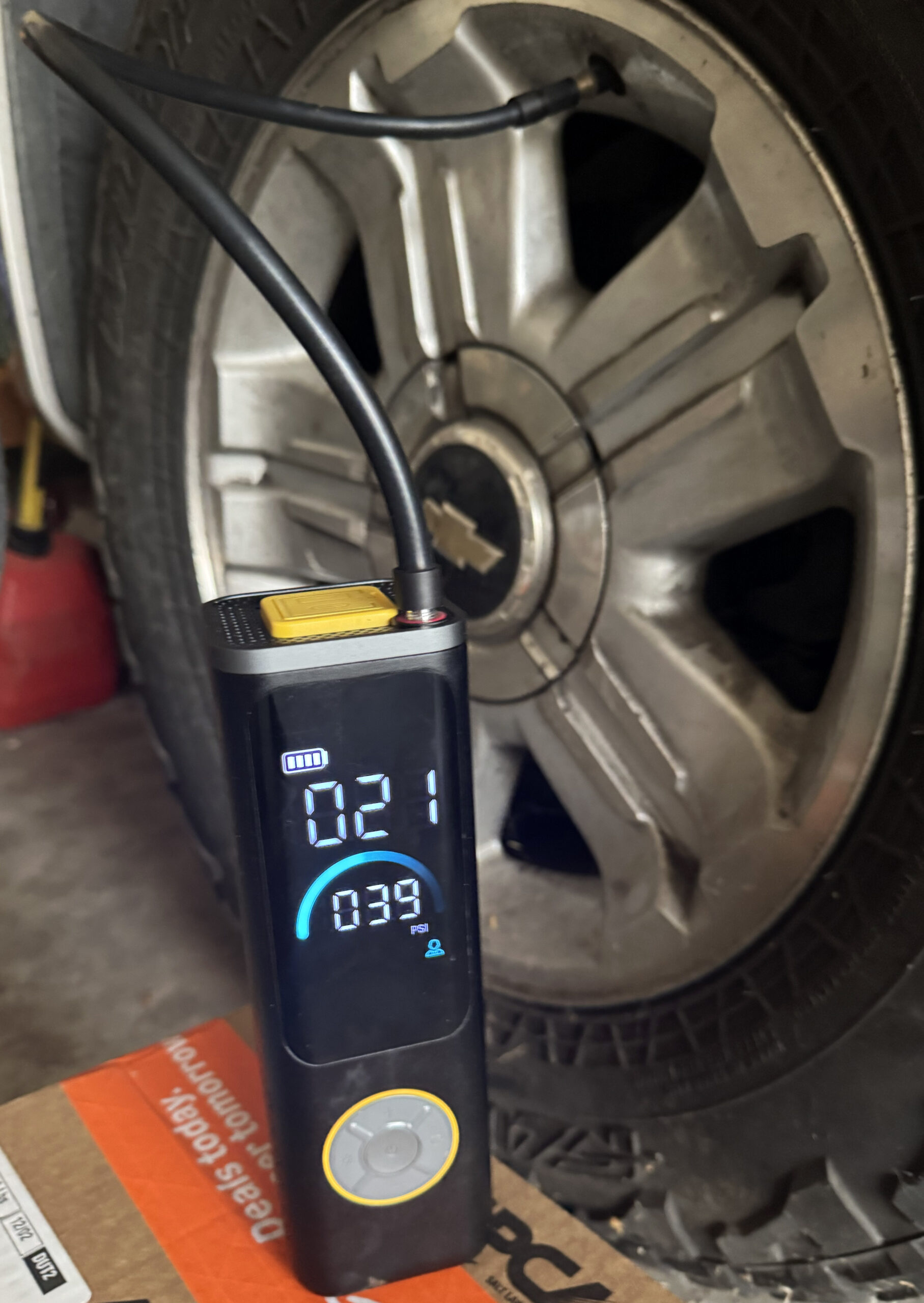
I tried it out on a big trailer tire and a big truck tire. While it took 5–10 minutes and used over half the battery, it did the job. Since my Tesla Model 3 has no spare tire, this tire inflator has made its way into my frunk.
My wife has been in the market for a battery-powered hand vacuum for some time. However, the one she purchased from Amazon didn’t do the job. For Christmas, our daughter gave us the powerful battery-powered hand vacuum that you see in the photo below.
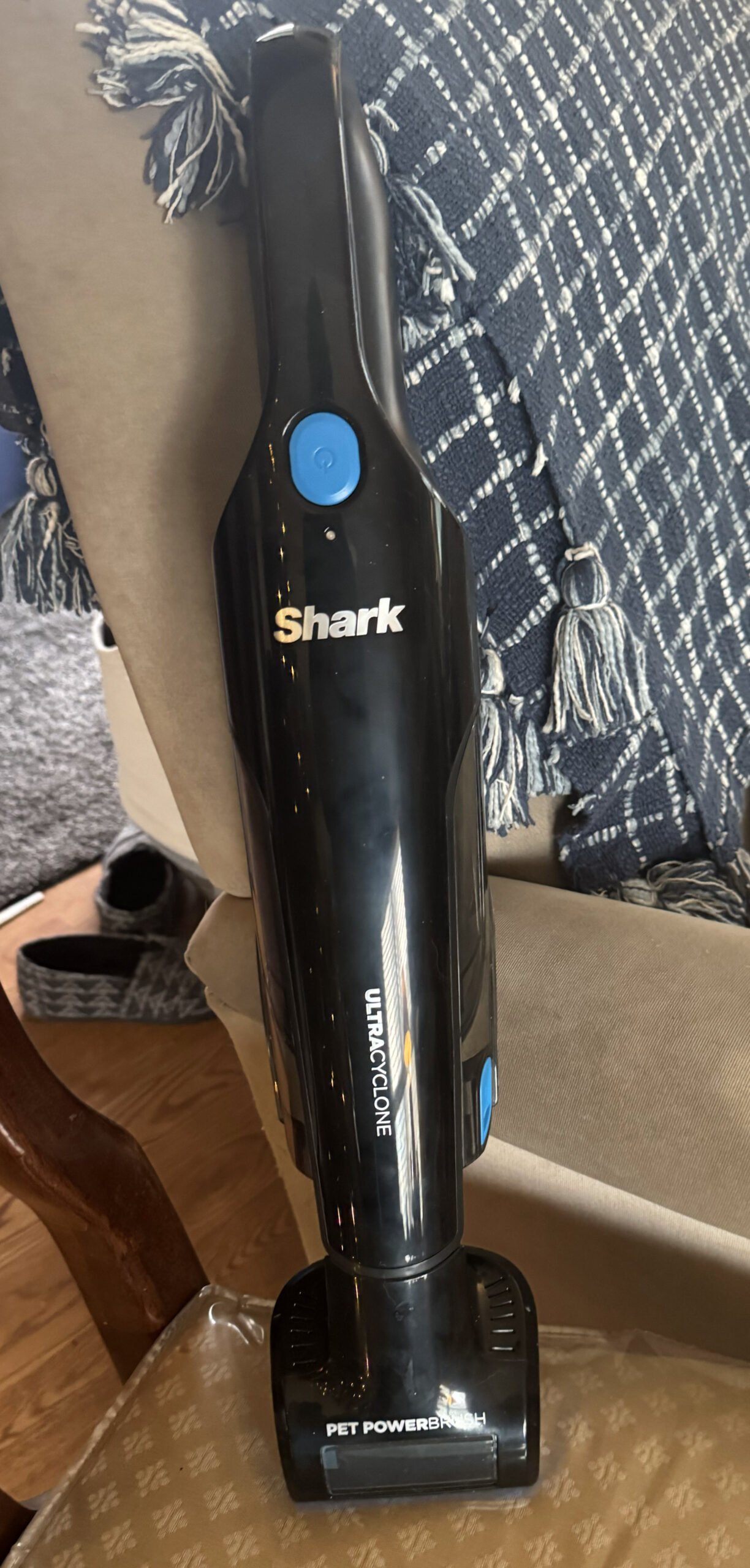
I also bought a small electric drone that my grandson unboxed and operates for me. It makes great video for my movies from overhead. (Imagine a gas-powered device like this.) Less important were purchases of numerous electric RC cars and boats.

For Christmas, my grandson got a tiny new RC drone that weighs only a few ounces.

What’s left to do in my household? Electric heat pump space and water heating would be great. I recently replaced my gas water heater. I should have switched to a heat pump water heater but did not do so because of the increased cost and the necessity to route 220V service to my utility room. My gas furnace is almost 30 years old and will need to be replaced fairly soon. That would be an opportunity to switch to heat pump house heating. However, as an 85-year-old retired person on a very limited budget, I hope my gas furnace lasts longer than I do.
EV advances
Three years ago, EVs were mostly limited to sedans. Now it is possible to buy electric pickup trucks and SUVs that look like traditional pickup trucks and SUVs.
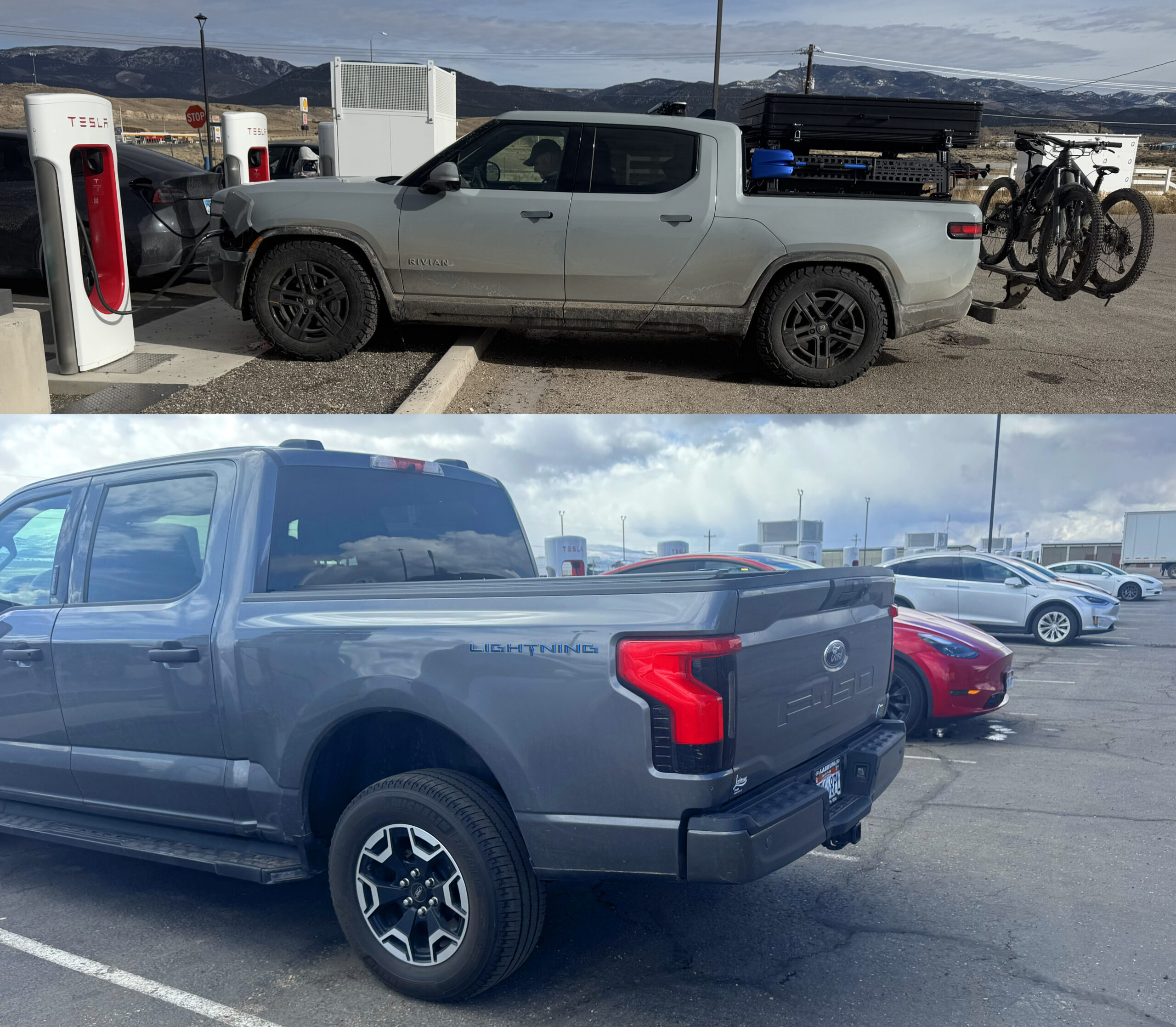
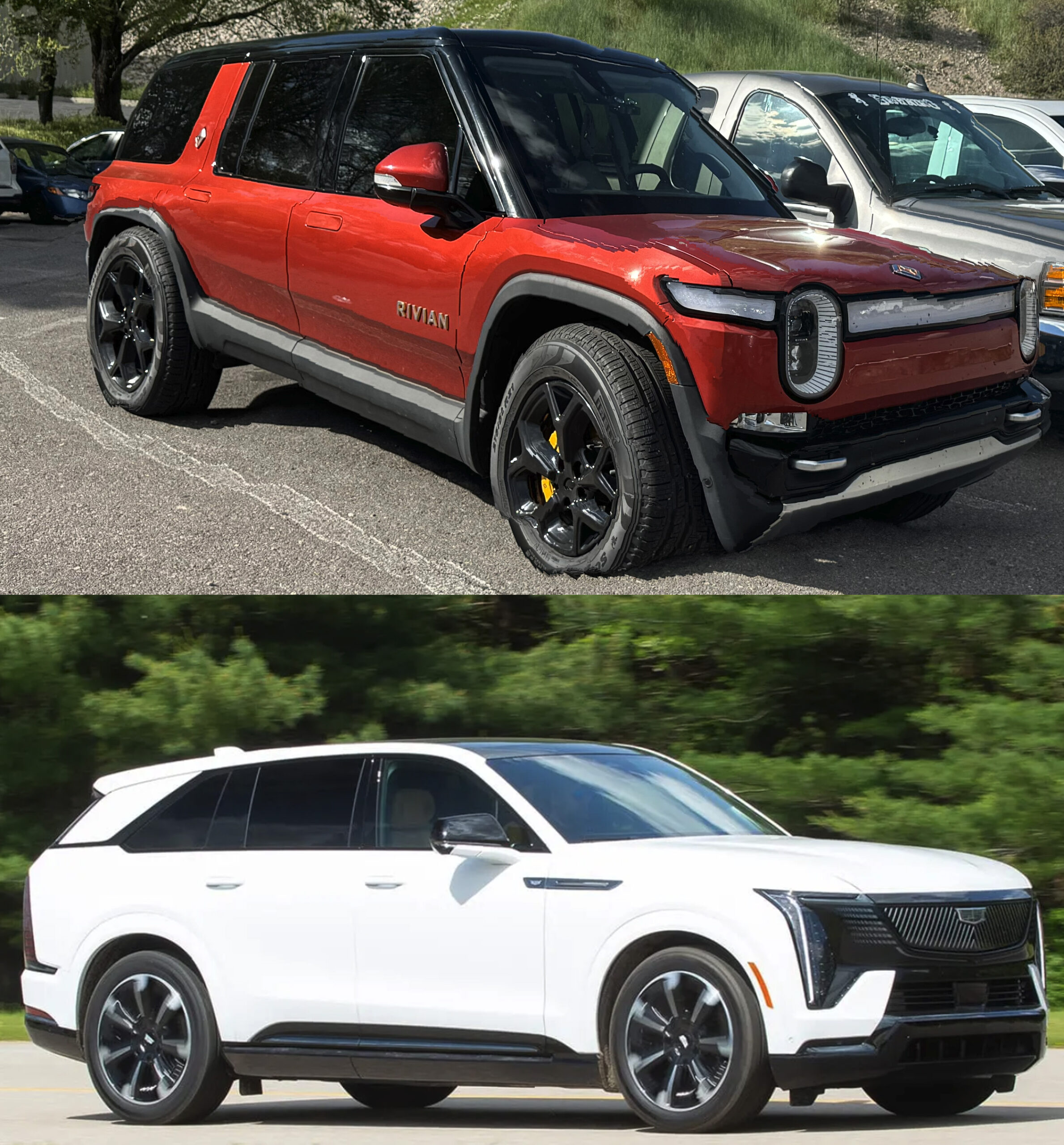
The Rivian SUV has been available for some time, but the EV version of the Cadillac Escalade is also now available (see above). So, you can now buy an electric SUV that’s as big as any gas SUV that is available. There are probably 50 different EV models available in the US at this time. Also, virtually all non-Tesla EVs can now use Tesla’s so called NACS ubiquitous (Supercharger) charging system with an adapter. Most will have NACS native charging ports in the near future.
- Electric delivery and class-8 semi trucks: In the last 3 years, northern Utah is swarming with Prime electric delivery vans. I don’t see electric FedEx or UPS delivery vans, but perhaps they will be coming soon. The first electric Class-8 (long range) semi-truck was announced by Tesla eight years ago. In the meantime, Mercedes, Volvo, and other manufactures have announced electric semi-trucks. However, Tesla’s promises to start mass production always seems to be for “next year,” and I have yet to see one on the road.
- Electric boats: You can now order an electric Mercury outboard motor with power equivalent to that of up to a 10 hp 4-stroke gas engine. However, Mercury outboards are more expensive than the gas equivalents, and the run time with the standard battery is less than a gas motor. You can now order a Correct Craft GS22E electric Super Air Nautique ski boat. It has all the advantages of electric propulsion, but is limited to a run time of 2 to 3 hours.
- Electric ships: There are numerous electric ferries and short-range electric ships in operation around the world at this time. Electric hydrofoil boats are also becoming popular. Long-range electric container ships are also under discussion. Charged container battery modules would be loaded onto the ship and replaced with freshly charged containers to reduce the turnaround time. Installation of high-tech sails on most ocean-going ships is also under discussion. This would significantly decrease the number of batteries needed for electric ships.
Referral Program: If you find any of my articles helpful to you and you are buying a new Tesla, please use my referral link: https://ts.la/arthur73734 (be sure to use it when you make your order). If you are buying a new Tesla and use my link, you’ll currently receive $1,000 off the purchase price of a Model S or X or Cybertruck, or 3 months of complimentary FSD with a Model 3 or Y.
Sign up for CleanTechnica’s Weekly Substack for Zach and Scott’s in-depth analyses and high level summaries, sign up for our daily newsletter, and follow us on Google News!
Have a tip for CleanTechnica? Want to advertise? Want to suggest a guest for our CleanTech Talk podcast? Contact us here.
Sign up for our daily newsletter for 15 new cleantech stories a day. Or sign up for our weekly one on top stories of the week if daily is too frequent.
CleanTechnica uses affiliate links. See our policy here.
CleanTechnica’s Comment Policy