

Support CleanTechnica’s work through a Substack subscription or on Stripe.
TIME magazine this week published an article by Alexis Abramson, the dean of the Columbia Climate School, who said the failed assault on Iran has altered the way people think about solar energy. “Across the U.S. and globally, interest in clean energy is accelerating faster than at any point in history, and not necessarily because of anything the clean energy movement achieved on its own. Understanding why is critical,” she said.
The move toward clean energy began with the first Earth Day in 1970, during which 20 million turned out to support curbing human caused pollution because it was simply the right thing to do. “The environmental conviction was real, and it moved a committed minority. By 2010, after four decades of moral-based advocacy, solar still represented less than 0.1% of U.S. electricity generation,” Abramson noted.
The Third Wave
Then came the economic revolution, which focused on making solar affordable enough that it could compete head to head with fossil fuels. The solar investment tax credit — supported by both political parties — debuted in 2006. Over the next 15 years, solar grew by more than 10,000%. Then the Inflation Reduction Act turbocharged the solar industry to the point that in 2024, solar accounted for more than 80 percent of new grid-scale generating capacity. Abramson wrote:
“Now we are entering a third era, one defined not by values or economics, but by a drive for control. Psychologists have long documented that when people feel external forces are governing their lives, they seek out whatever domains they can control. Energy has now become one of those domains. Gas prices set by an unpredictable war. Blackouts from an aging grid. Energy bills that keep climbing.
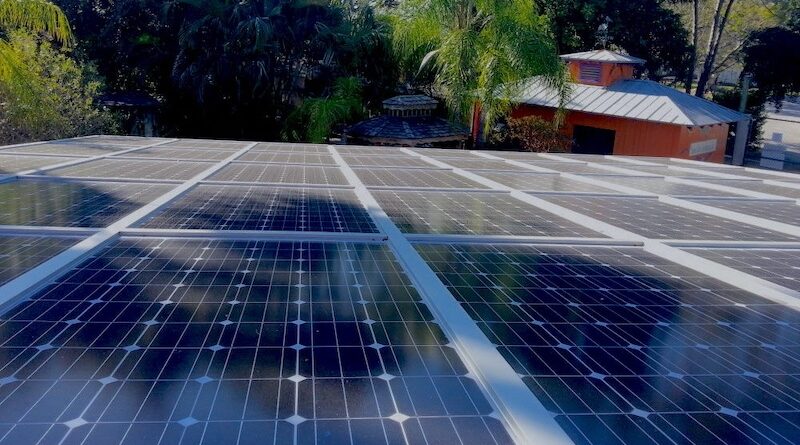
“Rooftop solar, a home battery, an electric vehicle offer something the grid, the gas station, and the utility bill cannot — certainty. They are no longer just products. They are acts of self-determination. These solutions meet people where they already are — anxious, exhausted, and done feeling exposed — and offer them what they have been missing — stability.
“The data confirms the shift is already underway. Even before the war began, nearly 78 percent of US homeowners expressed concern about power grid reliability. Sixty-four percent say recurring blackouts would make them more likely to go solar within five years. Since the war began, nearly half say they are extremely or very concerned about affording fuel in the coming months.
“The conversation has shifted from ‘How much will I save?’ to ‘How do I protect my family from the next crisis?’ — whether that crisis arrives as a blackout, a gas price spike, or an economic shock. Americans want control. A growing number want to generate their own power, store it, and insulate themselves from volatile energy prices and an unreliable grid. And solar delivers exactly that.”
“The long-term economics still hold,” Abramson wrote. “Once panels are up, the energy is free. Every dollar invested in clean energy infrastructure today is a hedge against tomorrow’s uncertainty. For 50 years, the clean energy movement tried to change how Americans think about power. In the end, it may be global turbulence that ultimately moves what decades of advocacy could not. While the motivation may seem misaligned with the original mission, the outcome is what matters.”
The Circular Firing Squad
How odd that an administration in thrall to fossil fuel interests has lit the fuse on demand destruction for those fuels. A weak, powerless bully and his failed secretary of war — Pomade Pete — have engineered a stunning loss for the US.
Shortly after the war on Iran began, David Wallace-Wells, who has written extensively on climate change and the politics of energy, wrote an opinion piece for the New York Times in which he said the conflict is a harbinger of something bigger — a recognition by all concerned that fossil fuels are the past, while renewables are the future.
He described what is happening in Iran as “a new age of resource conflict arising just as the old energy order was being upended but before the new one has really taken hold.” He called it a “mid-transition war, one that spans the old paradigm of fossil energy and the new paradigm of renewable energy.”
There aren’t any wars being started over solar panels, wind turbines, electric motors, or batteries, he noted, and then asked this rather pointed question: “Why continue to rely so heavily on imports from erratic authoritarians overseas when you can instead harvest the bountiful sun, wind, hydropower and geothermal found nearly everywhere on earth?”
The High Cost Of Cheap Fuels
Writing for The Climate Brink, Andrew Dessler, a professor of atmospheric sciences at Texas A&M, said: “When people debate the cost of fossil fuels versus renewables, the conversation almost always centers on the price at the pump or the cost per kilowatt-hour of your electricity bill. That’s understandable — those are the costs you can see — but they’re not the whole story.”
He said the discussion usually focuses on subsidies for renewable energy, but fossil fuels get enormous subsidies as well. They are deeply hidden, however, as they are spread across government budgets, healthcare systems, and military spending in ways most people can’t connect back to their energy choices. To the extent that they do get attention, most of it goes to the implicit subsidy for fossil fuels from climate change and air pollution, which economists have valued at trillions of dollars per year.
“There’s another hidden subsidy that few talk about — national security. [The DOJ was just played the national security card this week. It was part of an attempt to convince a judge to dismiss a lawsuit filed by the NAACP on behalf of residents in Mississippi who are being inundated by pollution from the portable methane generators being used by xAI to power its massive data centers.]
“According to Securing America’s Future Energy, a nonpartisan national security organization led by retired senior military officers, about one fifth of the entire Department of Defense base budget exists, at least in part, to keep oil flowing through vulnerable choke points like the Strait of Hormuz, the Suez Canal, and shipping lanes in the South China Sea.
“The US each year spends more than $81 billion to protect the global supply of oil, but that cost does not appear at the gas pump. That makes it a subsidy, paid for by taxpayers, which makes oil look cheaper than it actually is. Spread across all US oil consumption, it is equivalent to about $11 per barrel — or about 28 cents per gallon — money that is hidden in the defense budget,” he wrote.
Fossil Fuels Are Not Cheap
For a typical fill-up, that subsidy amounts to about $5.00, and that is just to be ready for war, Dessler says. Once the shooting starts, the costs go up exponentially. The 2003 Iraq War’s cost was estimated to be $3 trillion, which translates to nearly $10,000 per US citizen. Dessler wrote:
“When you add it all up, fossil fuels are not cheap. They’ve never been cheap. We’ve just been brilliant at hiding the costs — in the defense budget, in emergency rooms, in FEMA disaster relief, and so forth. And it’s not just the cost of fighting the war. Despite trillions spent protecting global oil routes, we will always be economically vulnerable to disruption in oil supplies.
“Why? Because oil is a globally priced commodity, meaning everyone pays the same price. When something disrupts supply anywhere in the world, prices go up everywhere, including the US. This happens despite the United States being the largest oil producer in the world.
“We saw this play out in real time [recently]. Following US and Israeli strikes on Iran, oil prices surged. Gas prices are following. And this was before the conflict escalated to directly threaten the Strait of Hormuz, through which roughly 20 percent of the world’s petroleum and LNG flows every day.
“Fossil fuel pushers don’t want you to understand this. And they particularly don’t want you to recognize that the price of solar energy and wind energy is not affected by events in the Middle East [emphasis added]. A missile strike on Iranian oil infrastructure has zero effect on the cost of generating electricity from a solar panel in Texas or a wind turbine in Iowa. The ‘fuel’ — sunlight and wind — is free, domestic, and geopolitically inert.”
And so, what we are left with is a group of incompetents who started a war of choice and lost bigly, while pulling the rug out from under those who paid handsomely to get this cabal of grifters elected. Now the chickens have come home to roost and the takeaway from all this chest thumping and bloviating is this — payback is a certified bitch. In America, the stupid are leading the gullible over a cliff. The country may not survive this carefully coordinated assault on sanity.
Sign up for CleanTechnica’s Weekly Substack for Zach and Scott’s in-depth analyses and high level summaries, sign up for our daily newsletter, and follow us on Google News!
Have a tip for CleanTechnica? Want to advertise? Want to suggest a guest for our CleanTech Talk podcast? Contact us here.
Sign up for our daily newsletter for 15 new cleantech stories a day. Or sign up for our weekly one on top stories of the week if daily is too frequent.


CleanTechnica uses affiliate links. See our policy here.
CleanTechnica’s Comment Policy