
Ethio Telecom Expands Its EV Charging Network with the Launch of a Third Super-Fast Smart Station in Addis Ababa

Support CleanTechnica’s work through a Substack subscription or on Stripe.
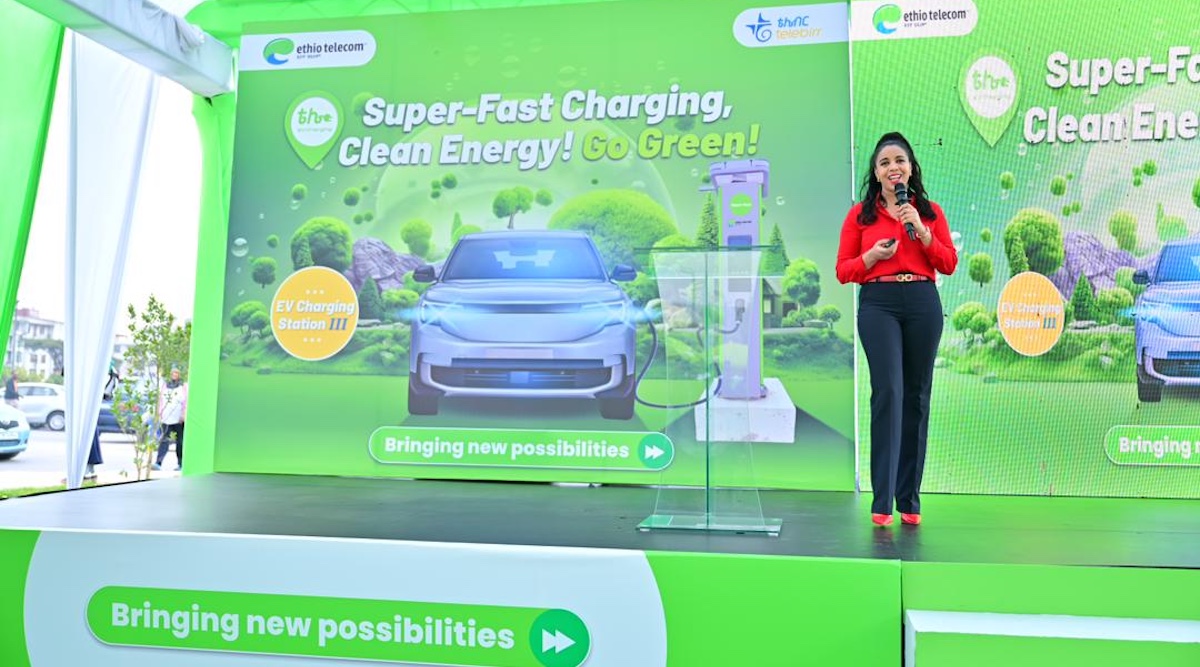
The station can accommodate up to 16 vehicles at a time, ensuring efficient service for drivers. This brings the total combined capacity now to 48 vehicles at a time across Ethio Telecom’s Fast Charging Hubs.
Last year, Ethiopia made the bold step to become the first country in the world to totally restrict the import of internal combustion engine vehicles. When the initial restrictions were announced, only the imports of semi knocked down and completely knocked down kits of internal combustion engine (ICE) vehicles destined for local vehicle assembly plants were permitted. There was no special treatment for anyone and even embassies and diplomats had to comply. Earlier this year, Ethiopia moved to further restrict imports of ICE vehicles by including SKD and CKD kits of ICE vehicles.
This bold move by the Ethiopian government has resulted in a surge of electric vehicle registrations. According to Ethiopia’s E-Mobility Strategy and Implementation Plan, 2025–2030, over 60% of new vehicle registrations in Ethiopia in 2024 were electric vehicles. EV registrations jumped from 7,000 in 2022 to 115,000 in 2025. This uptake of EVs is supported by Ethiopia’s growing renewable energy powered electricity generating plants, such as the Grand Ethiopian Renaissance Dam. The 5,150 MW Grand Ethiopian Renaissance Dam (GERD) contributes 15,500 GWh per year of clean electricity to the country’s energy mix. Now that the GERD has been successfully completed, Ethiopia is also working on the 1,800 MW Koysha hydropower plant that is expected to generate around 6.4 GWh per year. It is already under construction and is set to be completed by 2029. Ethiopia’s energy mix is already over 90% sourced from renewables.

As the fleet of electric vehicles continues to grow in Ethiopia, naturally, some teething problems are to be expected. One of the major concerns highlighted by Ethiopians was the lack of adequate public charging infrastructure. Ethio Telecom has heeded this call and launched electric vehicle fast charging hubs. Ethio Telecom says as part of its unwavering commitment to realizing the country’s green legacy and supporting the increasing electric vehicle ecosystem with state-of-the-art technology, it continues to support the EV ecosystem.
The first hub consists of:
- Eight Ultra-Fast Chargers (up to 600 kW each) — the chargers are capable of fully charging compatible vehicles within 15 minutes, enabling rapid recharges for drivers on the go.
- Twelve Super-Fast Chargers (up to 500 kW each) — delivering high-speed charging with optimal accessibility, and ensuring drivers get back on the road quickly.
- Smart Pole Chargers — integrated into smart city infrastructure, these Level II chargers provide emergency charging options for drivers in need and are located along various routes.
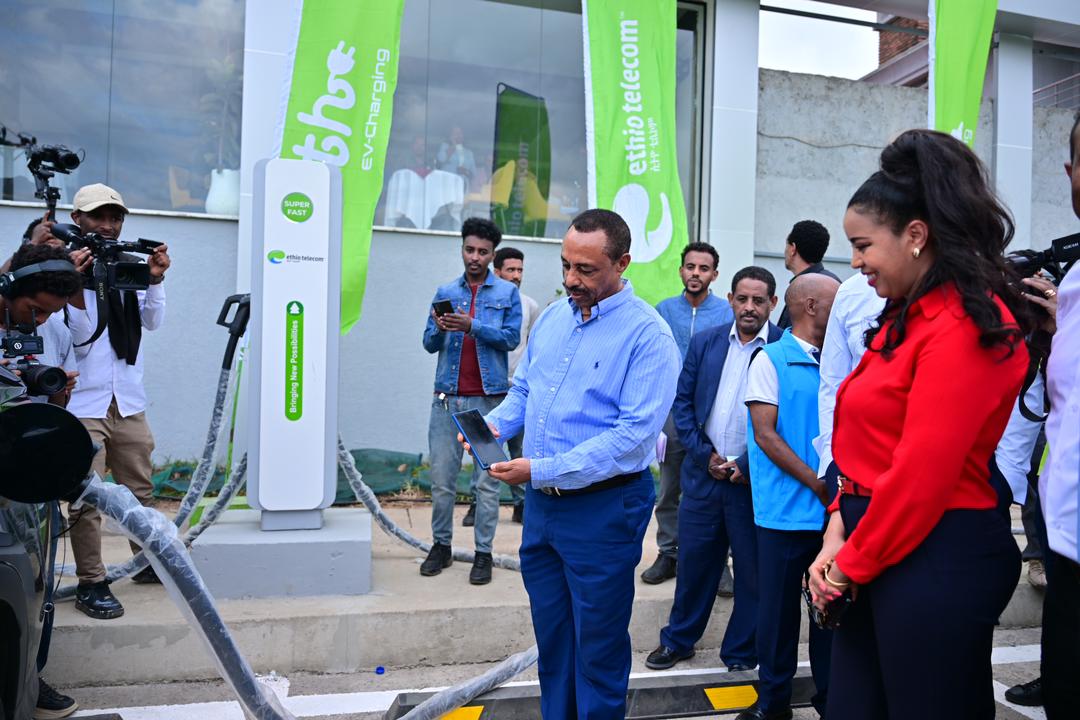
Other features that leverage Ethio Telecom’s existing ecosystem include a seamless digital experience via the telebirr app, featuring:
- The charging station operates 24/7 and is fully powered by the telebirr SuperApp, Ethio Telecom’s digital payment platform.
- Customers can pay for charging services quickly, easily, and conveniently with telebirr.
- Drivers can charge their vehicles independently using telebirr, ensuring a seamless, cashless transaction experience.
- Smart Online Monitoring enables real-time tracking and efficient management via the telebirr SuperApp, ensuring seamless connectivity through fibre, 4G, or 5G networks.
The Second Hub consists of:
- Four Ultra-Fast Chargers (up to 600 kW) — the chargers are capable of fully charging compatible vehicles within 15 minutes depending on the vehicle’s capacity, enabling rapid recharges for drivers on the go. Particularly, for city buses engaged in providing public transport service, rapid charging (refueling) allows them to save time and continue providing their service.
- Twelve Super-Fast Chargers (up to 500 kW) — Delivering high-speed charging with optimal accessibility, ensuring drivers get back on the road quickly.
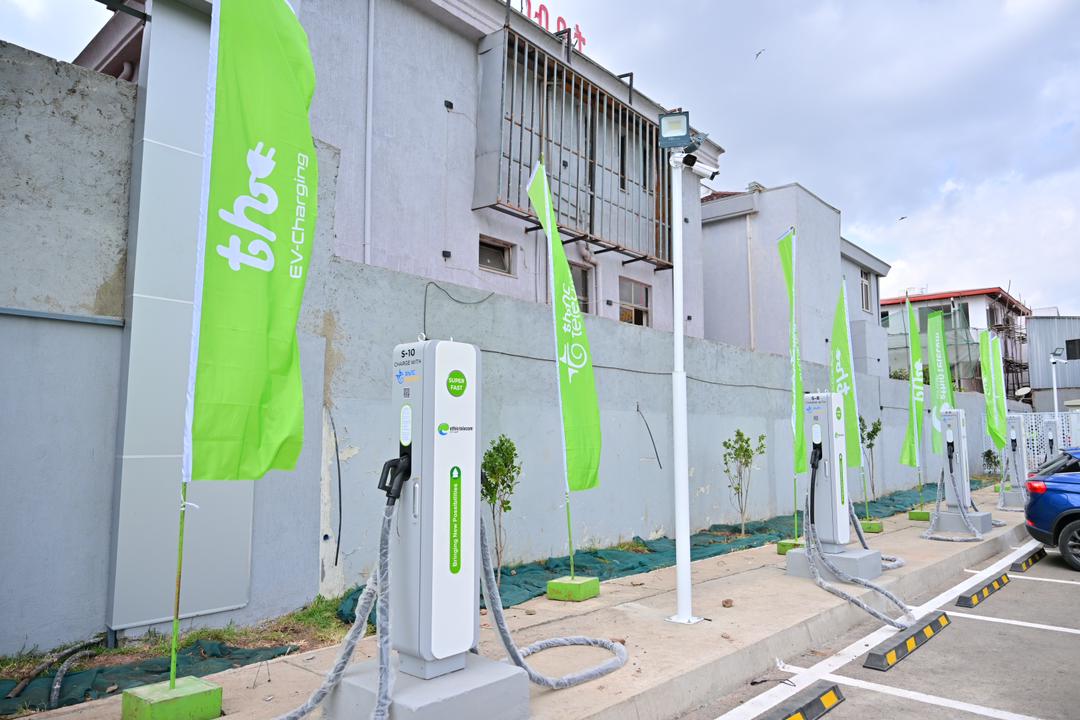
Last week, Ethio telecom officially inaugurated its third Super-Fast Electric Vehicle Charging Station around the Summit-Fyel Bet area of Addis Ababa.
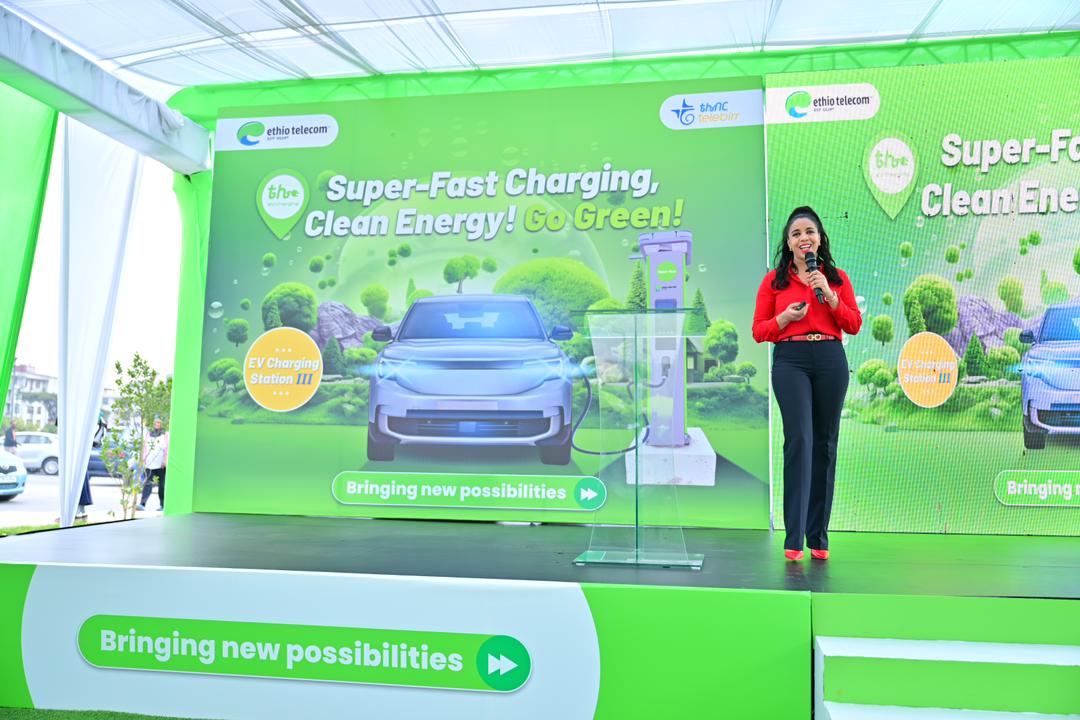

This newly launched third station is powered by Artificial Intelligence (AI) and equipped with cutting-edge technology. It features super-fast chargers capable of automatically diagnosing and adapting to various vehicle specifications — with specific compatibility for European EV models, addressing a critical market gap.
“The station can accommodate up to 16 vehicles at a time, ensuring efficient service for drivers. With this commissioning, our company’s total combined capacity now reaches 48 vehicles at a time across the three stations we have built.”
The first two charging station hubs were capable of serving up to 32 electric vehicles at a time along both directions of the Bole–Megenagna corridor.
Ethio Telecom says since commencing operations on February 11, 2025, the first two hubs have served over 165,000 electric vehicles, dispensing 4,349,761.54 kilowatt-hours of energy. This initiative has successfully prevented the emission of 6,081,447.62 kilograms of carbon dioxide into the atmosphere — an environmental contribution equivalent to planting more than 30,444 trees. Since there are about 115,000 electric vehicles in Ethiopia, we can assume that the 165,000 actually represents the number of charging sessions, as probably in such a big city and on such a busy corridor, there would be a lot of regular drivers frequenting those stations.
So, Ethiopia essentially went from zero electric vehicles to over 115,000 in about 4 years. That’s incredible! We are seeing tremendous growth in other markets, such as Nepal, as well. A lot of people assumed that the transition to electricity would only happen in wealthy nations such as Norway and in the major markets that were pushing hard for electrification, such as China, but we are now seeing tremendous growth even in developing countries.
One can understand Ethiopia’s motivation for all of this, though. Ethiopia’s motivation? A high fossil fuel import bill of over US$5 billion a year, taking a huge chunk of the country’s scarce foreign currency resources. Substituting a huge chunk of imported fossil fuels with locally generated clean renewable electricity to power a significant portion of Ethiopia’s fleet will free up a huge portion of scarce foreign currency. Additionally, accelerating the adoption of electric vehicles will help drive down emissions, cleaning up the air in major cities. It’s great for the African continent too. That is because we now have an example and case study from the continent we can relate to. It’s a great story to tell that the transition is not only happening in Europe, far away in Norway, it’s happening right here as well.
It actually makes more sense to electrify in countries that are heavily dependent on fossil fuel imports that strain their budgets.
Sign up for CleanTechnica’s Weekly Substack for Zach and Scott’s in-depth analyses and high level summaries, sign up for our daily newsletter, and follow us on Google News!
Have a tip for CleanTechnica? Want to advertise? Want to suggest a guest for our CleanTech Talk podcast? Contact us here.
Sign up for our daily newsletter for 15 new cleantech stories a day. Or sign up for our weekly one on top stories of the week if daily is too frequent.
CleanTechnica uses affiliate links. See our policy here.
CleanTechnica’s Comment Policy