

Support CleanTechnica’s work through a Substack subscription or on Stripe.
Or support our Kickstarter campaign!
Nitrous oxide, known chemically as NO2, is a byproduct of burning gasoline or diesel fuel in an internal combustion engine. It occurs whether you are driving a Lexus or a Trabant — if it burns gasoline or diesel fuel, it leaves nitrous oxide in its wake. If you were to ask 100 people, maybe two would know about NO2 emissions, but they are nothing to take casually.
According to the National Center for Biotechnology Information, nitrous oxide is “absorbed into the blood through the lungs and then enters the brain and nerve tissue through the bloodstream. The body can’t break the gas down, so it has to be completely breathed out through the lungs again.”
“Nitrous oxide changes the reactions and metabolism of the nerve cells. That quickly causes feelings of euphoria and relaxation in the brain after it is breathed in (inhaled). Perception of time and space also changes temporarily….Inhaling even small amounts can cause problems like dizziness, drowsiness, headaches and tingling. Nitrous oxide can also cause nausea, vomiting, balance problems and loss of consciousness. Mild hallucinations are possible as well.
“Nitrous oxide can make it more difficult to control your movements and can affect perception. That increases the risk of accidents and injuries, which is particularly dangerous on roads. Driving a car or cycling, walking at the roadside or operating machinery when under the influence of nitrous oxide isn’t just a danger to yourself, but also to others.”
TROPOMI Satellite Data
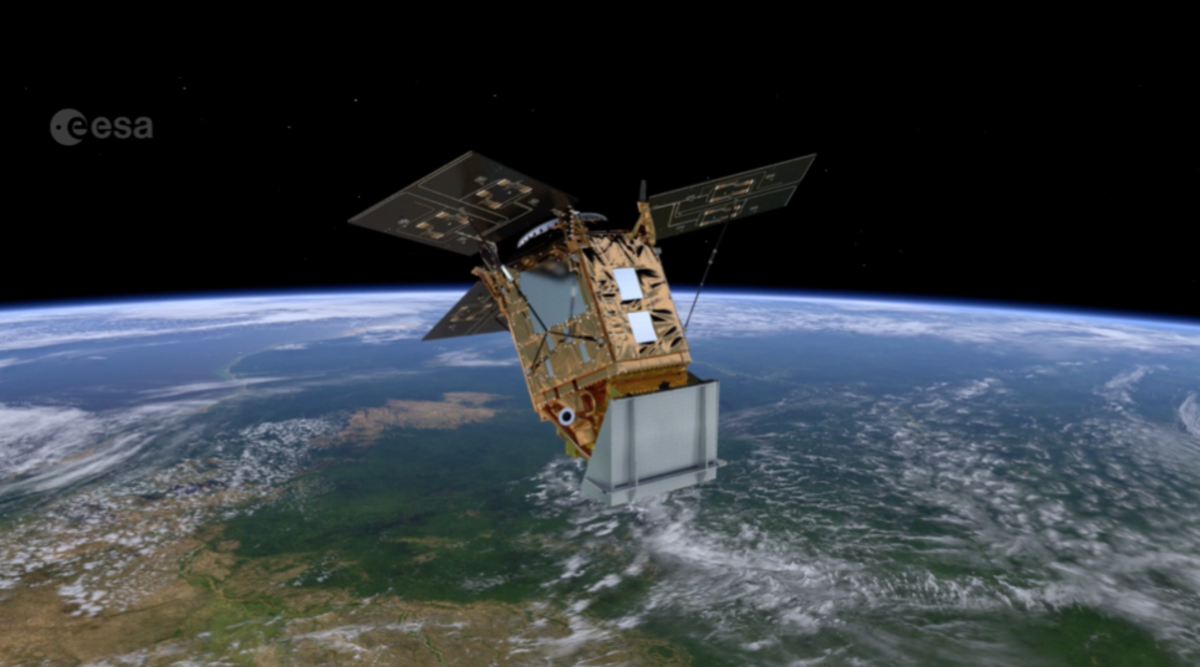
A new study published in The Lancet Planetary Health in January, 2026, found that as the number of electric cars on the road in California increased from 2019 to 2023, the concentration of nitrous oxide decreased in the communities where they were located. The data was sourced from the Tropospheric Monitoring Instrument (TROPOMI) satellite measurements, which track the concentration of nitrous oxide by measuring the way the gas reflects and absorbs light.
The researchers explain that the “Tropospheric Monitoring Instrument on the Sentinel-5 satellite measures tropospheric vertical NO2 column contents in molecules per cm2 from low Earth orbit (approximately 824 km) once a day at approximately 13:30 local time. The National Aeronautics and Space Administration Health and Air Quality Applied Science Team publishes freely available TROPOMI NO2 data processed into annual averages at 0·01˚ × 0·01˚ — approximately 1 km2 resolution, available for 2019–23. We imported these data and projected them into the NAD83 spatial coordinate reference system.”
That data was then compared to ground level NO2 data and applied to 1692 Zip Cope Tabulation Areas. Date from the California DMV provided information on how many zero emissions vehicles — both battery-electric and fuel cell powered — were added to each ZCTA from 2019 through 2023. The year 2020 was skipped because the data was skewed by the pandemic.
A Conclusive Link
Previous studies also attempted to draw connections between reduced exhaust emissions and improved air quality, but this study claims to be the first to conclusively link increased EV adoption with lower levels of pollutants.
The researchers wrote, “We found that within-ZCTA increases in ZEV registrations were associated with reductions in NO2 air pollution measured by satellite and replicated with ground-level monitors. This work in California serves as a proof of principle for future work using satellite measured NO2 to quantify effects of climate change mitigation efforts on combustion related air pollution within the USA and internationally. A full transition to electric vehicles is projected to reduce ambient NO2 concentrations by 61 percent in the US and 30 to 80 in China.”
“These anticipated reductions have important public health implications because traffic related air pollution exposures, including NO2, negatively affect cardio-pulmonary health and contribute to premature death. In the US, transitioning to 100 percent zero emissions vehicle sales for passenger vehicles by 2035 and medium-duty and heavy-duty vehicles [with GVWR of more than 10,000 lbs] — delivery trucks, buses, and tractor trailers is projected to have more than $1.2 trillion in cumulative health benefits between 2020 and 2050.”
$1.2 Trillion By 2050
$1.2 trillion over the next 25 years may sound like small potatoes to some, but it connotes significant health benefits for all Americans. Note that those benefits are not confined to those who own zero emissions vehicles, but everyone in the same zip code where those cars are located.
“In this article, we investigated the air quality co-benefit of the early to mid-phase light duty ZEV transition in California using publicly available longitudinal data. We overcame the limited spatial coverage of our previous work by leveraging newly available satellite measurements of NO2 to relate annual average atmospheric NO2 across all of California from 2019 to 2023 to annual ZEV registrations over the same period. We complement our primary analysis with a positive control analysis using internal combustion engine vehicles and with a ground-truth analysis of extended longitudinal data from ground-level NO2 at regulatory monitors.” Over the study period, the typical neighborhood gained 272 EVs and plug-in vehicles.
The researchers controlled for changes in gas prices and work from home patterns that might affect driving behavior, eliminating the year 2020 entirely from the results due to the anomalous pandemic-related decrease in driving. They also confirmed that neighborhoods with an increase in gasoline-powered cars saw an increase in pollutants and checked satellite data against ground-level monitoring data from 2012 to 2023.
Global & Free
In the conclusion to the study, the researchers said, “TROPOMI assessments are global and freely available, so our approach in California has the potential to be generalized to locations around the globe, including those without air quality monitoring networks. Furthermore, although we focused on light-duty ZEVs, our approach has the potential to be generalized to any climate change mitigation strategy reducing combustion related sources of NO2.”
“Examples include the electric motorbike transition in some low income and middle income countries or mode shifts to active transport, such as bicycling in Paris. Furthermore, given the well documented health effects of traffic related air pollution, future work can link air quality co-benefits of transportation electrification to improvements in health outcomes. A scoping review of health effects of the electric vehicle transition called for such observational studies, especially for populations disproportionately exposed to traffic-related pollution. These real world data have the potential to drive effective solutions for a healthier future.”
That might be true in some countries, but certainly not in the US, where heaping discredit on science and scientists is a prominent feature of current government policy. In the rest of the world, research such as this may help stiffen the spine of government leaders who are under pressure to roll back zero emission vehicle standards.
Support CleanTechnica via Kickstarter

Sign up for CleanTechnica’s Weekly Substack for Zach and Scott’s in-depth analyses and high level summaries, sign up for our daily newsletter, and follow us on Google News!
Have a tip for CleanTechnica? Want to advertise? Want to suggest a guest for our CleanTech Talk podcast? Contact us here.
Sign up for our daily newsletter for 15 new cleantech stories a day. Or sign up for our weekly one on top stories of the week if daily is too frequent.
CleanTechnica uses affiliate links. See our policy here.
CleanTechnica’s Comment Policy