

Support CleanTechnica’s work through a Substack subscription or on Stripe.
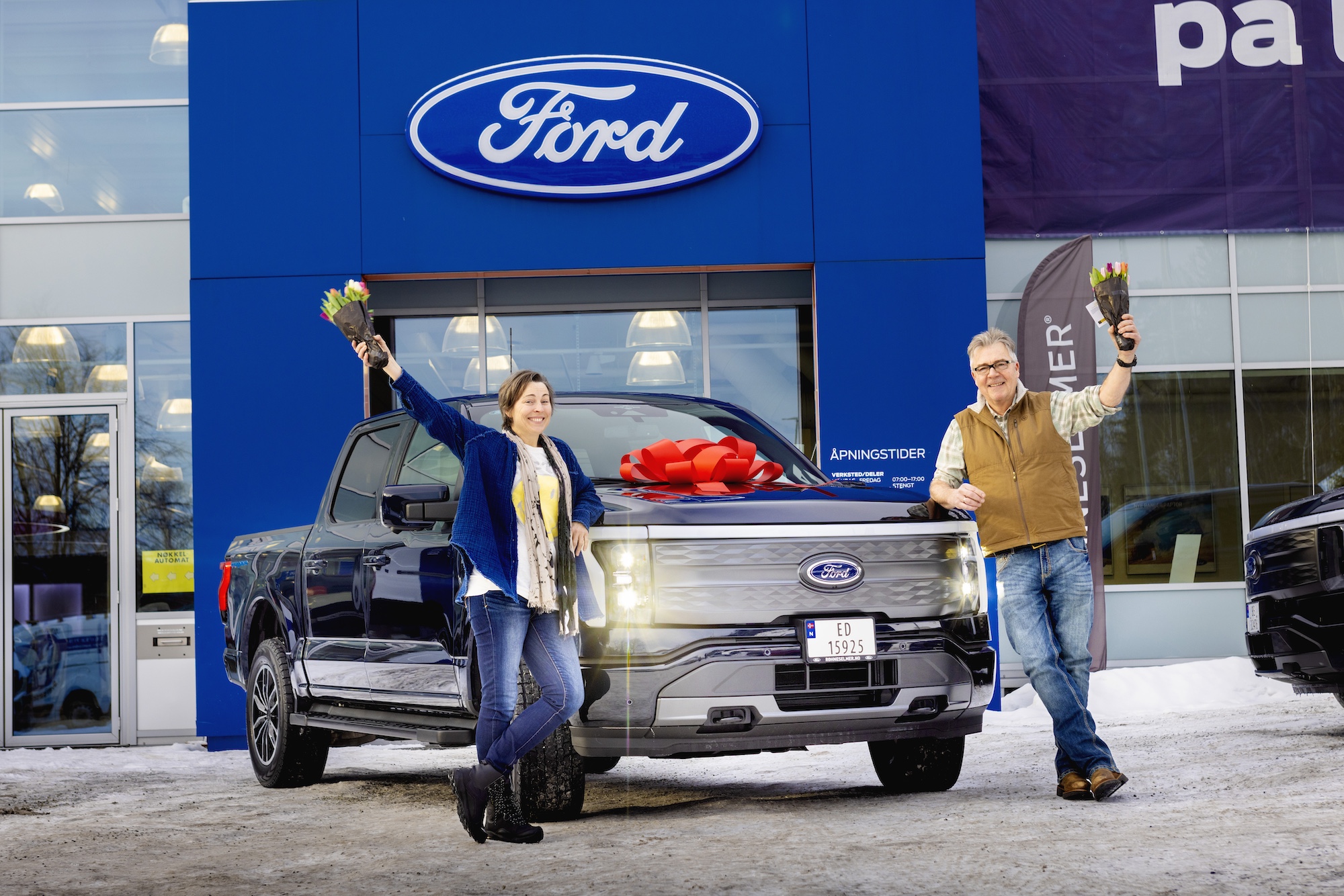
The world cheered six years ago when Ford posted a video of its soon-to-be-released F-150 Lightning battery electric pickup truck towing a line of freight cars weighing 1 million pounds. What an incredible feat that was! You want to talk about torque? Ford’s got your torque and it comes in a package that looks just like the standard F-150 America had come to know and love. Best of all, the starting price was just $40,000. Wow! Where do we sign up?
It is fair to say those of here at CleanTechnica were giddy with excitement. Let Elon fool around with his goofy looking Cybertruck, Ford was going to lead the EV revolution to the promised land. It talked about creating a brand new campus for the manufacture of electric vehicles called Blue Oval City. It struck a deal with SK On to build a battery factory in Kentucky. The future was so bright, we had to wear shades!
Reality Bites
Then reality hit. The F-150 Lightning cost tens of thousands more when it arrived in Ford showrooms. That was a setback, but then the stories started filtering in from people who bought one complaining that the truck could only go 100 miles or so when fully loaded or when towing a trailer. Charging stops took an hour or more. The trucks suffered from numerous quality control issues. Soon the bloom was off the rose, and sales plummeted as prices increased.
Then came the Grinch Who Hates EVs. All the carrots the prior administration sprinkled around to encourage electric vehicle production were swept away in the bilious torrent of bile that swept over Washington in January. Soon, all those lovely incentives were gone, replaced by an ever-changing set of new tariffs on steel, aluminum, and battery components. Anti-immigrant fever soured foreign investments by Chinese and South Korean companies.
The coup de grâce was the announcement a few weeks ago that the federal government was rolling back exhaust emissions standards to where they were 20 years ago and would no longer impose fines on manufacturers who failed to meet even those weakened goals. That was the starting gun that announced open season against electric vehicles in America.
Ford, GM, and Stellantis celebrated the news. Why? Because it meant they were free to build as many large SUVs and pickup trucks as they could weld, bolt, or glue together — vehicles that traditionally are the most profitable products for the companies.
No More Ford F-150 Lightnings
Ford today announced it has ended production of the F-150 Lightning and will no longer pursue the development of its all-electric successor. The original was built on a modified F-150 chassis, but the second-generation truck — known internally at the T3 — would be based on a new platform engineered specifically to meet the needs of a battery electric vehicle.
Ford also said it would write off $19.5 billion this quarter to address the losses it has experienced as an EV manufacturer so far. That will make it the most expensive loss in the industry since Volkswagen swallowed almost $34 billion in penalties and other charges resulting from its Dieselgate fiasco.
But don’t weep for Ford. Its top executives will still get paid. Its shareholders may take a hair cut, but the people most affected will be the workers — the little people who actually show up every day to build the cars and trucks the company manufactures. The economic pain will hit them in their wallets during the next round of union negotiations. Ford, meanwhile, will benefit greatly from selling more high-profit SUVs and light trucks — a rejuvenated revenue stream that could offset the entire write-down and then some over time.
Consumers Have Spoken
Andrew Frick, the president of Ford Blue and Ford model e, told the press on Monday, “The American consumer is speaking clearly and they want the benefits of electrification like instant torque and mobile power. But they also demand affordability. Rather than spending billions more on large EVs that now have no path to profitability, we are allocating that money into higher-returning areas.
“Some of the original forecasts had EV adoption” set much higher than actually proved to be the case, Frick said. “We know that hasn’t been the case for several reasons, including changes in the regulatory environment, commercial and consumer tax incentives, [and] battery costs not coming down.”
Really? Battery costs are not coming down? There is a story on CleanTechnica nearly every week about how the cost of batteries is declining. What Frick probably means is that the repeal of the incentives contained in the IRA changed the equation in a way that was not acceptable to the bean counters at Ford.
CEO Jim Farley said in a statement, “This is a customer-driven shift to create a stronger, more resilient and more profitable Ford. The operating reality has changed, and we are redeploying capital into higher-return growth opportunities: Ford Pro, our market-leading trucks and vans, hybrids, and high margin opportunities like our new battery energy storage business.”
Ford Is In The Energy Storage Business
Wait, Ford has a battery energy storage division? It does now. Just about the only category of incentives in the Inflation Reduction Act that was not gutted by the present administration was the one that offered incentives for battery storage. SK On announced last week it is terminating its relationship with Ford. About 1600 employees will be laid off as a result. Ford will now operate the factory in Kentucky itself and convert it to manufacturing energy storage products that still qualify for federal tax credits.
“This strategic initiative will leverage currently underutilized electric vehicle battery capacity to create a new, diversified, and profitable revenue stream for Ford. The company also plans to invest roughly $2 billion in the next two years to scale the business. These systems are at the heart of the energy storage solution market for data centers, utilities, and large scale industrial and commercial customers,” Ford said in a press release.
EREV Lightning
Ford also says it will soon begin manufacturing the EREV Lightning, a plug-in hybrid with a gasoline range extender engine onboard. We presume the enormous frunk on the original truck will be eliminated to make room for the engine. The new truck will offer many of the same features as the original Lightning, particularly the multitude of electrical outlets that allow owners to power their campsites and work locations from the truck’s battery. There is no word yet on whether the EREV Lightning will have V2H and V2G capability.
“We learned a lot from our first generation of EVs, and we know that for many truck owners, towing heavy loads over long distances is non-negotiable,” said Frick, who called the EREV Lightning “a big step forward” because it will operate primarily as an EV, but with a gas engine to achieve “range confidence” and longer-distance towing performance. “The typical customers will get through nine out of 10 days on electricity alone. It will be able to tow with uncompromised range, which is significant for truck owners.”
Some readers may say, “Wait, that sounds like a Chevy Volt with a pickup truck body,” and they would not be far wrong. The original Volt was a world class PHEV that had a real-world range of 55 miles or more. I drove one for a week in 2016 and absolutely loved the car. But it was not profitable enough for GM, which chose to focus on Suburbans and Escalades instead, because that’s where the money is.
Americans will dicker until they are blue in the face about the price of a Corolla or Elantra, but won’t utter a peep of protest when buying a hulking V-8 powered vehicle they know the manufacturer is making at least a 15 percent profit on. People scream about the high price of cars and trucks and with some justification, but never question the right of the companies to price gouge to their heart’s content. We find that curious.
Ford Skunk Works Hard At Work
But fear not, Ford EV fans. Out in California, Doug Field, the former Ford engineer who spent years on Apple’s excellent electric car adventure, is leading a team that is designing the next EVs from Ford — which reportedly will be smaller and cheaper. According to the New York Times, the team is focusing on a new midsize pickup truck, but whether it will be battery electric or a plug-in hybrid is unclear.
What is known is that Field’s team is planning to use high-pressure castings for the front and rear sections, with the battery in the middle. Sharp-eyed readers may recognize this as pretty much what Tesla is planning with its “unboxed factory” initiative. Theoretically, there will be one or more electric passenger cars coming from the California “skunk works” as well.
Irrelevancy Looms
So the dream of affordable, compelling electric cars from Ford is not dead, at least not yet. But the US risks becoming irrelevant in the global auto market. The latest report from Ember claims that, so far this year, a quarter of all new passenger vehicle sales are electric. Almost none of them are from American manufacturers.
The US auto industry has gone from being the standard of the world to being a laughing stock. Jim Farley and his merry pranksters may think they have the tiger by the tail at last, but they are this close to becoming just a distant memory, like Packard, Pontiac, and Plymouth. Let’s hope they don’t screw this up any more than they already have.
Sign up for CleanTechnica’s Weekly Substack for Zach and Scott’s in-depth analyses and high level summaries, sign up for our daily newsletter, and follow us on Google News!
Have a tip for CleanTechnica? Want to advertise? Want to suggest a guest for our CleanTech Talk podcast? Contact us here.
Sign up for our daily newsletter for 15 new cleantech stories a day. Or sign up for our weekly one on top stories of the week if daily is too frequent.
CleanTechnica uses affiliate links. See our policy here.
CleanTechnica’s Comment Policy