

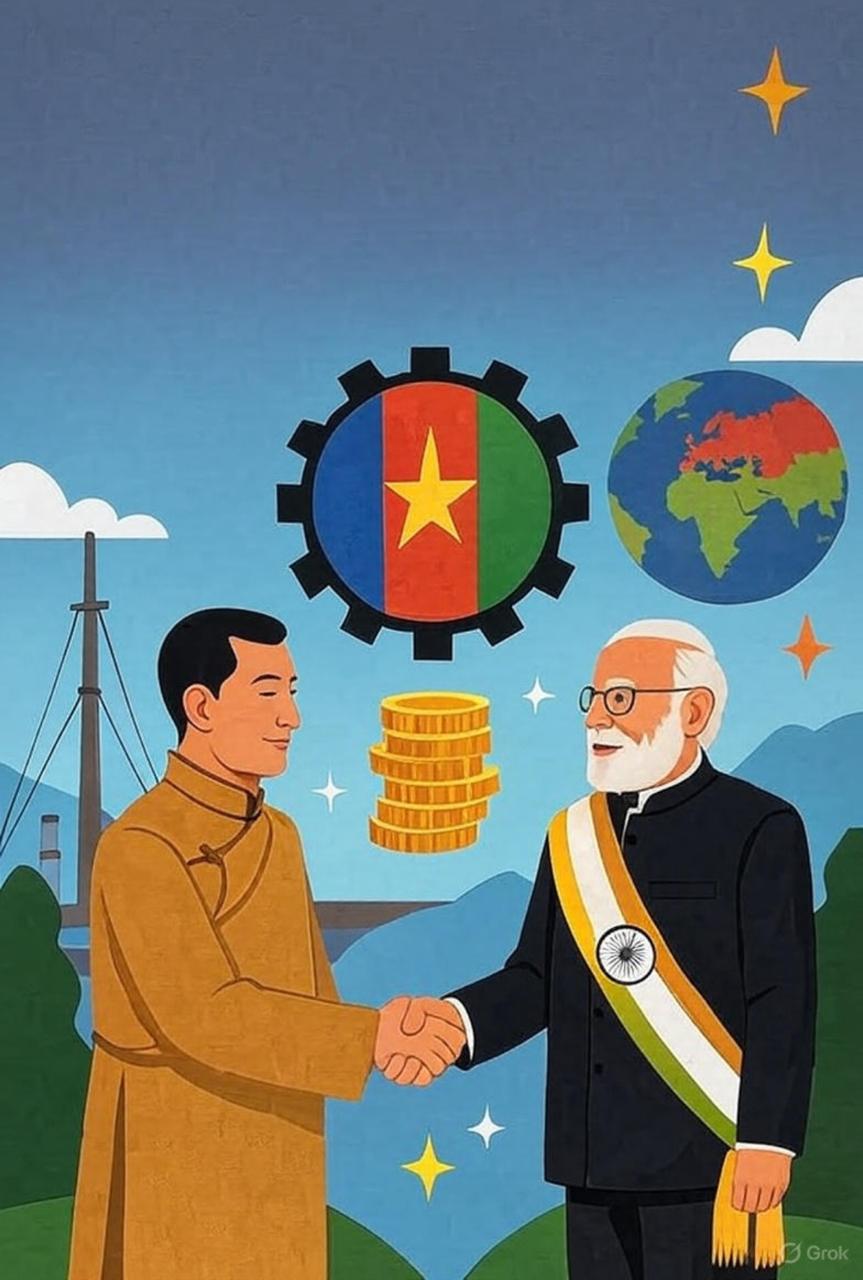
In the shifting global energy and technology landscape, critical minerals are becoming the linchpin of future growth, security, and industrial competitiveness. Nations are scrambling to secure reliable sources, reduce supply chain vulnerabilities, and build downstream value addition. India, intent on accelerating its green transition, electric mobility adoption, and domestic manufacturing, is actively seeking new mineral partnerships. Mongolia, with vast and under‑exploited reserves, finds in India a promising “third neighbor” partner beyond its traditional dependence on China and Russia.
Why Critical Minerals Matter — and Why Mongolia
Critical minerals such as lithium, cobalt, rare earth elements, copper, nickel, and tungsten are essential inputs for batteries, electric vehicles, renewable energy systems, semiconductors, and many advanced technologies. The global energy transition demands exponentially more of these minerals. Many countries now treat them as strategic assets rather than just commodities.
India has recognized this urgency and is actively exploring critical minerals domestically while seeking partnerships abroad to diversify its supply base. Mongolia, on the other hand, is richly endowed with copper, gold, zinc, iron, fluorspar, rare earths, and uranium prospects. Recent policy shifts show that Mongolia is reorienting toward greater value capture — renaming its state enterprise “Erdenes Critical Minerals” underscores this strategic rebranding.
What Has Been Achieved So Far
- During the 2025 state visit of Mongolia’s President to India, the two countries signed 10 MoUs, including one on geology and mineral resources cooperation.
• India has publicly expressed interest in Mongolia’s reserves of copper, zinc, gold, iron, and uranium.
• Talks are ongoing for a preliminary mining/exploration pact to facilitate mineral shipments and geological cooperation.
• India and Mongolia are exploring viable logistics routes through Tianjin (China) or Vladivostok (Russia) given Mongolia’s landlocked geography.
These moves suggest the initial building blocks of a broader treaty or framework are already under negotiation.
Key Issues, Risks & Challenges
A binding or semi‑binding treaty on critical minerals would be ambitious. Below are the principal hurdles and risks:
1. Logistics & Transit Routes – Mongolia lacks direct access to seaports, raising geopolitical and cost challenges.
2. Geopolitical Sensitivities – China and Russia may view deepening ties with India cautiously.
3. Resource Sovereignty – Mongolia may seek strong control over extraction and revenues.
4. Capital & Investment Risk – High capital needs and price volatility could affect project viability.
5. Environmental & Social Safeguards – Mining impacts must be managed with strong ESG standards.
6. Legal & Dispute Resolution – Requires clear arbitration and legal frameworks.
7. Market / Price Fluctuations – Needs flexible pricing and off‑take mechanisms.
Strategic & Geopolitical Implications
- Diversification of India’s Critical Mineral Supply Chain.
2. Strategic Footprint in Central / Inner Asia.
3. Value Addition & Industrial Upstream‑Downstream Linkages.
4. Soft Power & Diplomatic Influence.
5. Balancing China & Russia.
6. Regional Connectivity & Infrastructure Synergies.
Possible Structure of a Mongolia‑India Critical Minerals Treaty
- Scope & Objectives – Identification of critical minerals, long‑term goals, and supply stability.
2. Exploration & Joint Ventures – Data sharing, JV formations, and technology transfer.
3. Off‑take Commitments – Pre‑agreed volumes and pricing mechanisms.
4. Transit & Logistics – Legal guarantees for transit and infrastructure development.
5. Refining & Value Addition – Setting up refining and downstream industries.
6. Sustainability – ESG clauses, environmental safeguards, and benefit sharing.
7. Revenue Sharing – Clear fiscal regime and stability clauses.
8. Governance – Oversight bodies and neutral arbitration.
9. Safeguards & Exit Provisions – Defined conditions for suspension or exit.
10. Timeline & Implementation – Phased rollout and pilot projects.
What India & Mongolia Must Do Next
- Conduct feasibility studies on logistics and cost models.
• Align legal and regulatory frameworks.
• Launch pilot projects for selected minerals.
• Establish a bilateral task force or commission.
• Integrate treaty within regional frameworks.
• Ensure stakeholder engagement and environmental compliance.
• Design risk mitigation mechanisms through guarantees or insurance.
Conclusion
A Mongolia‑India Critical Mineral Treaty is not merely about minerals — it is a strategic partnership for the 21st century. For India, it secures essential materials for its green ambitions. For Mongolia, it diversifies partnerships and captures greater value. Though logistical and geopolitical hurdles exist, with visionary diplomacy and careful structuring, this partnership can emerge as a model for South‑South cooperation in sustainable resource development.