

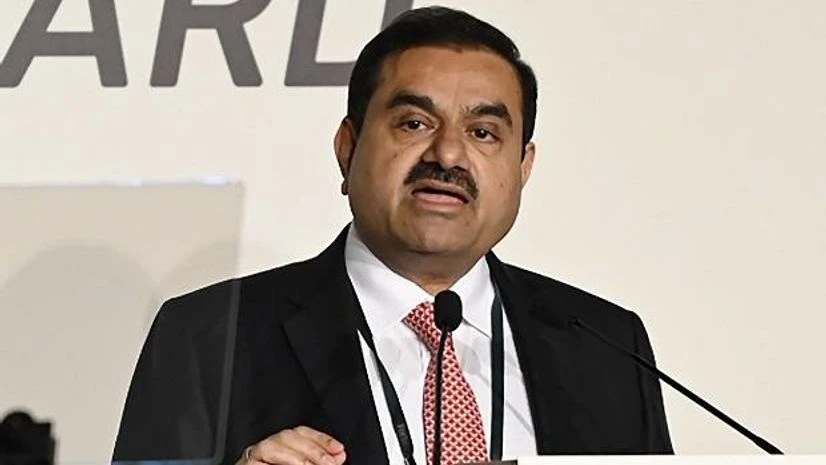
Adani Group Chairman Gautam Adani has delivered one of his strongest critiques yet of the global sustainability discourse. Speaking as a chief guest at IIT – ISM on the Centenary celebration of India’s prestigious global mining school on 9th December 2025 at Dhanbad , The coal capital of India , Mr Adani called it a “weaponised narrative” driven by nations that historically polluted the planet but now want to dictate development models for countries like Bharat.
Adani Group Chairman Gautam Adani has delivered one of his strongest critiques yet of the global sustainability discourse, calling it a “weaponised narrative” driven by nations that historically polluted the planet but now want to dictate development models for countries like Bharat.
1. “Narrative Colonisation” and the Global Paradox
Adani argues that the nations responsible for plundering resources, enslaving societies, and burning fossil fuels for 200 years are today lecturing the developing world from a position of false moral superiority.
“Those who heated the planet now want to set the rules for how we must cool the planet.”
He warns that unless Bharat controls its own narrative, external actors will:
• Criminalise our development
• Delegitimise our aspirations
• Frame India’s rise as a global threat
This is what he calls narrative colonisation—a modern tool of geopolitical influence.
⸻
2. COP30 and the “Weaponised” ESG Narrative
Adani highlighted how at COP30 (2025), a downgrade of Bharat’s sustainability ranking was justified on grounds such as:
• No fixed coal exit timeline
• Continued auction of coal blocks
This, he says, ignores context, equity, and fairness—and weaponises ESG frameworks built primarily around Western developmental experiences.
⸻
3. The Reality of India’s Energy Consumption
India is the world’s 3rd-largest electricity consumer, but:
• Per-capita consumption: < 1,400 kWh/year
• Less than half the global average
• One-tenth of the US
• One-fifth of Europe
This means India’s total energy demand appears large only because of population—not wasteful per-person usage.
⸻
4. CO₂ Emissions: The Per-Capita Story the West Ignores
Adani emphasises that total emissions tell only half the story.
• India emits < 2 tons CO₂ per person
• US emits ~14 tons,
• China ~9 tons,
• Europe ~6 tons
Despite being the world’s most populous nation, India’s per-person emissions remain extremely low.
On historical responsibility (the true basis of climate justice):
• India’s cumulative emissions over 200 years: 4%
• Europe: 13%
• US: 19%
• China: 20%
Yet the West pushes uniform benchmarks that disproportionately penalise developing economies.
⸻
5. ESG Frameworks Favour the Rich, Burden the Poor
Adani points out that many ESG models:
• Do not account for development stages
• Do not recognise historical emissions
• Do not balance growth with equity
• Judge countries without considering poverty eradication goals
This results in biased rankings that discourage industrialisation in emerging economies while protecting the interests of developed markets.
⸻
The Core Message
Bharat will transition to clean energy—but on its own terms, not under external pressure.
Adani’s argument is clear:
• India cannot be forced into unrealistic timelines
• Development cannot be criminalised
• A nation of 1.4 billion cannot be judged by the same yardstick as countries that have already completed their industrial growth
• Climate justice must include historical accountability, equitable frameworks, and developmental rights
1. “Narrative Colonisation” and the Global Paradox
Adani argues that the nations responsible for plundering resources, enslaving societies, and burning fossil fuels for 200 years are today lecturing the developing world from a position of false moral superiority.
“Those who heated the planet now want to set the rules for how we must cool the planet.”
He warns that unless Bharat controls its own narrative, external actors will:
• Criminalise our development
• Delegitimise our aspirations
• Frame India’s rise as a global threat
This is what he calls narrative colonisation—a modern tool of geopolitical influence.
⸻
2. COP30 and the “Weaponised” ESG Narrative
Adani highlighted how at COP30 (2025), a downgrade of Bharat’s sustainability ranking was justified on grounds such as:
• No fixed coal exit timeline
• Continued auction of coal blocks
This, he says, ignores context, equity, and fairness—and weaponises ESG frameworks built primarily around Western developmental experiences.
⸻
3. The Reality of India’s Energy Consumption
India is the world’s 3rd-largest electricity consumer, but:
• Per-capita consumption: < 1,400 kWh/year
• Less than half the global average
• One-tenth of the US
• One-fifth of Europe
This means India’s total energy demand appears large only because of population—not wasteful per-person usage.
⸻
4. CO₂ Emissions: The Per-Capita Story the West Ignores
Adani emphasises that total emissions tell only half the story.
• India emits < 2 tons CO₂ per person
• US emits ~14 tons,
• China ~9 tons,
• Europe ~6 tons
Despite being the world’s most populous nation, India’s per-person emissions remain extremely low.
On historical responsibility (the true basis of climate justice):
• India’s cumulative emissions over 200 years: 4%
• Europe: 13%
• US: 19%
• China: 20%
Yet the West pushes uniform benchmarks that disproportionately penalise developing economies.
⸻
5. ESG Frameworks Favour the Rich, Burden the Poor
Adani points out that many ESG models:
• Do not account for development stages
• Do not recognise historical emissions
• Do not balance growth with equity
• Judge countries without considering poverty eradication goals
This results in biased rankings that discourage industrialisation in emerging economies while protecting the interests of developed markets.
⸻
The Core Message
Bharat will transition to clean energy—but on its own terms, not under external pressure.
Adani’s argument is clear:
• India cannot be forced into unrealistic timelines
• Development cannot be criminalised
• A nation of 1.4 billion cannot be judged by the same yardstick as countries that have already completed their industrial growth
• Climate justice must include historical accountability, equitable frameworks, and developmental rights