

Support CleanTechnica’s work through a Substack subscription or on Stripe.
Without a doubt, one of the top concerns Europeans and Americans bring up regarding Chinese electric vehicles is whether or not they are safe. Is it a legitimate concern in 2026? Not that I’ve seen, especially since Chinese automakers have to meet European and US safety standards to sell cars there, and they typically do quite well with these.
Chinese automakers have been looking to counter the concerns by acing the safety tests. Geely is now taking it a step further, though. It is adding tests.
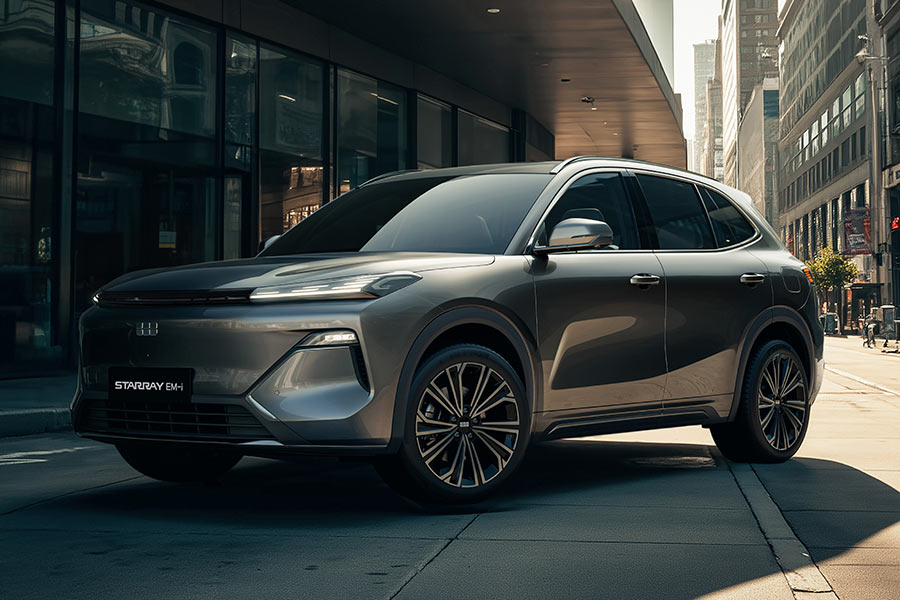
“The Geely Starray EM-i has completed a beyond-compliance, dual-sided serial extreme crash test at France’s Euro NCAP-accredited UTAC headquarters. The vehicle’s exceptional performance directly validated Geely’s leading vehicle safety architecture and its systemic engineering depth,” Geely shares.
That all sounds normal so far, right? Maybe not. “Geely Auto was the sole automaker selected to conduct a live safety demonstration during the ‘Automotive Safety Tech Globalization & Innovation in the Smart Driving Era’ summit, co-hosted by the China Automotive Engineering Research Institute Co., Ltd. (CAERI) and UTAC. As Europe’s first-ever side-impact test combined with a far-side rigid pole intrusion challenge, this test goes far beyond the current Euro NCAP side-impact protocol, compounding the test’s severity to replicate real-world multi-vehicle chain collisions,” Geely adds.
Clearly, this was all planned for the press. But it makes sense. Want to break open perceptions that your cars aren’t safe? You can’t just match a bunch of other cars, you need to do something special and grab attention. How far this will actually go in changing opinions, I don’t know — who is going to hear about it, and among those previously concerned, are they going to just be hyper-skeptical of the tests?
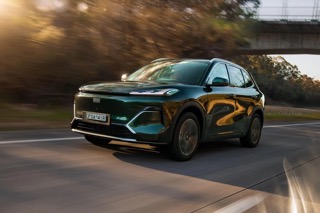 Anyway, whether it works or not, it has to objectively be seen as a good thing. Here are some more details on the test: “During the test, a moving deformable barrier strikes the side of the vehicle at 60 km/h, pushing it into a rigid pole positioned on the opposite side, creating a second high-severity impact comparable to a side pole crash. It puts an extreme test on the vehicle’s structural integrity, millisecond-level airbag deployment algorithms, and NEV battery system protection. The results confirmed that the Geely STARRAY EM-i maintained an intact passenger cell after the collision. The restraint systems were deployed with pinpoint precision, the e-CALL emergency rescue system triggered instantly, and the doors unlocked automatically.”
Going further, Geely references its three decades of experience building cars and its “core philosophy” of “Consumer First, Safety First.” You getting the message?
Naturally, because that’s the name of the game these days, Geely also had to bring AI into the discussion. “Spanning nearly three decades of automotive manufacturing, Geely Auto has steadfastly adhered to its core philosophy of ‘Consumer First, Safety First.’ Geely Auto has fused full-domain AI technology to enhance its Comprehensive Safety System 2.0. This evolution shifts the focus from traditional ‘vehicle-centric safety’ to an ecosystem-wide perspective encompassing ‘People-Vehicle-Road-Cloud-Satellite,’ anchoring four distinct zero-accident mobility visions.”
Geely adds that it has received top ratings in 80 global authoritative safety assessments, including five-star ratings across C-NCAP, Euro NCAP, ANCAP, ASEAN NCAP, and C-IASI. Furthermore, it has “opened up critical safety patents to the public, including its one-touch window-breaking technology and underbody battery protection systems, while making its Safety Center resources accessible to industry peers.” That all sounds quite noble.
So, are you sold?
Sign up for CleanTechnica’s Weekly Substack for Zach and Scott’s in-depth analyses and high level summaries, sign up for our daily newsletter, and follow us on Google News!
Have a tip for CleanTechnica? Want to advertise? Want to suggest a guest for our CleanTech Talk podcast? Contact us here.
Sign up for our daily newsletter for 15 new cleantech stories a day. Or sign up for our weekly one on top stories of the week if daily is too frequent.
CleanTechnica uses affiliate links. See our policy here.
CleanTechnica’s Comment Policy