
Hitachi’s Battery Electric Dump Truck Trial at Kansanshi Mine: A Leap Toward Sustainable Mining in Zambia

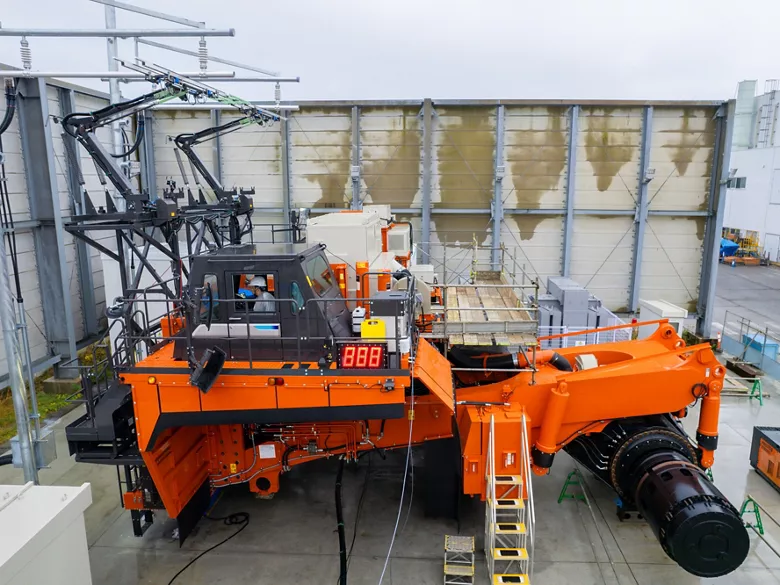
Hitachi Construction Machinery launched a groundbreaking technological feasibility trial of the world’s first OEM-produced ultra-large, full-battery rigid frame dump truck, with a load capacity exceeding 150 tons, at First Quantum Minerals’ (FQM) Kansanshi copper-gold mine in Zambia. This trial aligns with the commissioning of the $1.3 billion Kansanshi S3 Expansion Project on August 19, 2025, by President Hakainde Hichilema, marking a transformative moment for Zambia’s mining sector. The initiative reflects a broader push toward sustainable mining, leveraging Zambia’s 92% renewable energy grid to reduce emissions and enhance productivity. This article explores the trial’s significance, its integration with the S3 expansion, and the challenges and opportunities for Zambia’s mining industry, as of August 20, 2025, at 11:15 AM IST.
The Hitachi Battery Electric Dump Truck Trial
Technical Specifications and Trial Details
-
World’s First OEM Innovation: The Hitachi dump truck, fitted with an ABB Ltd. battery and onboard charger, is the first ultra-large, full-battery rigid frame dump truck produced by an Original Equipment Manufacturer (OEM). With a payload capacity of 240 tons, it uses a trolley charging system, drawing power from overhead cables to eliminate downtime for charging and reduce battery weight, enhancing productivity.
-
Trial Objectives: Initiated in June 2024 at Kansanshi, the trial verifies operational performance—traveling, turning, stopping, and battery charging/discharging cycles—under real mining conditions. The test leverages Kansanshi’s advanced trolley assist infrastructure, a decade-long FQM innovation.
-
Performance Impact: FQM reports the truck maintains full payload capacity without compromising production, potentially saving 1.2 million liters of diesel annually, equating to a 3,000-ton CO2 reduction per truck if scaled across the fleet.
Collaboration and Context
-
Hitachi-FQM Partnership: A March 2023 Letter of Intent between Hitachi Construction Machinery and FQM established a zero-emission partnership, with the trial as a proof of concept. The truck was shipped to Zambia in January 2024 and assembled on-site by June 2024.
-
Rees Magrath’s Perspective: FQM’s Mining Operations Manager, Rees Magrath, called the trial “revolutionary,” emphasizing its role in decarbonizing copper production, critical for the global energy transition.
Kansanshi S3 Expansion Project
Project Overview
-
$1.3 Billion Investment: Launched on August 19, 2025, by President Hakainde Hichilema, the S3 expansion is one of Zambia’s largest single investments, extending Kansanshi’s mine life by 20 years to 2044. It includes a 25-million-tonne-per-year processing plant, expanded smelter capacity (from 1.38 to 1.65 million tonnes annually), and a new mining fleet, boosting copper production to 250,000 tonnes per year.
-
Economic Impact: The project has created 2,700 jobs during construction and will add 1,200 permanent jobs, increasing FQM’s workforce to 8,800. It supports Zambia’s goal of 3 million tonnes of annual copper production by 2030, with $120 million spent on local procurement, including $6 million for 546 km of copper cables from Zambia Metal Fabricators.
-
Hichilema’s Vision: The commissioning underscores Hichilema’s economic reforms, including debt restructuring and a projected 6.5% GDP growth in 2025, positioning Zambia as Africa’s leading mining hub.
Sustainability Integration
-
Renewable Energy: Kansanshi’s operations are 85% powered by Zambia’s renewable energy grid, primarily hydroelectric, with plans for a 430 MW hybrid solar-wind project by 2027 in collaboration with Total Energies.
-
Fleet Transition: The S3 expansion includes 41 Hitachi EH4000 diesel-electric dump trucks, with plans to convert to fully electric models if the trial succeeds, aligning with FQM’s zero-emission goals.
Implications for Zambia’s Mining Sector
Economic and Social Benefits
-
Job Creation and Local Economy: The S3 expansion and electric truck trial bolster Solwezi’s economy, supporting over 500 Zambian-owned SMEs and infrastructure growth. FQM’s $25 billion tax contribution in 2022 highlights its role as Zambia’s largest taxpayer.
-
Global Copper Demand: With copper prices at a decade-high and demand outstripping supply, Kansanshi’s increased output strengthens Zambia’s position in the global market, critical for electric vehicles and decarbonization.
Environmental Leadership
-
Emission Reduction: The battery truck trial supports Zambia’s 92% renewable energy reliance, setting a model for sustainable mining. FQM’s estimated 100,000-tonne annual CO2 savings across Zambian operations underscore its environmental commitment.
-
Community Support: Local residents take pride in Kansanshi’s advanced technologies, with the trial enhancing FQM’s community engagement through programs like farmer support and women’s training.
Challenges
-
Power Supply Constraints: Zambia’s electricity supply faces strain, with Kansanshi importing 80 MW from Mozambique and South Africa to meet S3’s demands. Delays in the solar-wind project could hinder scalability.
-
Trial Scalability: Converting the entire fleet to electric trucks depends on the trial’s success, requiring significant investment in infrastructure and battery technology.
-
Economic Risks: Zambia’s reliance on copper exports makes it vulnerable to global price fluctuations, with the $1.3 billion investment exposing FQM to financial risks if markets shift.
-
Community Expectations: High expectations for job creation and economic benefits could lead to tensions if not fully met, as seen in posts on X calling for greater Zambian ownership of mineral wealth.
Opportunities
-
Sustainable Mining Model: A successful trial could position Kansanshi as a global leader in zero-emission mining, attracting investment and partnerships for green technologies.
-
Economic Diversification: The S3 expansion’s job creation and local procurement can drive Solwezi’s infrastructure and SME growth, reducing regional disparities.
-
Global Influence: Zambia’s adoption of sustainable mining aligns with global energy transition goals, enhancing its influence in forums like BRICS and the African Union.
-
Technological Innovation: The trial’s success could spur further R&D in battery-powered heavy machinery, with Hitachi and FQM leading industry-wide decarbonization efforts.