


Support CleanTechnica’s work through a Substack subscription or on Stripe.
Or support our Kickstarter campaign!
Hyundai Motor Group claimed in an article today that it is “Driving the Future of Electrified Mobility with Advanced R&D.” It sounded positive and exciting, and Hyundai is a company producing some of the better EVs out there. But it is also hard to call Hyundai a leader.
Hyundai is the 18th best selling auto brand in the world in terms of EV sales, and Kia is 17th. They are in the top 20 … but barely.
So, yes, Hyundai Motor Group is innovating and doing okay. Is it driving the future of electrified mobility forward, though? Let’s see what the company has to say.
Well, the focus of the essay is the Namyang R&D Center, which it calls “a powerhouse of innovation, located in Hwaseong, South Korea.” This is where the company developed the Hyundai IONIQ 5, Hyundai IONIQ 6, Kia EV9, and Kia EV3. And it is true that these models have won many awards. They are actually some of my favorites — like, top-of-the-list favorites. Hyundai also notes that these models have won 12 World Car Awards since 2022.
The company then highlights its aerodynamic testing and optimization, its environmental testing facility, its engineering for driving dynamics, and its development of “quiet and refined EV experiences.” I don’t know how much of this is actually different from what other automakers do. Much of it looks like a basic explanation of what is standard across the industry. But perhaps there are truly special components in there.
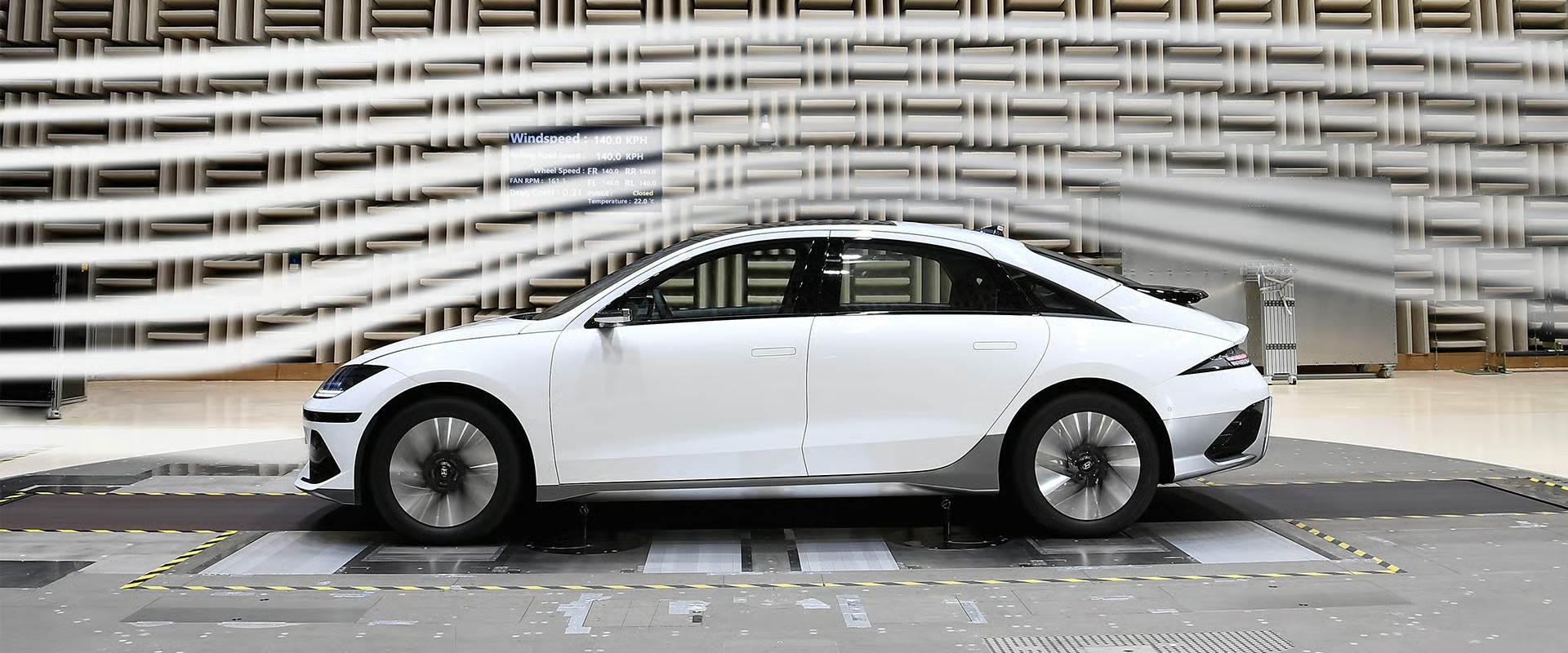
I did find the aerodynamics section notably interesting, so let me highlight that here:
Aerodynamic Testing Facility to Optimize EV Efficiency
Why It Matters
Aerodynamic efficiency is a key factor in EV range and performance. Hyundai is pushing boundaries with ultra-low drag technologies – both active and passive design – to maximize energy efficiency.
Highlights
-
- Facility size: ~6,000 m² (about the size of a soccer field)
- Wind tunnel: 3,400 hp system simulating airflow speeds up to 200 km/h
- Noise reduction: Carbon fiber fan blades, cutting noise to 54 dB at 100 km/h
- Ground simulation: Rotating belt system replicates ground-level airflow
Key Evaluations
-
- Drag and lift analysis: Measures resistance and vertical forces
- Wake flow optimization: Reduces turbulence behind the vehicle through the study of vortex patterns, improving efficiency
Aero Challenge Car
Hyundai Motor Group’s ‘Aero Challenge Car’ was developed as a research prototype to explore next-generation aerodynamic solutions, achieving a world-best drag coefficient of 0.144Cd. It features proprietary active aerodynamic technologies designed to reduce drag and boost efficiency, including:
-
- Active Cowl Cover (ACC): Eliminates the gap between the windshield cowl and glass, reducing air pressure and improving windshield airflow
- Active Rear Spoiler (ARS): Deploys based on driving mode to minimize vortex formation and enhance high-speed stability
- Active Side Blade (ASB): Retractable blades extend the rear overhang by 40 cm to suppress side vortices and stabilize wake flow
- Active Rear Diffuser (ARD): Fan-shaped diffuser unfolds from the rear underbody to control airflow and optimize wake dynamics
- 3D Integrated Undercover: Streamlines airflow, covering more than 87 percent of the underbody with a contoured 3D surface
These innovations are experimental and not yet production-ready but signal future directions in EV design to maximize aerodynamic efficiency and further enhance driving range and convenience for customers.

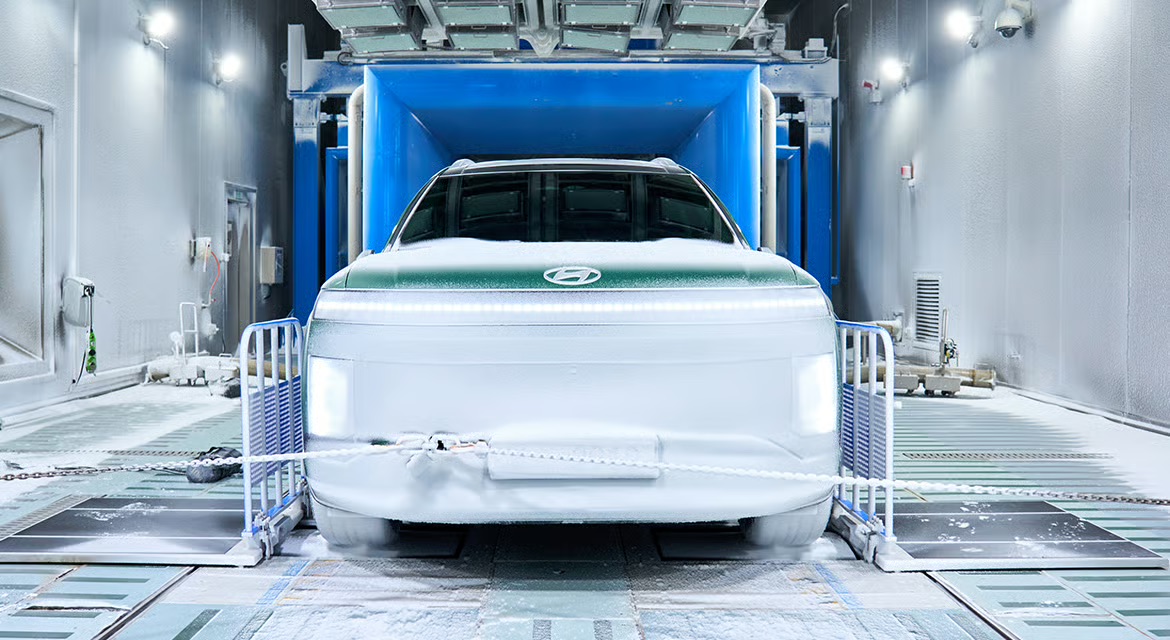
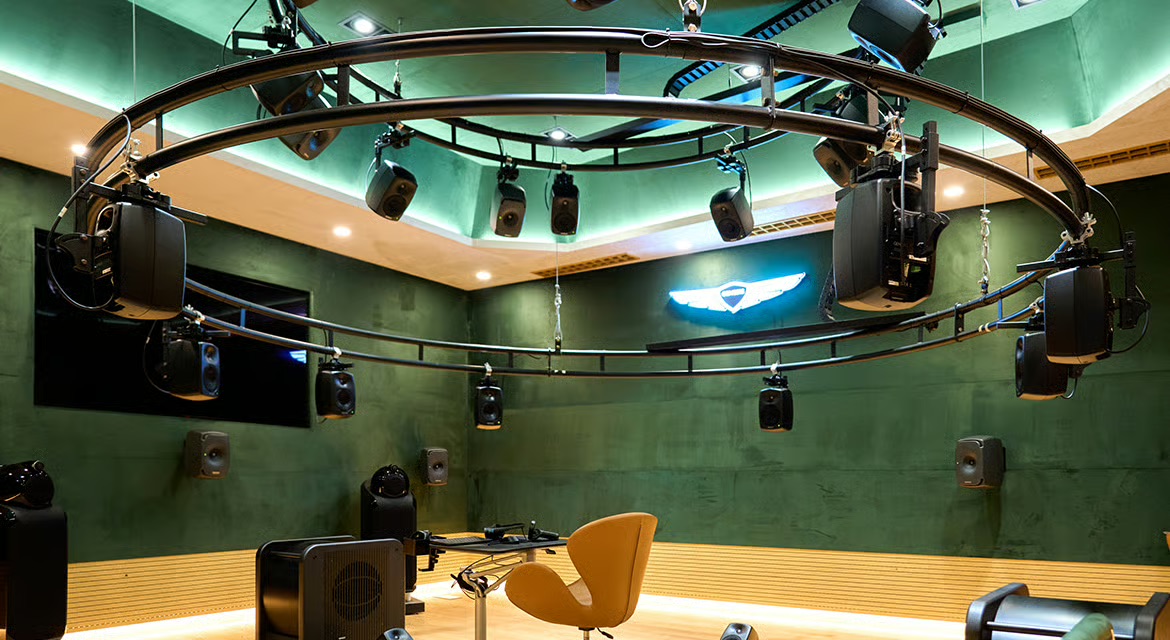


Well, we can see that Hyundai is putting a lot into its EV design and development. I encourage you to check out all of the pictures and details in the article. However, what is really critical at this stage is scaling up EV production and sales, more rapidly than one’s neighbor in the legacy auto industry. It would be nice to see Hyundai competing more with Tesla, Geely, or at least Volkswagen, rather the battling with Ford, Deepal, and Audi at much lower volumes. It seems to be Hyundai’s biggest problem for years in this sector has been lack of ambition and commitment. Hopefully we can see more of that in 2026 and 2027.
Support CleanTechnica via Kickstarter

Sign up for CleanTechnica’s Weekly Substack for Zach and Scott’s in-depth analyses and high level summaries, sign up for our daily newsletter, and follow us on Google News!
Have a tip for CleanTechnica? Want to advertise? Want to suggest a guest for our CleanTech Talk podcast? Contact us here.
Sign up for our daily newsletter for 15 new cleantech stories a day. Or sign up for our weekly one on top stories of the week if daily is too frequent.
CleanTechnica uses affiliate links. See our policy here.
CleanTechnica’s Comment Policy