

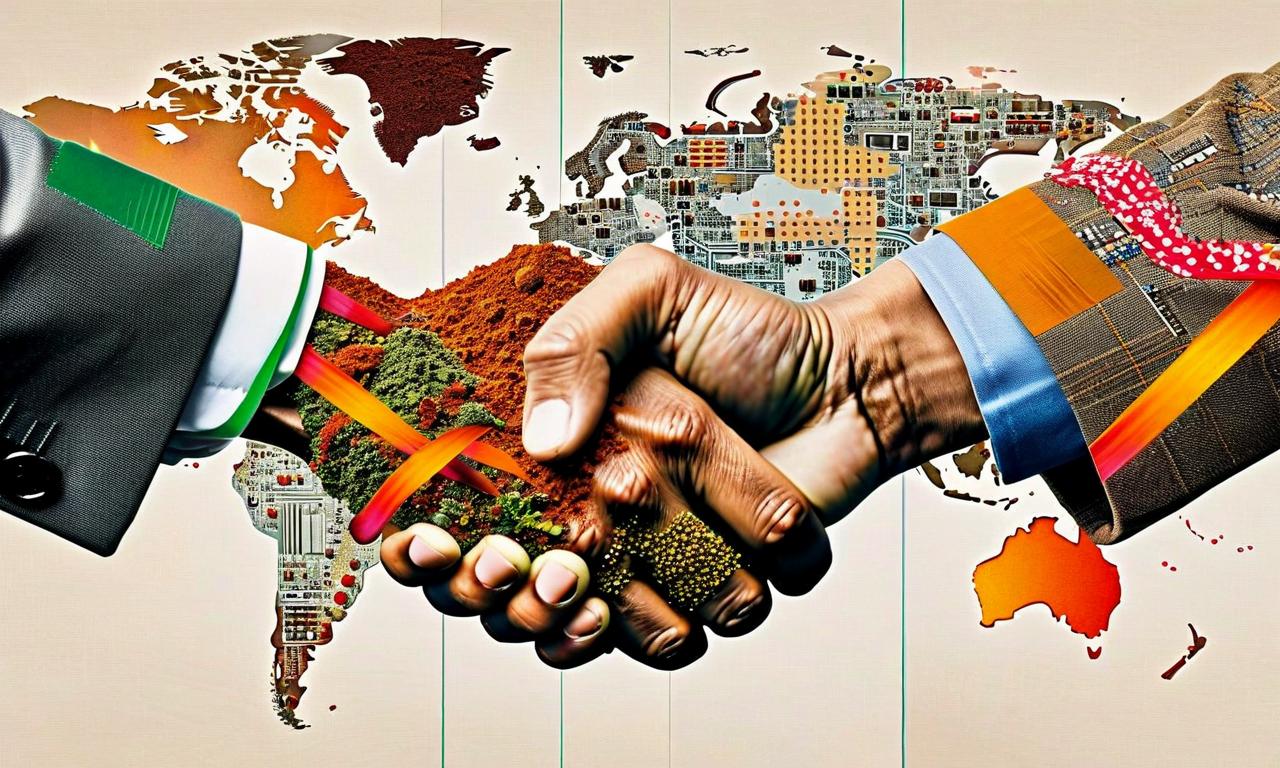
A Memorandum of Cooperation (MoC) between the Ministry of Mines, Government of India, and Japan’s Ministry of Economy, Trade and Industry (METI) has been exchanged, marking a significant milestone in bilateral ties, witnessed by Prime Minister Narendra Modi and his Japanese counterpart, Fumio Kishida. This agreement aims to foster collaboration in the mineral resources sector, focusing on sharing insights into mineral policies, mining techniques, extraction processes, stockpiling strategies, and sustainability practices. The move has been hailed as a step toward strengthening India-Japan relations, though it also invites scrutiny over whether the ambitious goals can be practically realized given the complexities of global mineral markets.
Global Alliances Shape Bilateral Ambitions
The strategic context of this MoC is rooted in the shared interests of India and Japan within multilateral platforms like the Minerals Security Partnership (MSP), Quad, and Indo-Pacific Economic Framework (IPEF), where both nations seek to build resilient supply chains for critical minerals. The agreement builds on their aligned goals to counter China’s dominance in the sector, with joint investments planned for exploration, mining, and processing of these minerals in India and beyond. This collaboration reflects a broader geopolitical strategy to ensure resource security, yet the involvement of multiple stakeholders raises questions about coordination. X posts show enthusiasm for economic synergies, though some caution against over-dependence on foreign partnerships, highlighting the delicate balance of sovereignty and cooperation.
Courtesy:- Ministry of Mines
Impacts Strengthen Economic and Environmental Ties
The implications of this MoC span economic, environmental, and diplomatic dimensions. Economically, joint investments could enhance India’s mineral output, supporting industries like electronics and renewable energy, while boosting Japan’s access to raw materials for its tech sector. Environmentally, the emphasis on sustainability promises greener mining practices, though the scale of operations may test these commitments. Diplomatically, the pact reinforces the Quad’s strategic framework, potentially elevating India-Japan influence in global trade, but it risks straining relations with China. Operationally, implementing shared policies may challenge administrative capacities, testing the narrative of seamless collaboration promoted by both governments.
Challenges Test Implementation Feasibility
Significant challenges emerge as the MoC takes shape. Operationally, aligning India’s mining regulations with Japan’s advanced standards requires significant effort, with potential delays in project timelines. Economically and socially, disparities in investment returns or environmental costs could spark local resistance, particularly in mining regions. Policy risks include trade disputes if third countries perceive this as an exclusionary alliance, and the establishment’s portrayal of a smooth partnership invites skepticism, given historical hurdles in bilateral projects. The complexity suggests a need for robust frameworks, yet differing national priorities may complicate progress.
Opportunities Unlock Innovation and Global Leadership
Despite the obstacles, opportunities abound for mutual growth. Economically, successful collaboration could position India and Japan as leaders in critical mineral supply, attracting further investment and enhancing trade balances. Socially, technology transfers from Japan could upskill India’s workforce, fostering inclusive development if managed equitably. Policy-wise, the MoC could set a precedent for sustainable mining standards, influencing global forums like MSP and IPEF. Innovative approaches, such as joint research hubs or digital mapping of resources, could emerge to maximize benefits. Whether this alliance flourishes or falters depends on execution, but it underscores a strategic pivot toward resource security.
Future Rests on Collaborative Success
The MoC between India’s Ministry of Mines and Japan’s METI, overseen by Narendra Modi and Fumio Kishida, heralds a new era of mineral resource collaboration aimed at bolstering critical supply chains. While the economic and diplomatic potential excites stakeholders, operational challenges and environmental concerns pose significant hurdles. Amid opportunities for innovation and leadership, the establishment’s optimistic narrative warrants critical review, given the complexities of international partnerships. The outcome—whether it solidifies a robust alliance or reveals logistical gaps—hinges on the commitment of both nations to turn this vision into reality.