
India Nears Completion of First Geothermal Power Project in Ladakh’s Puga Valley


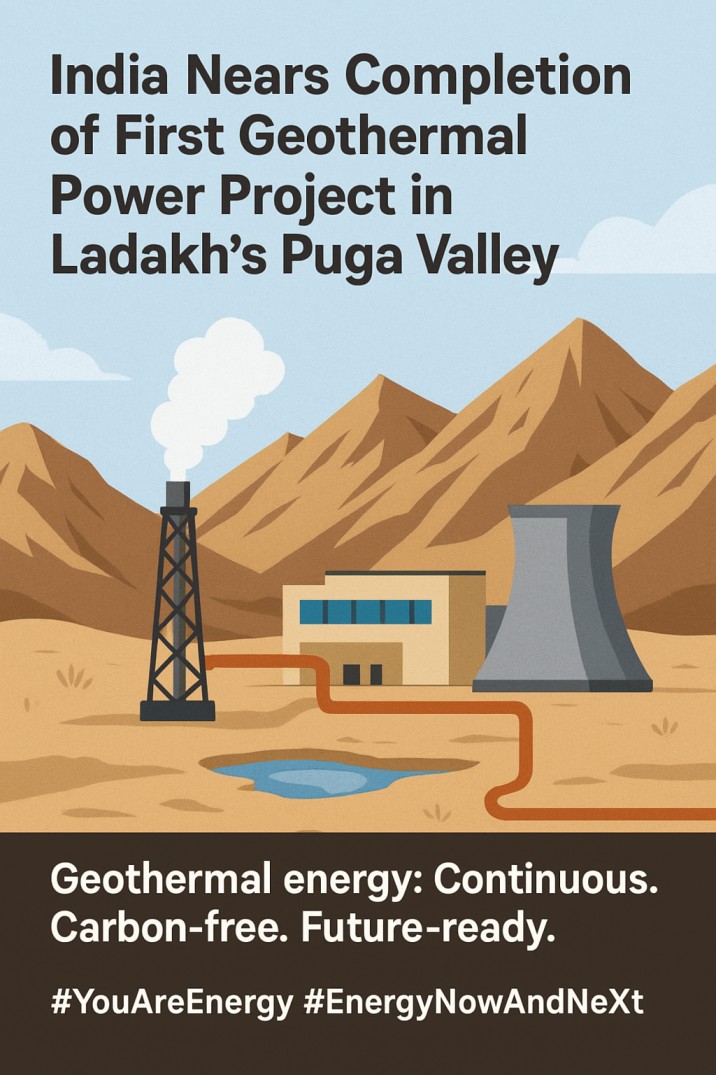
In a landmark achievement for India’s renewable energy ambitions, the Oil and Natural Gas Corporation (ONGC) is on the verge of completing the nation’s first geothermal-based electricity generation project in the Puga Valley, located in Ladakh’s cold desert. Situated at an altitude of approximately 14,000 feet, this pioneering initiative marks a major stride towards clean, continuous, and carbon-free energy production.
Harnessing the Power Beneath Ladakh’s Surface
The Puga Valley, known for its hot springs and geothermal activity, has long been identified as a promising site for geothermal energy development. ONGC’s work in the region involves drilling and constructing a geothermal well capable of tapping into naturally occurring underground heat to generate electricity. Once operational, this will be India’s first facility to produce power directly from geothermal sources.
What makes this achievement particularly noteworthy is the execution under some of the world’s most challenging environmental and geological conditions. The extreme cold, unconsolidated Himalayan formations, rugged terrain, and limited seasonal access demand both technical expertise and logistical resilience. Despite these hurdles, the project has progressed steadily, relying on homegrown technology and indigenous operational capabilities.
A Milestone in India’s Clean Energy Journey
The development of the Puga Valley project reflects India’s strategic push toward energy self-reliance and sustainability. Geothermal energy offers a unique advantage over solar and wind power — it can provide uninterrupted, round-the-clock electricity regardless of weather or daylight conditions. This makes it a critical component in achieving a stable renewable energy mix.
Moreover, geothermal energy is inherently carbon-free, producing negligible greenhouse gas emissions compared to fossil fuel-based generation. For a region like Ladakh, which has set ambitious carbon-neutral goals, this project represents a significant leap forward.
Putting India on the Global Geothermal Map
Globally, countries like Iceland, the United States, and the Philippines have successfully harnessed geothermal energy for decades. With the Puga Valley project, India is set to join this league, establishing itself as a player in the global geothermal sector. The ONGC Energy Centre, which is spearheading this initiative, envisions replicating such projects in other geothermal-rich zones across the country.
By leveraging indigenous expertise and resources, the project reinforces the “Make in India” ethos while contributing to national energy security. It also holds potential for regional development, creating employment opportunities and improving energy access in remote Himalayan areas.
The Road Ahead
Upon completion, the Puga Valley geothermal plant is expected to serve as a pilot for scaling up geothermal power generation in other parts of India. The experience gained in overcoming Ladakh’s extreme conditions could pave the way for more efficient drilling, better resource mapping, and cost-effective deployment in similar terrains.
India’s first geothermal power plant is more than just an engineering feat — it’s a statement of intent. It signals the country’s readiness to embrace innovative, clean technologies to meet its growing energy needs while staying committed to environmental stewardship.
Geothermal energy is continuous, carbon-free, and future-ready — and with Puga Valley leading the way, India is set to tap into the heat beneath its feet.