
India’s $89 Billion Clean Industrial Pipeline Stalls Amid Financing Bottlenecks: Report

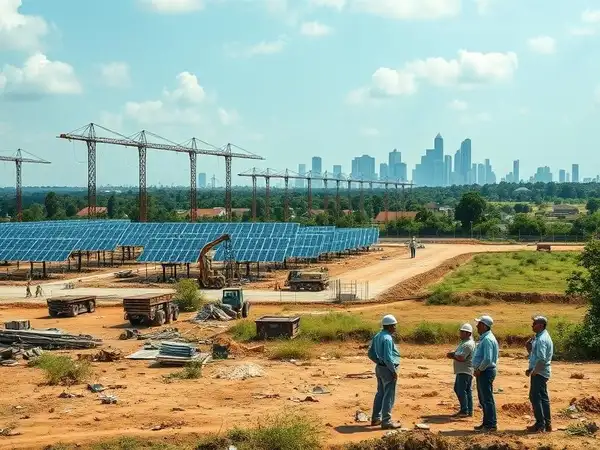
India’s ambitious clean industrial transition — valued at over $89 billion — is facing serious headwinds, as projects struggle to secure the necessary financing to move forward. According to a recent report by a clean industry alliance, only one project in this entire pipeline has reached final investment decision (FID) status in the past six months, raising red flags about the pace and viability of India’s green industrial growth targets.
Clean Industry Pipeline Faces Financing Freeze
The report highlights a concerning stagnation in India’s clean manufacturing and infrastructure projects, which span across key sectors such as:
-
Green hydrogen and ammonia production
-
Carbon capture, utilization and storage (CCUS)
-
Electrification of industrial heat
-
Sustainable steel and cement manufacturing
-
Battery storage and renewable energy manufacturing
Despite a promising pipeline, the flow of private capital and public support mechanisms has not kept pace. Projects are either stalled or progressing very slowly due to unclear return profiles, evolving regulatory frameworks, and high upfront costs.
What’s Causing the Financing Bottleneck?
Several factors are cited in the report as causes for the sluggish investment momentum:
-
High Capital Costs: Clean industrial technologies, especially those like green hydrogen or CCUS, require large-scale upfront investments with long gestation periods and uncertain near-term returns.
-
Lack of Policy Clarity: Developers cite the absence of clear subsidy frameworks, market guarantees, or off-take agreements — particularly for green hydrogen and carbon capture — as a deterrent to long-term commitments.
-
Risk Aversion by Lenders: Commercial banks and investors remain hesitant to fund first-of-its-kind projects without proven profitability or credit guarantees.
-
Limited Carbon Pricing or Incentives: Without a robust carbon pricing regime or tax incentives, clean industrial projects struggle to compete with traditional, emission-intensive alternatives.
One Project Reaches FID: A Rare Milestone
Out of the $89 billion worth of projects identified, only one has reached a final investment decision (FID) — a telling statistic that reflects the scale of the problem. The project, though unnamed in the report, is likely in the hydrogen or low-emissions industrial cluster category, according to industry insiders.
This lack of FID progress is alarming given that India has positioned itself as a global clean manufacturing hub and has set a net-zero target by 2070, with mid-century goals for energy transition and emission reductions.
Industry Voices and Policy Recommendations
The report calls for urgent policy action and financial innovation, recommending the following steps:
-
Creation of viability gap funding (VGF) or production-linked incentives (PLIs) for clean industrial projects
-
Green investment risk guarantees to lower lender exposure
-
Greater role for public-private partnerships (PPPs) in de-risking early-stage technologies
-
A clear roadmap for carbon markets and pricing to reward emission reductions
-
Long-term off-take agreements and mandates for green procurement by heavy industries
Industry leaders have emphasized that without clear signals and structured financial support from the government and regulators, India risks falling behind global competitors like the EU and the US, both of which have already rolled out multi-billion-dollar subsidies and carbon border adjustment mechanisms.