
India’s Coal and Mineral Sectors Undergoing Historic Transformation, Driving Green Growth: Union Minister Reddy

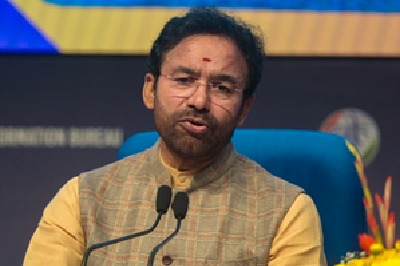
India’s coal and mineral sectors are experiencing a historic transformation, aligning the country’s traditional energy industries with modern sustainability goals, according to Union Minister of Mines and Coal, Pralhad Joshi Reddy. Speaking at a recent industry forum, the minister emphasized that the sector’s evolution is crucial to meeting India’s rising energy demand while simultaneously supporting the government’s ambitious green growth agenda.
A Sector in Transition
For decades, coal and minerals have been the backbone of India’s industrial growth, powering thermal plants, steel production, and infrastructure projects. However, the Union Minister noted that recent policy reforms, technological innovations, and strategic investments are transforming these sectors from purely extractive industries into drivers of sustainable development.
“India is at a unique juncture,” Reddy said. “Our coal and mineral sectors are not only meeting the country’s energy needs but also contributing to cleaner and greener industrial practices.”
Driving Green Growth
The minister highlighted several initiatives aimed at making mining and coal operations more environmentally friendly. These include:
-
Adoption of cleaner coal technologies and high-efficiency power plants to reduce carbon emissions.
-
Digitization and automation in mining to improve operational efficiency and minimize environmental impact.
-
Expansion of mineral beneficiation and recycling efforts, ensuring optimal utilization of extracted resources.
-
Strategic exploration of critical minerals, such as rare earth elements, lithium, and cobalt, which are vital for renewable energy technologies like solar panels, wind turbines, and electric vehicles.
According to Reddy, these measures are helping India transition toward a more sustainable energy ecosystem without compromising on the country’s growth imperatives.
Meeting Rising Energy Demand
India’s energy consumption continues to rise, driven by rapid industrialization, urbanization, and a growing population. Coal still accounts for a significant portion of the nation’s power generation. Reddy emphasized that the sector’s modernization is essential to ensuring reliable energy supply, reducing import dependence, and maintaining industrial competitiveness.
The minister also pointed out that mineral-rich states are seeing new investment inflows, job creation, and infrastructure development, which together strengthen local economies and support inclusive growth.
Strategic Policy Reforms
India’s coal and mineral sectors have benefited from several recent policy measures, including:
-
Commercial coal mining for private and public players, breaking decades-long monopolies.
-
Auction-based allocation of mineral blocks, improving transparency and efficiency.
-
Focus on sustainable mining practices, guided by environmental regulations and corporate social responsibility norms.
These reforms, Reddy argued, have created an ecosystem that balances economic growth with environmental sustainability and energy security.
Global Implications
India’s transformation in the coal and mineral sectors also positions the country as a key player in the global green transition. With increasing demand for critical minerals and coal technologies worldwide, India’s modernized sector could not only meet domestic energy needs but also contribute to global supply chains for renewable energy and advanced industrial applications.
Conclusion
Union Minister Reddy’s remarks underscore a pivotal moment in India’s energy and mineral journey. By embracing innovation, sustainability, and strategic resource management, India’s coal and mineral sectors are no longer just traditional industries—they are now central to the nation’s green growth story and its broader ambitions for energy security and economic resilience.
As India charts its path toward net-zero targets and a low-carbon future, the coal and mineral sectors’ ongoing transformation could become a blueprint for harmonizing growth, sustainability, and energy demand in the 21st century.