

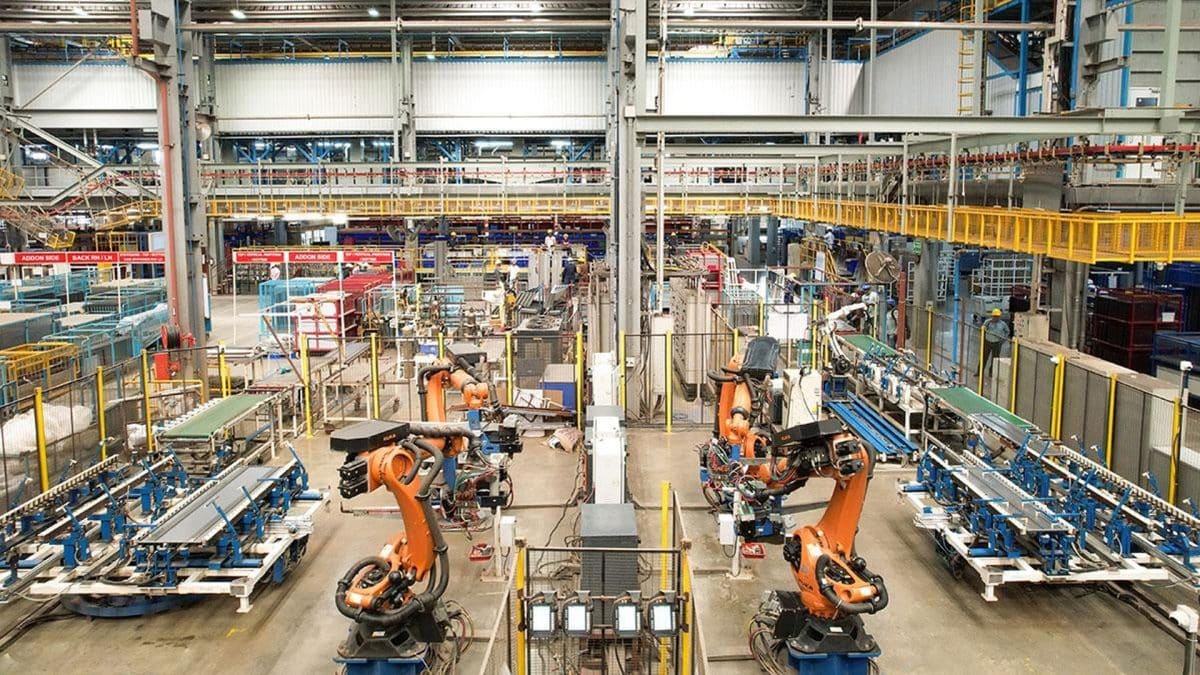
India’s manufacturing sector—long criticized for its reliance on low-cost assembly and manual labor—is undergoing a radical transformation driven by deep-tech innovations. A recent report from Business Standard highlights how startups are leveraging robotics, artificial intelligence (AI), and precision engineering to elevate the country’s factory floors from maligned underperformers to global leaders in high-precision production. This shift aims to propel India toward its ambitious $1.3 trillion manufacturing goal, addressing longstanding challenges like inefficiency, waste, and human error.
The article, titled “India’s much-maligned factory floor gets a radical deep-tech makeover,” published on August 6, 2025, spotlights emerging technologies and startups reshaping the sector. Shared widely on platforms like X (e.g., @seshanm and @IndianVCA) and LinkedIn (e.g., Prashanth Prakash’s post), the narrative reflects India’s push to compete with global manufacturing powerhouses like China and Germany. This article explores the drivers of this makeover, key technologies, startup examples, challenges, and the broader economic implications for India in 2025.
Drivers of the Deep-Tech Makeover
India’s $500-billion manufacturing sector has historically been characterized by labor-intensive assembly lines, often criticized for low productivity and high waste. However, several factors are catalyzing this deep-tech revolution:
-
Economic Ambitions: With a target of $1.3 trillion in manufacturing output by 2030, as outlined in government initiatives like “Make in India,” the sector needs advanced technologies to scale efficiently. The EY-Parthenon report, cited in related coverage from Business Standard, emphasizes the role of deep tech in achieving this growth, particularly in high-value segments like aviation and auto parts.
-
Global Trade Pressures: U.S. tariffs on Indian exports, including auto parts, have prompted diversification into markets like Brazil, Poland, and Africa. Deep-tech adoption enhances competitiveness by improving quality and reducing costs, as noted in IBEF reports.
-
Technological Convergence: The integration of AI, robotics, and precision engineering allows for micron-level accuracy, reducing reliance on manual labor and addressing skill gaps in India’s workforce.
-
Startup Ecosystem: India’s vibrant deep-tech startup scene, supported by funding from venture capitalists like Prashanth Prakash, is pioneering solutions tailored to local challenges, as highlighted in LinkedIn discussions.
-
Sustainability Imperatives: With global emphasis on reducing waste, deep-tech solutions like automated manufacturing minimize material loss, aligning with India’s net-zero goals.
Key Technologies Transforming the Factory Floor
The makeover involves cutting-edge technologies that automate and optimize production processes:
-
Robotics: Robotic arms enable precise tasks, such as placing carbon fibre strands with micron-level accuracy. This eliminates human error, which traditionally plagued composite manufacturing, reducing waste by up to 20% compared to manual methods.
-
Artificial Intelligence (AI): AI algorithms analyze production data in real-time, predicting maintenance needs and optimizing workflows. This integration with robotics creates “smart factories” that adapt to varying demands, enhancing efficiency.
-
Precision Engineering: Advanced tools ensure components meet exact specifications, crucial for industries like aviation and auto parts. Technologies like automated fibre placement systems revolutionize material handling, making production faster and more reliable.
These technologies, as described in the Business Standard article, shift India from low-cost assembly to high-precision manufacturing, positioning the country as a hub for complex, value-added products.
Startup Examples Leading the Charge
Deep-tech startups are at the forefront of this transformation, with innovative solutions tailored to India’s manufacturing needs:
-
Fabheads: Based in Chennai, Fabheads has developed an automated manufacturing system using robotic arms for carbon fibre composite production. In a climate-controlled facility, the robot places strands with micron precision, completing tasks in minutes that once took craftsmen hours. This reduces material waste by 20% and human error, as detailed in the Business Standard report. Fabheads exemplifies how startups are addressing precision challenges in aviation and auto sectors.
-
Other Emerging Players: While the article focuses on Fabheads, related coverage from LinkedIn and X mentions startups in robotics and AI, such as those specializing in factory automation. These ventures, often backed by investors like Prakash, are scaling solutions for industries like auto parts, where India aims to expand exports to Brazil ($12.09 billion aftermarket by 2028) and Africa (over $7.6 billion combined).
These examples illustrate a grassroots innovation wave, with startups leveraging India’s engineering talent to create cost-effective, scalable technologies.
Challenges in the Deep-Tech Transition
Despite the promise, the makeover faces hurdles:
-
Infrastructure Gaps: Many factories lack the climate-controlled environments needed for precision tech, requiring significant investments, as noted in Business Standard.
-
Skill Shortages: Transitioning to deep-tech demands reskilling workers, a challenge in a sector reliant on manual labor. The article highlights the shift from craftsmen to automated systems, potentially displacing jobs without adequate training.
-
Funding and Scaling: Startups like Fabheads need venture capital to scale, but India’s deep-tech ecosystem lags behind China. LinkedIn posts emphasize the need for more investment to compete globally.
-
Regulatory and Trade Barriers: U.S. tariffs on Indian exports, as per IBEF, could hinder growth in high-tech manufacturing unless offset by diversification.
-
Sustainability Concerns: While reducing waste, deep-tech adoption may increase energy consumption, requiring green innovations to align with India’s environmental goals.
Critical Perspective: Innovation vs. Implementation Realities
The deep-tech makeover represents a bold leap for India’s manufacturing, addressing criticisms of inefficiency and low value-add. Startups like Fabheads demonstrate how robotics and AI can reduce waste by 20% and enhance precision, aligning with the $1.3 trillion goal. This shift could boost exports, particularly in auto parts to markets like Brazil and Africa, as per the EY-Parthenon report, positioning India as a global manufacturing contender.
However, the optimism must be tempered. The transition risks exacerbating inequality by displacing low-skilled workers, a concern in a labor-abundant economy. Infrastructure and funding gaps could limit scalability, with deep-tech remaining confined to urban hubs like Chennai. Moreover, while the Business Standard article celebrates the “radical” change, it overlooks potential over-reliance on imported tech components, which could undermine self-reliance goals.
Geopolitically, U.S. tariffs highlight vulnerabilities, but diversification into emerging markets offers resilience. The makeover’s success depends on balanced policies—reskilling programs, sustainable practices, and increased R&D funding—to ensure inclusive growth.
Broader Implications: India’s Manufacturing Future
India’s deep-tech revolution could transform its $500-billion sector into a $1.3 trillion powerhouse by 2030, creating jobs in high-tech fields and boosting GDP. Exports of precision-engineered auto parts to Brazil ($12.09 billion aftermarket), Poland ($4.77 billion), and Africa (over $7.6 billion) align with this vision, as per Business Standard and IBEF. Globally, it positions India as an alternative to China in supply chains, attracting investments amid trade tensions.
Socially, the shift promotes innovation, but equitable implementation is key to avoiding job losses. As shared on X by @seshanm and LinkedIn by Prashanth Prakash, this makeover signals India’s ascent in global manufacturing, blending tradition with cutting-edge tech.
A Radical Reboot for Global Competitiveness
India’s factory floor, once maligned for its inefficiencies, is poised for a deep-tech renaissance, driven by robotics, AI, and precision engineering. Startups like Fabheads exemplify this change, reducing waste and error while scaling production. As India targets $1.3 trillion in manufacturing, this makeover addresses trade challenges and unlocks export opportunities in Brazil, Poland, and Africa.