

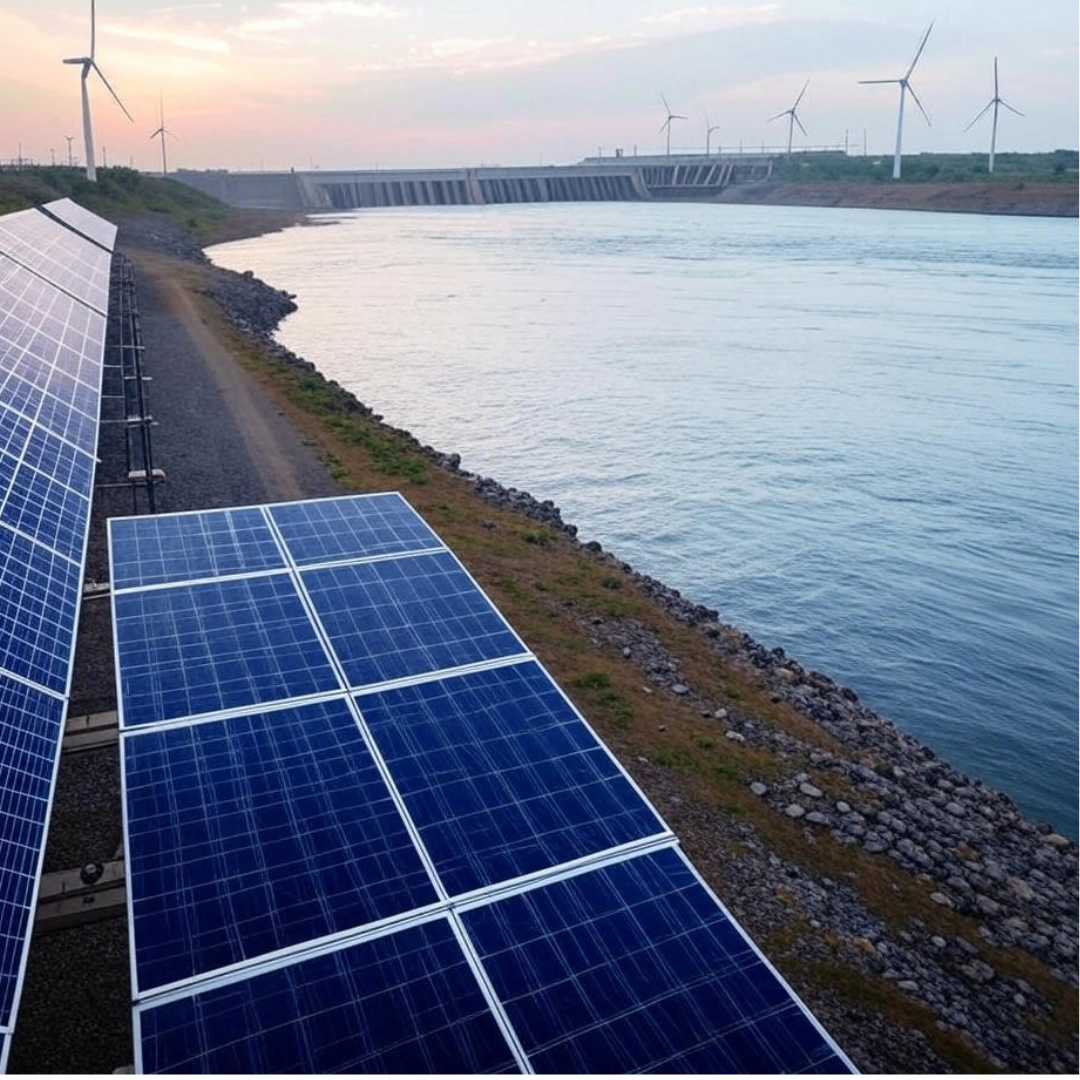
India has etched its name in the annals of global sustainability by achieving a landmark 50% of its total installed power capacity from non-fossil fuel sources. This milestone, reached five years ahead of the original 2030 target, marks a transformative leap in the nation’s energy landscape and sets a powerful precedent for sustainable development worldwide.
A Milestone in Clean Energy
India’s total installed power capacity has reached 484.8 GW, with an impressive 242.8 GW now sourced from renewable energy. This achievement is the culmination of a decade-long push to diversify the energy mix, driven by visionary policies and groundbreaking projects. The past year alone saw a record addition of 29.52 GW of renewable capacity in FY 2024-25, fueled by initiatives like the PM Surya Ghar Muft Bijli Yojana, which promotes rooftop solar installations, and the National Green Hydrogen Mission, aimed at pioneering green hydrogen technology.
The Power Behind the Shift
The renewable energy surge is powered by a robust portfolio, with solar leading the charge at over 90 GW, followed by wind, hydro, and bioenergy. This diversification has significantly reduced the nation’s dependence on coal, which, while still a key player, is gradually being phased out in favor of cleaner alternatives. The rapid growth is a testament to India’s strategic investments in large-scale solar parks, wind energy corridors, and innovative energy storage solutions, all of which have bolstered grid reliability and resilience.
A Global Benchmark
This early success in meeting the 50% non-fossil fuel target, initially pledged under the Paris Agreement as part of India’s Nationally Determined Contributions, highlights the country’s proactive approach to climate action. With a population exceeding 1.4 billion and rapid urbanization driving energy demand, India has managed to align economic growth with environmental stewardship. The milestone has drawn international attention, positioning India as a model for other developing nations striving to balance development with sustainability.
Future Prospects
Looking ahead, India aims to scale its renewable capacity to 500 GW by 2030, a goal that now seems well within reach given the current trajectory. The government’s continued focus on policy incentives, private sector collaboration, and technological innovation promises to accelerate this transition. As the world watches, India’s green revolution is not just a national triumph but a beacon of hope for a sustainable global future.