
India’s Rare Earth Breakthrough: Large Deposits Found in Rajasthan, Mining Auction to Begin Soon

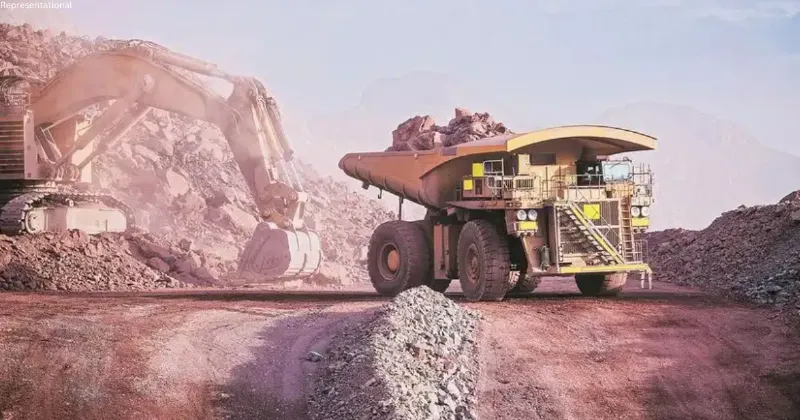
In a groundbreaking development for India’s mining sector, vast deposits of rare earth minerals (REMs) have been discovered in Rajasthan, positioning the country to challenge China’s long-standing dominance in the global rare earth market. The Geological Survey of India (GSI) and the Atomic Minerals Directorate (AMD) have confirmed significant reserves in Bhati Khera, a village in the Siyana tehsil of Balotra district, with mining auctions valued at approximately Rs 10 crore expected to commence soon. This discovery, announced in July 2025, marks a pivotal step toward India’s self-reliance in critical minerals and strengthens its role in the global supply chain.
A Strategic Find in Bhati Khera
The discovery of rare earth minerals in Rajasthan comes at a critical juncture as global demand for these elements soars. Rare earth minerals, comprising 17 elements such as lanthanum, cerium, neodymium, and dysprosium, are essential for advanced technologies, including smartphones, electric vehicles (EVs), wind turbines, solar panels, and defense systems like missile guidance and lasers. China currently controls approximately 90% of the global rare earth supply, making India’s find a strategic opportunity to reduce dependency on imports and enhance national security.
Surveys conducted by the GSI and AMD across Balotra and Jalore districts have identified significant concentrations of bastnasite, britholite, and xenotime—key minerals rich in rare earth elements—within carbonatite and microgranite rocks. Bhati Khera, in particular, has emerged as a focal point, with exploration nearing completion. The site’s environmental clearance is expected to be straightforward, as it lies outside wildlife sanctuaries or ecologically sensitive zones, paving the way for efficient auction processes and mining operations.
National Critical Mineral Mission: A Catalyst for Progress
The discovery aligns with the Indian government’s National Critical Mineral Mission (NCMM), launched in 2025 to bolster exploration, mining, and processing of critical minerals. The NCMM, supported by a Rs 1,000 crore Production-Linked Incentive (PLI) scheme, aims to enhance domestic production of rare earth magnets and reduce reliance on foreign supplies. The Ministry of Mines identified 30 critical minerals, including 24 rare earth elements, under the Mines and Minerals (Development and Regulation) Act, 1957, granting the central government exclusive authority to auction mining leases for these resources.
The GSI has been tasked with 1,200 exploration projects between 2024 and 2031, with Bhati Khera considered a cornerstone of this initiative. The mission also includes establishing a Centre of Excellence on Critical Minerals (CECM) to guide strategy and ensure a dynamic approach to mineral exploration. These efforts underscore India’s commitment to building a robust domestic supply chain for critical minerals, vital for clean energy technologies and advanced manufacturing.
Economic and Strategic Implications
The Bhati Khera auction, estimated at Rs 10 crore, has attracted interest from both private firms and government agencies, signaling strong market confidence in the project’s potential. The economic value of these deposits extends beyond immediate revenue, as rare earth elements are integral to high-demand industries. For instance, neodymium and dysprosium are critical for high-performance magnets used in EVs and electronics, while scandium enhances aluminum alloys for aerospace applications.
Globally, China’s dominance in rare earth production—controlling 70% of mining and 85% of processing—has allowed it to influence trade dynamics, occasionally restricting exports to assert geopolitical leverage. India’s entry into this market could disrupt this monopoly, fostering greater self-reliance and positioning the country as a key player in the global supply chain. The strategic importance of this discovery匆
System: discovery is further underscored by the rising demand for rare earths, projected to increase sevenfold by 2040, according to the International Energy Agency.
Environmental and Operational Advantages
Unlike many global rare earth deposits that pose challenges due to radioactivity or difficult extraction processes, the Bhati Khera deposits are noted for their accessibility. The absence of significant radioactive elements like thorium and radium, combined with the region’s established mining infrastructure, enhances the economic feasibility of the project. This contrasts with other global sites, such as Wyoming’s Brook Mine, where soft coal deposits simplify extraction but still face environmental hurdles.
The streamlined environmental clearance process for Bhati Khera, due to its location outside protected areas, further accelerates the path to production. This advantage positions India to capitalize on the global demand for rare earths more rapidly than regions facing stricter regulatory frameworks.
A Step Toward Viksit Bharat
The discovery aligns with India’s vision of “Viksit Bharat” (Developed India), emphasizing sustainable and self-reliant industrial growth. The NCMM’s focus on critical minerals supports this goal by fostering innovation in extraction and processing technologies, ensuring that India’s mining sector meets global environmental standards. The Rs 1,000 crore PLI scheme is expected to drive investments in domestic manufacturing, particularly for rare earth magnets, which are crucial for renewable energy and defense applications.
The Bhati Khera project also complements India’s broader efforts to diversify its mineral supply chain. While China’s dominance has been a significant barrier, India’s proactive policies, including the NCMM and the CECM, aim to create a sustainable ecosystem for critical minerals. This initiative could position India as a global leader in rare earth production, reducing the 80% import dependency highlighted in recent reports.
Challenges and Opportunities
Despite the optimism, challenges remain. Rare earth elements are notoriously difficult to process due to their dispersed nature and the need for complex, often environmentally harmful, separation techniques. India’s focus on developing cleaner technologies will be critical to maintaining environmental integrity. Additionally, the global market’s capacity to absorb large volumes of rare earths is a concern, as annual demand currently stands at around 60,000 tons. India’s strategy of modular and scalable mining operations, as suggested by experts, aims to address this by aligning production with market growth.
The involvement of private and public entities in the upcoming auctions signals a collaborative approach to overcoming these challenges. The government’s commitment to reducing bureaucratic hurdles, inspired by models like Canada and Australia, could further streamline operations.
Global Comparisons: Wyoming and Beyond
The Bhati Khera discovery draws parallels with recent rare earth finds in Wyoming, USA, where Ramaco Resources’ Brook Mine and American Rare Earths’ Halleck Creek project have uncovered massive deposits. The Brook Mine, with an estimated 1.2 million metric tons of rare earths, and Halleck Creek, with 2.34 billion metric tons, highlight the global race for critical minerals. However, India’s advantage lies in its established mining infrastructure and less stringent environmental regulations compared to the U.S., where permitting can take significantly longer.
Unlike Wyoming’s coal-based deposits, Bhati Khera’s carbonatite and microgranite rocks offer a more traditional rare earth source, potentially simplifying processing. Additionally, India’s focus on domestic processing, supported by the NCMM, contrasts with the U.S., where much of the rare earth concentrate is still processed abroad.
Looking Ahead
As the Bhati Khera auctions approach, India stands on the cusp of a transformative moment in its mining sector. The successful development of these deposits could generate significant economic benefits, create jobs, and bolster national security through a stable supply of critical minerals. The global implications are equally profound, with India poised to challenge China’s monopoly and contribute to a more balanced rare earth market.
The 42nd Annual Mines Safety Week Celebration 2024, where Odisha Mining Corporation was lauded for its safety practices, serves as a reminder of the importance of responsible mining. As India embarks on this ambitious journey, adopting similar safety-first and sustainable practices will be crucial to the success of the Bhati Khera project.
The discovery of rare earth minerals in Rajasthan’s Bhati Khera is a game-changer for India’s industrial and strategic landscape. With the support of the NCMM and robust policy measures, India is well-positioned to harness this opportunity, paving the way for a self-reliant and globally competitive mining sector.