

Support CleanTechnica’s work through a Substack subscription or on Stripe.
While walking the floor at CES, Jackery attracted my attention. Jackery started as a portable battery power company 14 years ago. There are many competitors in that space now offering high-quality products. Increasingly, they blur the line between portable battery storage and home storage, with solar-integrated scalable home batteries that can be taken with you when you need them. Jackery’s new HomePower 3600 Plus is a great example.
Beyond their more mainstream solar and batty products, what really set Jackery apart at the show was their design and creativity. I briefly mentioned their solar roof product in a previous article, which was unveiled last year and has won several awards. The curved solar tiles mimic terracotta tiles and offer up to 25% cell conversion efficiency. They integrate with non-solar tiles, ridges, baffles, etc. and a quick-mounting system to allow people to scale the solar system to their needs while maintaining visual consistency throughout the roof. I could imagine someone buying a system like this to rebuild a historic home near the coast in Portugal when they retire, with the tiles fitting in seamlessly with the local aesthetic (not that I would ever think about that). And I could see some restrictive HOAs approving such a system to blend in with surrounding homes.
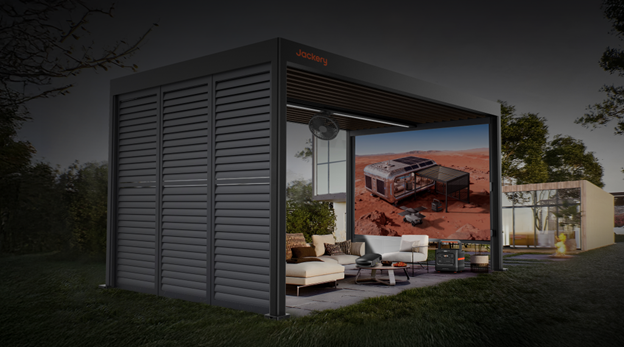
Jackery’s new Solar Gazebo also attracted. The gazebo measures 4.5 m (14.76 ft) long by 3 m (9.84 ft) wide by 2.7 m (8.86 ft) tall. In addition to serving as an outdoor living space, Jackery mentioned that it could be used to house and charge a golf cart or similar equipment. However, I could see using a product like this as a solar car port for a compact car, like a BYD Seagull at roughly 4 m wide and 1.7 m wide. Or, for fans of e-mobility, it would be a great way to charge e-bikes and scooters while keeping them out of the rain.
The solar gazebo includes 2 kW of panels for roughly 10 kWh of energy production per day. This is not enough to power a typical off-grid home but could add supplemental power to a home solar system. It could also be used to reduce utility bills in a grid-connected system, especially where net metering is not present and people are not compensated for excess fed into the grid. And, when combined with one of their storage systems, the solar energy can provide backup power or load shift to when it is needed.
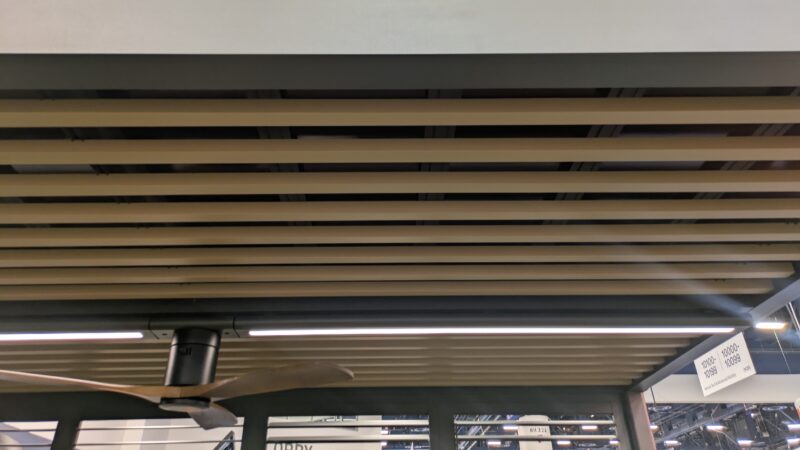
But the solar panels can also power outdoor living. In addition to built-in outdoor outlets, the gazebo includes lighting and can integrate a fan or video projector into the ceiling. That projector uses a screen that deploys as one of the walls, which can be replaced with a light-filtering screen or louvered side panels.
Overall price is anticipated to be in the $12-15,000 range. At this point, some people are probably thinking that they could DIY something together for less, especially if it didn’t have a louvered roof. However, this is a 350 kg permanent structure made from 6063 T5 aluminum. A heavy structure of lightweight, high-strength material. When I pushed it at the show, it didn’t budge. If you look for a similar non-solar aluminum permanent gazebo, it will often tend to come in at a similar price.
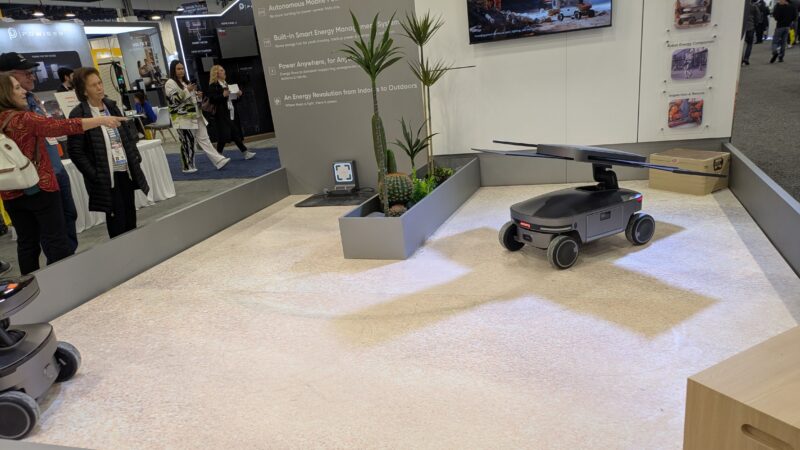
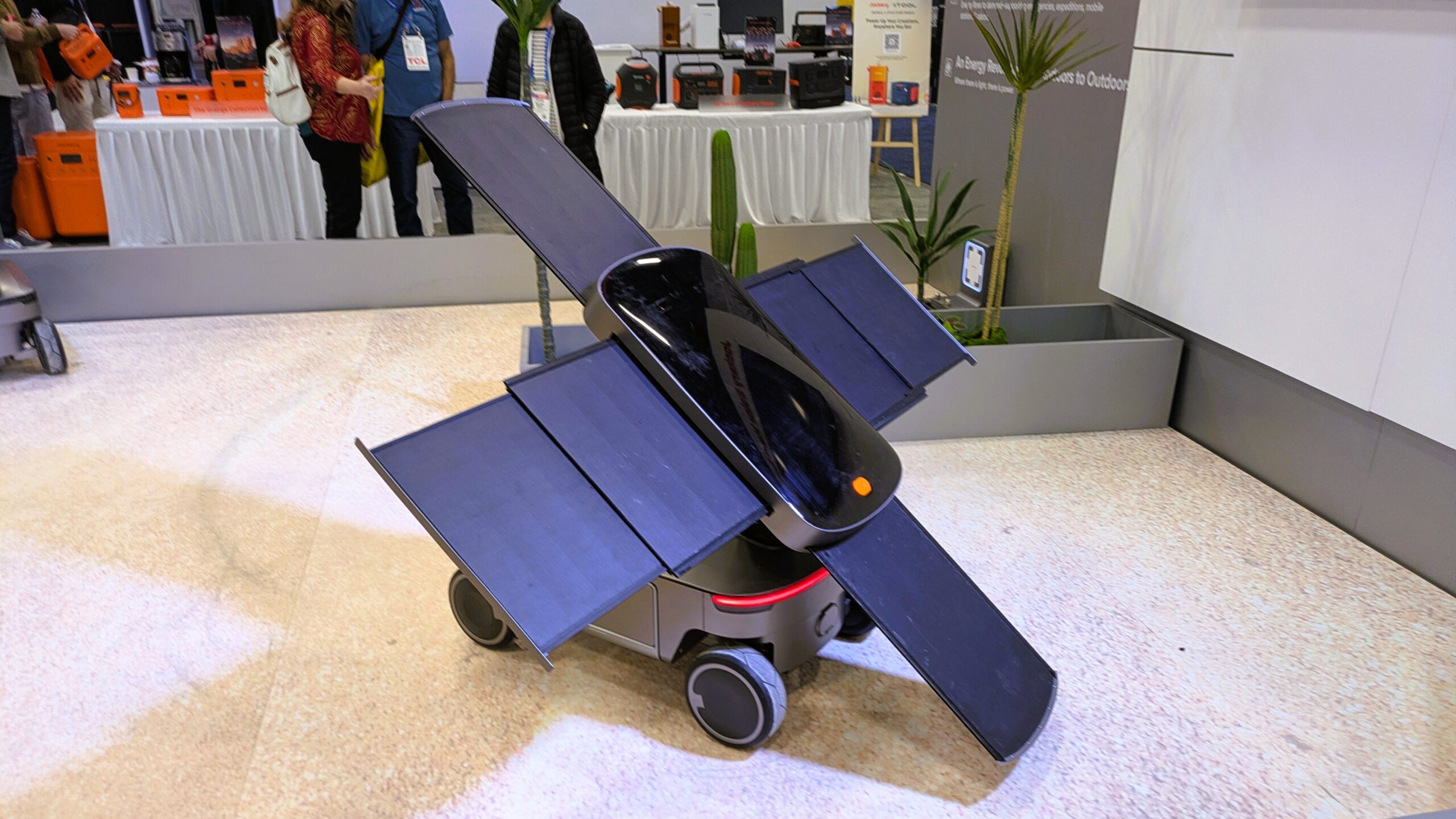
Also at the display was a “Solar Mars Bot” designed to take power where you need it. The 2 kWh of storage capacity per module and 1.5 kW output is useful, if not the largest portable battery. In addition, a retractable, tracking 300 W solar panel can be deployed to add power on the go. In addition, the energy storage is modular and detachable, letting the user add more power when needed.
The robot can move at quick walking pace of 1.8 m/s (4 mph) and maneuver withing 5 cm of obstacles with four-wheel steering. It can also navigate back to its dock when its charge gets low, with app-based monitoring and control. However, the dock doesn’t just charge the robot. Bidirectional charging also provides supplemental home backup power, potentially driving into the sun to recharge before returning to provide power over extended outages.
Jackery mentions emergency response, field operations, inspection, and outdoor living as some of the potential applications. Having recently been on a family vacation in Jamaica, I could also see it being useful to power audio systems, blenders, hot plates, etc. at different events at resorts. We do not have an indication of price yet, but it will undoubtedly be at a premium compared to just the battery alone.
Creativity In Design
Of course, these products are not going to replace the need for utility-scale generation and storage in the quest to reduce carbon emissions. Alone, they are not stopping global warming. However, they offer creative solutions that are designed to meet specific consumer needs.
Overall, flat solar panels are becoming increasingly commoditized globally. Stationary home energy storage is likely headed in a similar direction. Prices have declined significantly, especially in global markets. We could get to the point where many people pay about as much attention to the brand of solar panels or home storage batteries as they do to the brand of copper wire in their walls. That can be a good thing from a mass adoption perspective.
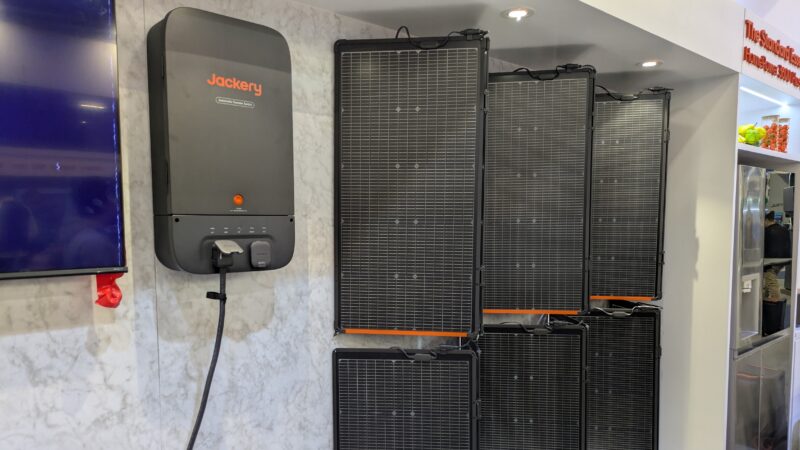
However, it will take innovation and design that focuses on customer needs for brands to break through. People will still pay for premium products in largely commoditized segments, like Lutron switches or Delta faucets, due to design and innovative features. Clearly there is some imagination in Jackery’s products. I can even see the design emphasis in their more traditional storage and solar products. And you can imagine them taking some of these products farther: An ATV-sized, ruggedized rover for off-road applications or work sites? Solar garages with integrated EV charging? Solar roofs that mimic other styles, like cedar shake?
Overall, electrification opens new possibilities. Electricity is not restricted by a cord anymore. You don’t have to worry about the exhaust or noise of gasoline. Increasingly, electrified products don’t have to look like a science experiment. Designs can be more aesthetically appealing than the legacy products they replace. The flexibility opens up new possibilities to address customer needs, including many we haven’t even thought of yet. It will be interesting to see what companies like Jackery come up with next.
Still, these products might not be for you. That’s great. There are different paths to electrification. While some may enjoy the DIY possibilities, others can appreciate a fully integrated user-friendly application. You can also still DIY a hotrod desktop that crushes a MacBook in performance for the money, but different people have different priorities. While I would love for the world to be populated with the kind of people who read CleanTechnica, that isn’t realistic. The more clean electrification can fit a broad range of needs and tastes, the faster we can get to widespread adoption.
Sign up for CleanTechnica’s Weekly Substack for Zach and Scott’s in-depth analyses and high level summaries, sign up for our daily newsletter, and follow us on Google News!
Have a tip for CleanTechnica? Want to advertise? Want to suggest a guest for our CleanTech Talk podcast? Contact us here.
Sign up for our daily newsletter for 15 new cleantech stories a day. Or sign up for our weekly one on top stories of the week if daily is too frequent.
CleanTechnica uses affiliate links. See our policy here.
CleanTechnica’s Comment Policy