

Support CleanTechnica’s work through a Substack subscription or on Stripe.
Or support our Kickstarter campaign!
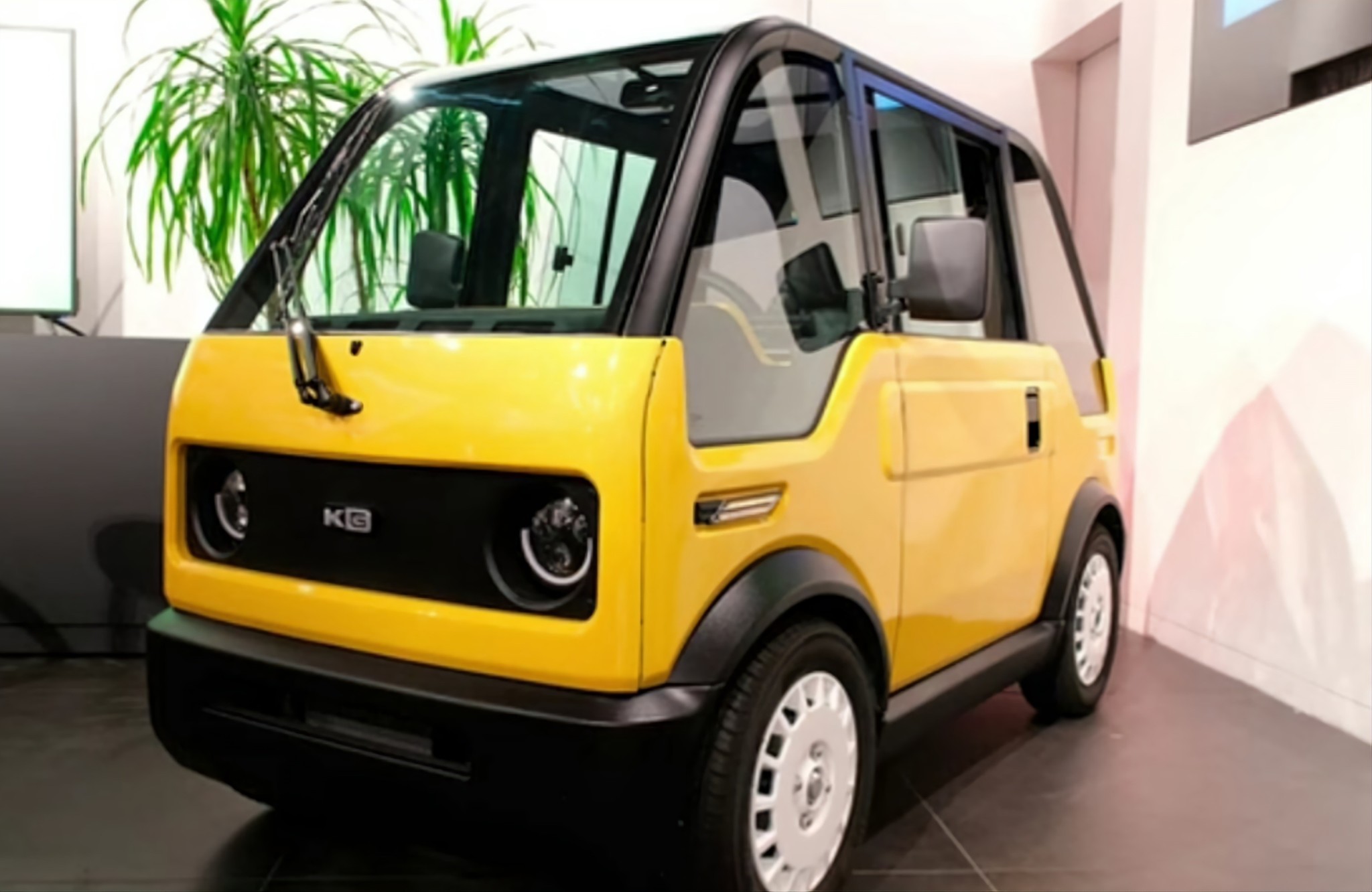
Remember the MiBot, that tiny Japanese EV predicted by many EV pundits to be the next spawn of electric mobility in Japan because of its affordable ¥1 million (~$7000) price tag?
Well, MiBot manufacturer KG Motors delivered the first completed MiBot units on December 30, 2025, after some delays which moved the production start by six months to October 2025. The delivery event not only marked the visible start of customer deployment, it also may have begun the well-funded corporate interest in the tiny vehicle.
This consequential development, which according to CleanTechnica sources came months before the start of production and actual release, was inked weeks after delivery. Idemitsu Kosan, one of Japan’s largest refiners and service-station operators, was so impressed by the tiny EV that the days that followed acceptance of unit No. 1 were spent on testing, and understanding the soul of the tiny EV. Company executives were convinced of the pitch.
So, on January 16, 2026, the two companies signed a formal business agreement to collaborate in the next-generation mobility space. The agreement not only covers sales support, it also includes delivery handling, registration assistance, insurance services, and after-sales maintenance and parts support.
This will all begin as a pilot at select apollostation service stations in Tokyo and Hiroshima from April 2026 onward. This collaboration has been publicly announced from both companies and reported in media outlets.
Plugging the MiBot into a national energy infrastructure that is already in transition will also push sales, which in turn may lead to hitting or exceeding the company’s set 10,000 unit annual target.
From Gas Pumps to Charging Hubs
Idemitsu will soon be actively converting portions of its nationwide apollostation network into electrified energy hubs under its “Smart Yorozuya” strategy. Yorozuya literally means “many trades.” The Idemetsu stations will include lifestyle and shopping options, sort of the equivalent of a Buc-ee’s in the US, minus the mall-like enormity due to limited spaces in Japan. It will also miss out on the lovable and toothed mascot. Many apollostation locations now include EV charging equipment, very select ones have hydrogen filling equipment, and upcoming sites will integrate solar generation and renewable electricity supply into their charging systems.
By aligning with Idemitsu, the MiBot enters production backed by infrastructure that is already evolving to support electrified transport.
April 2026: Production Meets Infrastructure
KG Motors plans to move into full mass production in April 2026, targeting at first about 300 to 500 units monthly. This will increase to about 800 to 900 vehicles per month once stabilized to meet the annual target.
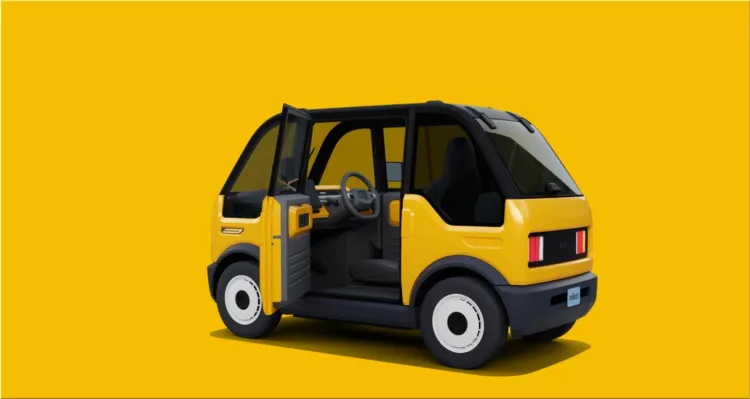
As the final price of the single-seat MiBot occupies a radically different tier from mainstream EVs, it is seen as a new path for vehicle electrification in Japan. With about 100 kilometers of range and a top speed near 60 km/h, it is designed for short urban commutes, not highways, but also not along Japan’s many bike lanes, in the way the Dutch Canta is being deployed in the Netherlands.
That modest performance envelope fits naturally into the kind of neighborhood-scale energy ecosystem Idemitsu is building. A micro-EV that charges at upgraded service stations powered in part by renewable energy is not just a product launch, it’s a microcosm of Japan’s gradual transport decarbonization.
And to make a more vivid comparison, add $400 m0re (~JPY61,250) to one million Japanese yen and one can buy an electric Kawasaki Ninja Z e-1.
Engineering Before Expansion
The MiBot’s path to this stage followed a long validation arc. Development extended across multiple prototype revisions to meet Japan’s minicar regulatory requirements, covering braking, electrical safety, stability, and durability.
That deliberate approach reflects Japan’s manufacturing culture: prove compliance, confirm performance, then scale.
The December 2025 deliveries were part of a controlled pre-mass production phase. The April ramp will test whether the company can maintain quality as volume rises.
Energy Transition in Practice
For Idemitsu, the collaboration signals practical adaptation. As internal combustion demand slowly plateaus, service stations must diversify. Adding EV chargers is the first step. Supporting sales, delivery coordination, insurance handling, and after-sales servicing for an ultra-affordable EV goes further.
The MiBot effectively becomes a test case for how a legacy oil company can remain relevant in an electrified future.
Japan’s EV market has lagged global leaders, in part because adoption has centered on larger, more expensive battery, plug-in hybrid, or just hybrid vehicles. The MiBot challenges that model by compressing electrification into a single-seat, low-speed format at an accessible price.
Now it does so with backing from one of the country’s largest energy companies and from a service-station network that is actively electrifying itself.
If April’s production ramp proceeds as planned, the MiBot will not just be another micro-EV experiment. It will represent a coordinated effort between a startup automaker and a transforming energy major.
That alignment may prove more important than the vehicle’s size. And may even go global.
Support CleanTechnica via Kickstarter

Sign up for CleanTechnica’s Weekly Substack for Zach and Scott’s in-depth analyses and high level summaries, sign up for our daily newsletter, and follow us on Google News!
Have a tip for CleanTechnica? Want to advertise? Want to suggest a guest for our CleanTech Talk podcast? Contact us here.
Sign up for our daily newsletter for 15 new cleantech stories a day. Or sign up for our weekly one on top stories of the week if daily is too frequent.
CleanTechnica uses affiliate links. See our policy here.
CleanTechnica’s Comment Policy