
Mangampeta Baryte Deposit: India’s Geological Treasure Powering Global Industries

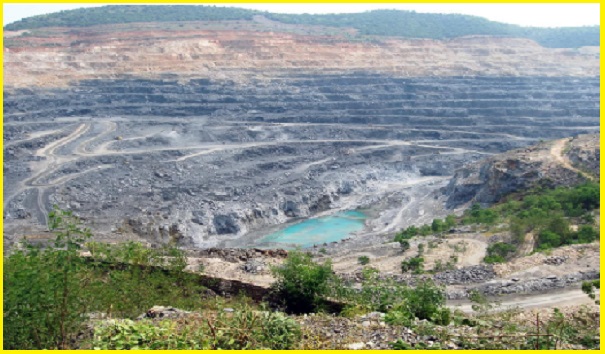
The Mangampeta baryte deposit in Andhra Pradesh’s Kadapa (Cuddapah) district is a geological marvel, recognized as the world’s largest and thickest single-layer baryte deposit. Supplying nearly 95% of India’s baryte production, this site in the Cuddapah Basin is a cornerstone of the nation’s mineral wealth, fueling industries such as oil and gas drilling, paints, plastics, and medical imaging. Managed primarily by the Andhra Pradesh Mineral Development Corporation (APMDC), Mangampeta’s baryte underscores India’s strategic role in global mineral supply chains while highlighting the need for sustainable mining practices, especially in light of recent global mining tragedies like the El Teniente collapse in Chile. This article explores the geological significance, industrial applications, economic impact, and future prospects of Mangampeta, drawing parallels with India’s broader industrial and civic challenges.
Geological Significance of Mangampeta
Located in the Cuddapah Basin, a Proterozoic sedimentary basin in Andhra Pradesh, Mangampeta hosts a baryte deposit unparalleled in scale and quality. Discovered in the 1970s, the deposit spans approximately 6 km in length and reaches depths of up to 200 meters, with an estimated reserve of over 70 million tonnes of high-grade baryte. Its unique single-layer structure, formed over a billion years ago through sedimentary and volcanic processes, makes it the world’s largest contiguous baryte deposit, surpassing those in China and the United States.
Baryte (barium sulfate, BaSO₄) is a dense, chemically inert mineral prized for its high specific gravity (4.5 g/cm³) and stability. At Mangampeta, the baryte is of Special High Grade (SHG) quality, with barium sulfate content exceeding 98%, ideal for industrial applications. The deposit’s thickness and purity reduce processing costs, making it a cost-effective resource for both domestic and export markets.
Courtesy:-
Industrial Applications of Mangampeta Baryte
Mangampeta’s baryte is a critical raw material across multiple industries, contributing to India’s industrial growth and global supply chains:
-
Oil and Gas Drilling (70% of usage): Baryte is a key component of drilling muds, used to lubricate drill bits, stabilize boreholes, and control pressure in oil and gas exploration. Its high density prevents blowouts, making it indispensable for India’s energy sector, including offshore projects in the Krishna-Godavari Basin. Mangampeta supplies nearly all of India’s drilling-grade baryte, reducing import dependency.
-
Paints and Coatings (15%): Baryte serves as a filler in paints, enhancing durability, brightness, and resistance to weathering. It is a vital input for India’s booming construction and automotive sectors, with companies like Asian Paints relying on domestic baryte.
-
Plastics and Rubber (10%): As a filler, baryte improves the density and strength of plastics used in packaging, automotive parts, and consumer goods. Its inert nature ensures compatibility with various polymers.
-
Medical Imaging (5%): Baryte’s radiopaque properties make it essential for barium sulfate suspensions used in X-rays and CT scans, supporting India’s healthcare sector, which serves over 1.4 billion people.
-
Other Applications: Baryte is used in glassmaking, ceramics, and radiation shielding, with niche applications in soundproofing and cosmetics.
In 2024, India’s baryte production reached approximately 2.8 million tonnes, with Mangampeta contributing 2.66 million tonnes, as per the Indian Bureau of Mines (IBM). The deposit’s output supports exports to countries like Saudi Arabia, the UAE, and the US, generating over ₹1,000 crore annually in foreign exchange.
Economic and Strategic Importance
Mangampeta is a linchpin of Andhra Pradesh’s economy and India’s mineral strategy:
-
Employment and Revenue: The mine employs over 1,500 workers directly and supports thousands more in ancillary industries like transportation and processing. In FY24, APMDC reported revenues of ₹500 crore from baryte operations, contributing significantly to state GDP.
-
Self-Reliance: By supplying 95% of India’s baryte, Mangampeta reduces reliance on imports from China, which dominates global baryte production (40% of 8 million tonnes in 2024). This aligns with India’s Make in India initiative and the National Critical Mineral Mission (NCMM), launched in January 2025, which emphasizes strategic minerals like baryte for industrial security.
-
Global Market Position: India ranks third globally in baryte production, behind China and Morocco, with Mangampeta driving export competitiveness. The mineral’s demand is projected to grow at a CAGR of 4.5% through 2030, driven by global energy and infrastructure needs.
Mining Operations and Sustainability
The APMDC operates Mangampeta as an open-pit mine, with mechanized extraction and processing plants ensuring high recovery rates (up to 90%). The mine uses advanced technologies like X-ray fluorescence (XRF) for quality control and flotation processes to separate baryte from impurities like quartz and calcite. However, challenges remain:
-
Environmental Impact: Open-pit mining generates dust and waste, requiring robust management to comply with National Green Tribunal (NGT) guidelines. APMDC has implemented water sprinkling and afforestation, but concerns persist about groundwater contamination.
-
Safety Protocols: The recent El Teniente mine collapse in Chile, where a seismic event killed six workers, underscores the need for stringent safety measures. Mangampeta, located in a seismically stable region, still requires regular audits to prevent accidents, especially as production scales.
-
Waste Management: Tailings from baryte processing must be managed to avoid environmental degradation, a challenge also seen in India’s civic issues like Gurugram’s garbage crisis, where governance failures have hindered waste solutions.
APMDC is exploring zero-liquid-discharge (ZLD) systems, similar to those in L&T’s Debari Smelter project, to enhance sustainability. The NCMM’s Centres of Excellence (e.g., IIT Hyderabad) could further develop eco-friendly extraction techniques, reducing Mangampeta’s environmental footprint.
Challenges and Opportunities
Challenges
-
Environmental Compliance: Stricter NGT regulations demand investments in dust control and tailings management, increasing operational costs.
-
Global Competition: China’s dominance in baryte exports and lower production costs pose pricing challenges for India.
-
Infrastructure Gaps: Limited rail connectivity in Kadapa hampers efficient transport, raising logistics costs for exports.
-
Safety Risks: While less seismic than Chile, Mangampeta must adopt global safety standards to avoid incidents like El Teniente’s tragedy.
Opportunities
-
Technological Innovation: AI-driven ore analysis and automated mining, as explored by NCMM’s CoEs, could boost efficiency and recovery rates, mirroring the precision of gold smelting flux ratios (borax, sodium carbonate, silica, sodium nitrate).
-
Export Growth: Rising global demand for baryte in renewable energy (e.g., EV battery production) offers opportunities to expand markets in Europe and North America.
-
Value-Added Products: Processing baryte into high-purity barium chemicals for medical and industrial use could increase revenue, leveraging India’s chemical industry expertise.
-
Community Development: Investments in local infrastructure, like schools and hospitals in Kadapa, could mirror the social impact of India’s teen tycoons, such as Arjun Deshpande’s Generic Aadhaar.
Parallels with India’s Broader Context
Mangampeta’s success as a geological treasure parallels India’s industrial and entrepreneurial advancements:
-
Industrial Precision: The mine’s high-grade baryte production aligns with the precision of L&T’s Debari Smelter, which optimizes zinc output, and the meticulous flux ratios in gold smelting, emphasizing efficiency in mineral processing.
-
Entrepreneurial Resilience: India’s teen tycoons, like Kaivalya Vohra and Aadit Palicha of Zepto, navigate systemic challenges with innovation, much like APMDC must address environmental and logistical hurdles at Mangampeta.
-
Civic Challenges: Gurugram’s garbage crisis, highlighted by Sanjiv Kapoor, underscores the need for governance to support industrial growth. Efficient waste management at Mangampeta could set a model for urban systems.
-
Global Safety Lessons: The El Teniente tragedy emphasizes the importance of safety audits, which Mangampeta can adopt to maintain its reputation as a reliable supplier.
Future Outlook
Mangampeta’s baryte deposit is poised to play a pivotal role in India’s industrial future. With global baryte demand projected to reach 10 million tonnes by 2030, driven by oil exploration and clean energy, APMDC plans to increase production to 3.5 million tonnes annually by 2028, potentially generating ₹1,500 crore in revenue. Investments in green mining technologies, such as ZLD systems and dust suppression, will ensure compliance with environmental standards, while NCMM’s R&D could enhance processing efficiency.
Collaborations with global players, like those auditing Codelco’s El Teniente operations, could introduce advanced seismic monitoring and safety protocols, positioning Mangampeta as a global benchmark. Additionally, integrating baryte into India’s critical mineral strategy under NCMM could attract investments, mirroring the success of teen-led startups like Generic Aadhaar in healthcare.
The Mangampeta baryte deposit in Andhra Pradesh stands as a geological and economic treasure, supplying 95% of India’s baryte and powering industries from oil drilling to medical imaging. Its single-layer deposit, the world’s largest, underscores India’s mineral wealth, contributing over ₹1,000 crore annually to exports and supporting thousands of jobs. Managed by APMDC, the mine faces challenges like environmental compliance and logistics but offers opportunities for technological innovation and global market expansion. Parallels with L&T’s Debari project, gold smelting precision, and the resilience of India’s teen tycoons highlight the need for efficiency and innovation. As India addresses civic issues like Gurugram’s waste crisis and learns from global tragedies like El Teniente, Mangampeta’s sustainable development will cement its role as a cornerstone of the nation’s industrial and economic future.