


Support CleanTechnica’s work through a Substack subscription, on Patreon, or on Stripe. Help us produce all of the high-quality, original content we publish week after week despite the challenges of content-scraping AI, antisocial media, inflation, and other hurdles.
BYD’s Denza brand recently launched the new Z9S EV in China. The premium sedan represents the top of its class by several measures, and set records on a couple of tests. All while being offered at roughly the average price of a new car in the United States.
RWD models come with 370 kW motors, or roughly 496 hp, while the top spec offers a combined 890 kW (1194 hp), good for a 0-100 km/h time of 2.68s. That makes the sedan quicker than many supercars. BYD claims it is the quickest car below 500,000 RMB (~$74,000 USD), with the Xiaomi SU7 Ultra coming in a little above that mark. For people who want to show off and wear out their tires, there is a “novice drift” mode that offers controlled drifts that make the average soccer mom look like Ken Block. Independent rear steering gives it a subcompact-like 4.75 m turning radius, while the ability to compass turn lets it maneuver in even tighter spaces. An active suspension soaks up bumps and controls body movement.
At 5090 mm long, the new Z9S is a little smaller than the car it replaces, which is an encouraging trend in a market where cars keep expanding. However, it is still a little larger than the Mercedes EQE, BMW i5 or discontinued Model S.
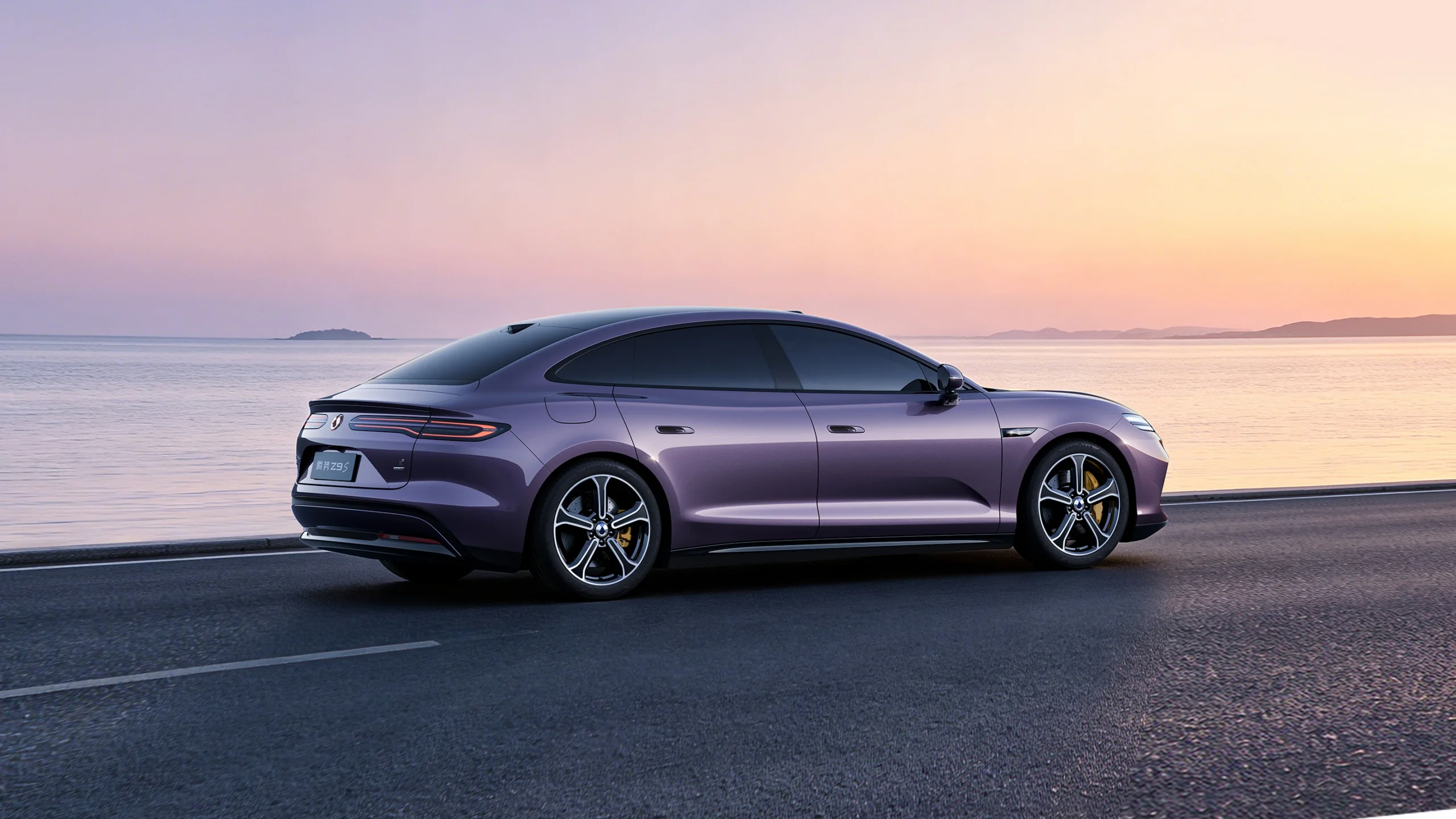
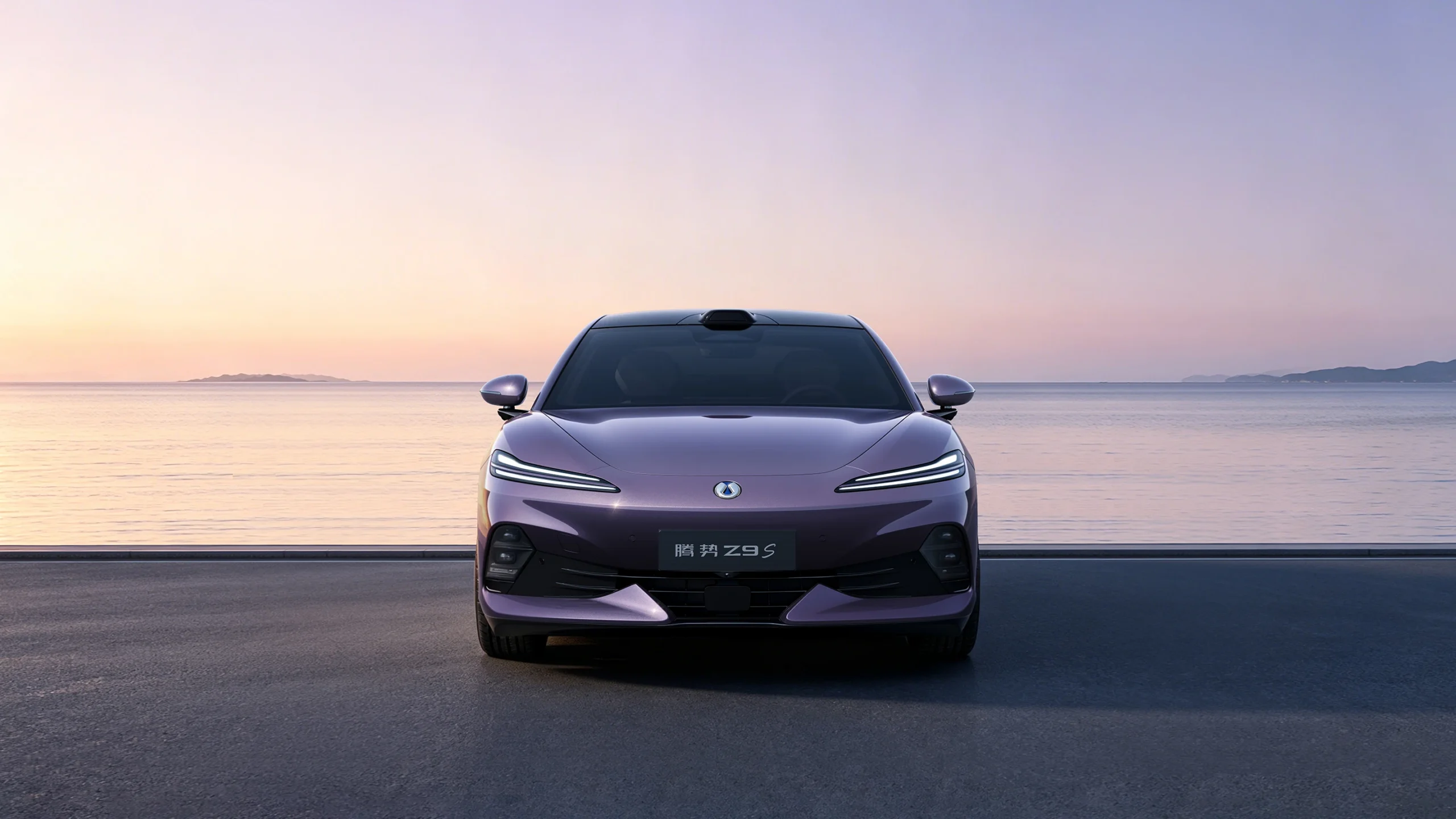
While styling is subjective, the exterior seems more refined and mature. A little less busy. Proportions seem to have improved visually. Semi-hidden door handles comply with the latest regulations. Fender tops on either side of the low hood are visible in images from inside the cabin, and the side mirrors seem large within their frameless housings. That potentially makes the car easy to place on the road.
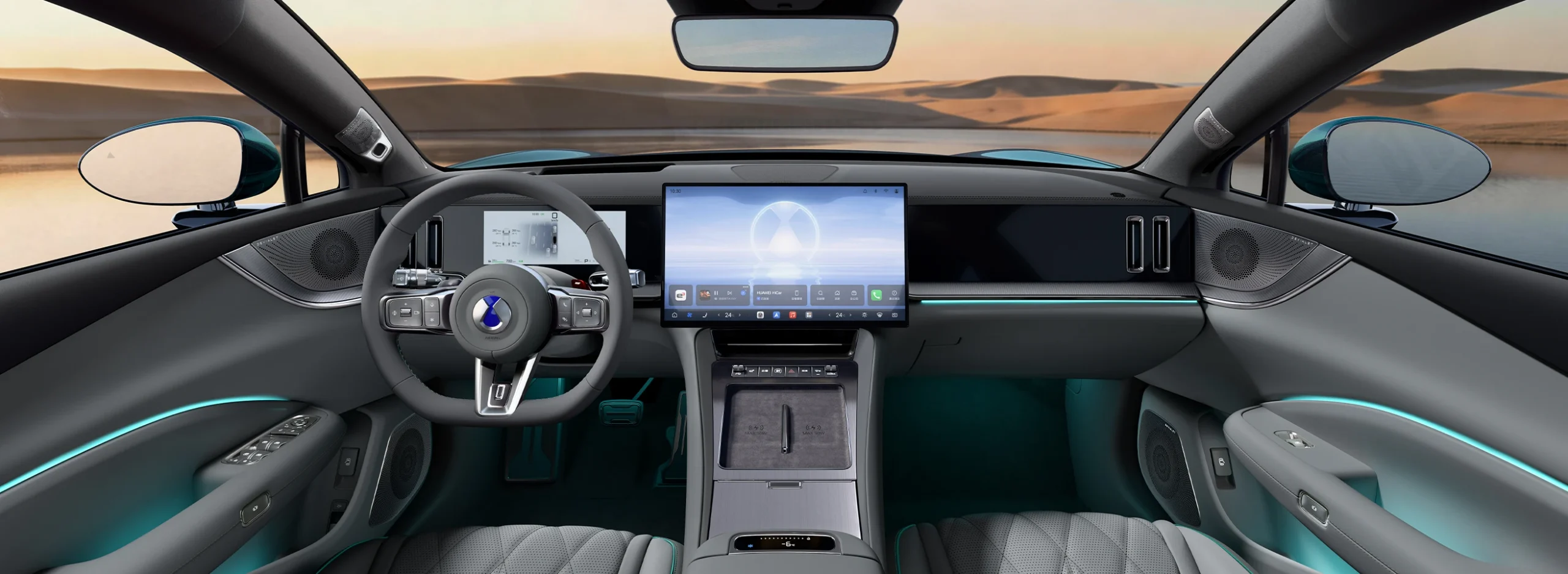
Also, as to be expected, it has essentially every luxury feature you can imagine. Multiple screens come with the car, including a 50” AR-HUD for the driver. It can also integrate additional screens and displays as powered accessories throughout the car. While the overall interior design may seem a bit more mature, magnetic mounting points and an animated driver assistance character give people the option to make it more youthful and fun. Seats are reclining, heated, ventilated and massaging front and rear. And, while vegans may not approve, seats surfaces are genuine leather.
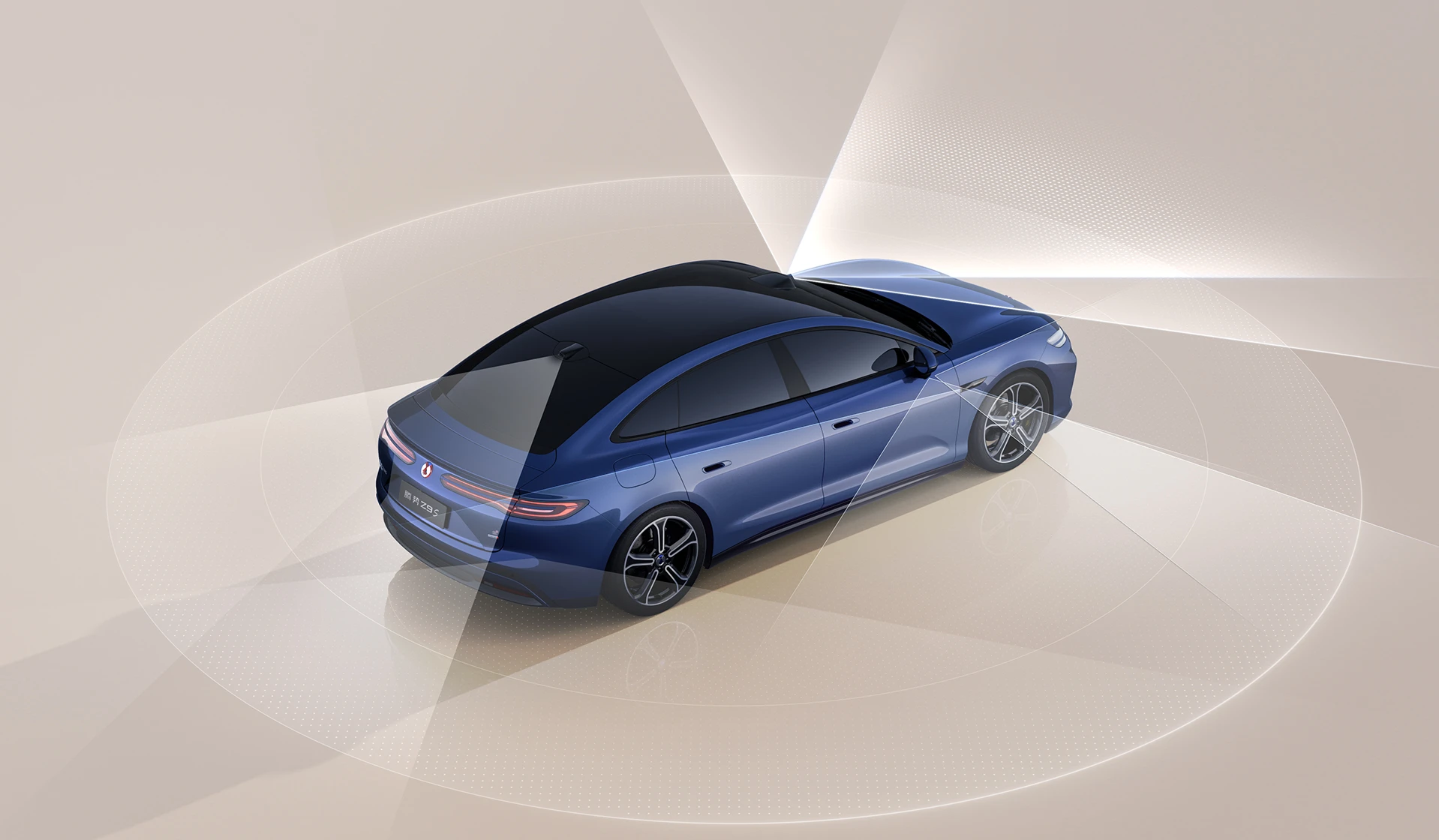
In addition, all trim levels include the latest version of BYD’s LiDAR-equipped God’s Eye intelligent driving system, with BYD taking full responsibility for parking and city operation. It also includes a new, AI-enabled voice control and a “smart partner,” which promises to operate almost like KITT from Night Rider, but presents itself as a friendly cartoon character. The vehicle also claims to offer the only global integration with every major smartphone, from Huawei and Xiaomi to Samsung and Apple.
Record Range
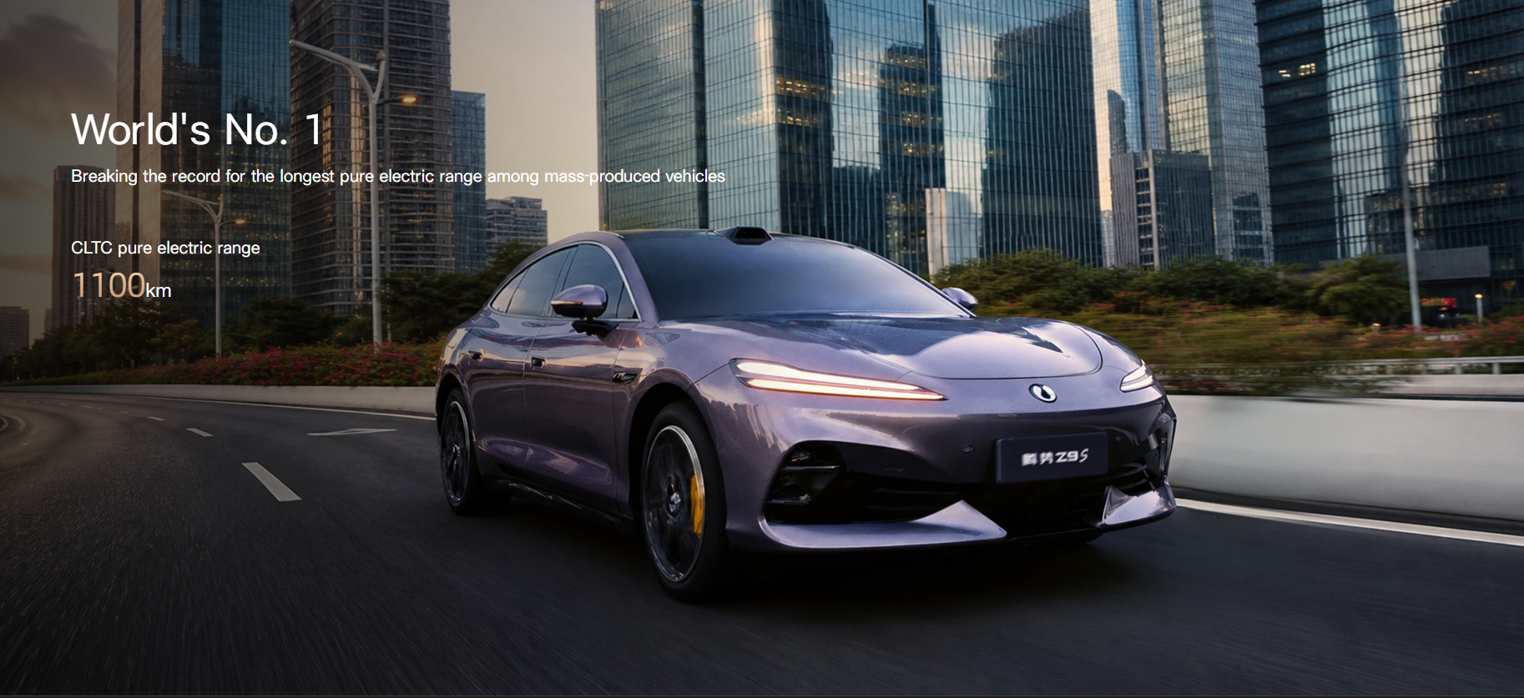
The Z9S offers up to 1100 km (684 mi) of CLTC range. This is a new record in China. Enough for a typical driver to charge a couple of times per month. While CLTC is known to be optimistic, when comparing under the same standard, the Z9GT has more range than any EV ever sold in China.
The LFP battery can easily handle being routinely charged to 100%. That compares to ternary batteries that have a shorter effective daily range than their rating, due to recommendations to only routinely charge to 80%.
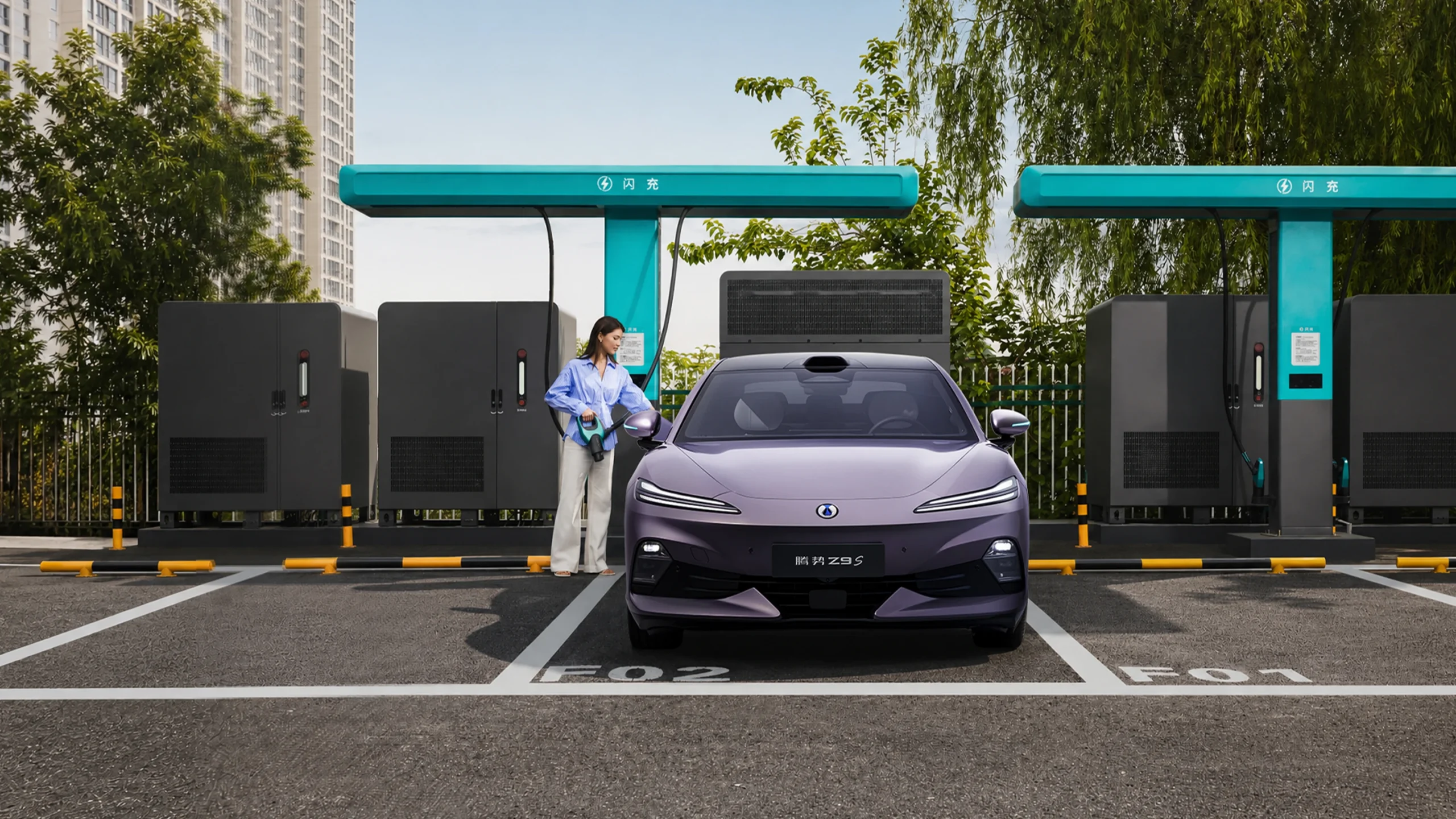
And that charging can happen rapidly. Capable of charging from 10-70% in 5 minutes and 10-97% in 9 minutes. In other words, it can add 660 km of range in 5 minutes. The replenishment gap with gasoline has been closed. The overall range is longer than many gasoline cars, like the slower accelerating Porsche Panamera Turbo E-Hybrid compared in the presentation.
Overall, while the record range might attract attention, BYD emphasized that the point is to forget about range. The range is enough that people will no longer need to think about it. Charging is fast enough that people will not have to plan around charging time on trips. Infrastructure is being built to the point that finding a fast charger will also not be a concern. Few drivers care about the range of their gasoline cars, and EVs are increasingly in a similar situation.
Record Moose Test
Back in 1999, the Citroën Xantia Activa V6 set a record 85 km/h entry speed in the ISO 3888-1 double lane change maneuver, also known as the “moose test.” This tricky maneuver simulates an obstacle in the road, and many vehicles find it challenging. The Citroen, with an active suspension, held the record for a quarter century.
Back in 2022, Tesla fans got excited when the Model Y performed well on the Moose Test at 82 km/h. A year later, A Model S Plaid with sticky Michelin Pilot Sport 4S tires set a similar time. Debate broke out online between Porsche Taycan fans (faster average speed, but 78 km/h entry) and Tesla fans (faster entry, but regenerative braking engaged for slower average speed). Meanwhile, both fans laughed at the FWD-based, comfort-oriented Han, which managed the test at 70 km/h.
However, as Elon Musk could tell you, it is unwise to laugh at BYD.
A couple of years later, the Denza Z9GT set the record at 93.6 km/h. Of note, this was the revised ISO 3888-2 test. Then the Yang Wang U7 broke it at 95.78 km/h. Both of those premium vehicles are over 5 m long.
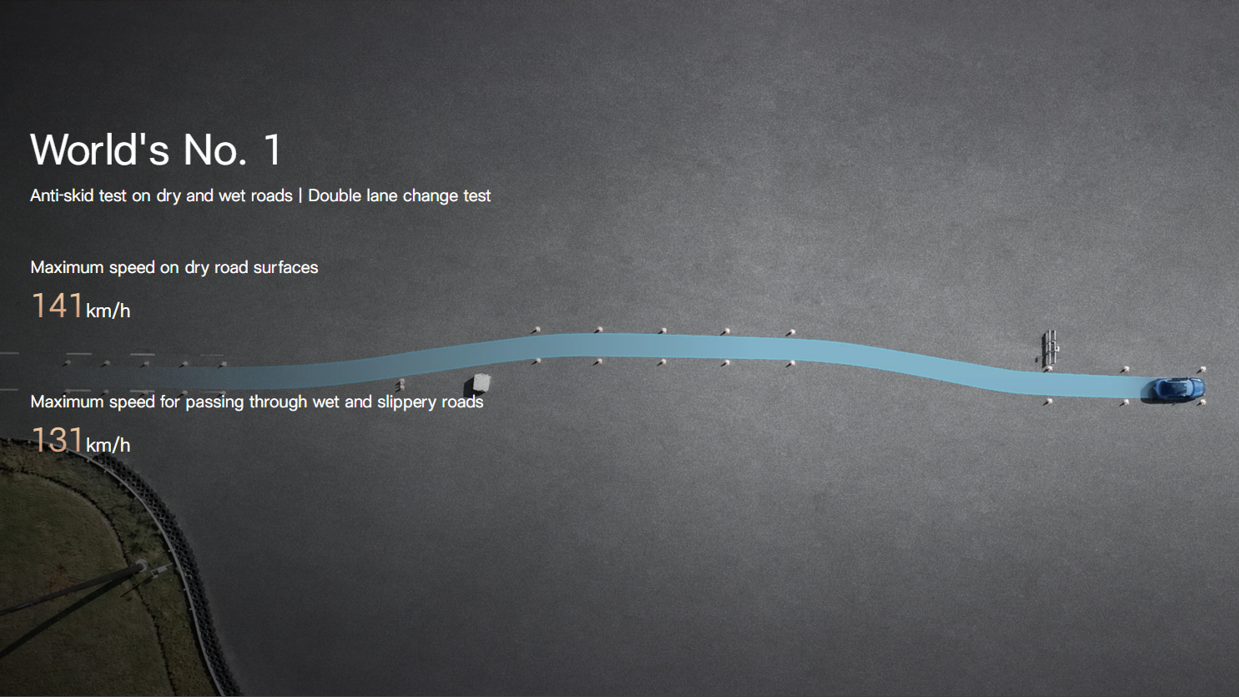
Now, the Denza Z9S set a new record of 141 km/h (88 mph) on a dry track and 131 km/h on a wet track. One caveat, based on the presentation, this was done on the older 3888-1 test procedure, also used to test the Citroen. The new test uses a little different cone layout. If they had used the new test, the gap would undoubtedly be a little tighter. But the speed recorded was dramatically higher than anything previously measured on any variation of the test. Capable of emergency maneuvers at higher speeds than many people will ever drive on public roads.
Surprisingly Efficient
One of the challenges with setting records is that compromises are often needed. The trick independent rear steering and active suspensions tend to make cars heavier. Sticky tires tend to not have the best rolling resistance.
Seeking massive ranges also tends to reduce efficiency. Battery packs tend to be oversized, increasing weight. Typically, large cars are also less efficient. And all the luxury amenities tend to add weight, reducing efficiency.
So, it is a bit surprising that the Z9S sets the 1100 km range record, while all versions reportedly have a 102.3 kWh battery. This gives it 10.75 km/kWh or 9.3 kWh/100 km. That is significantly more efficient than the Denza Z9GT, which got 1036 km from a 122.5 kWh battery, as well as the previous generation of the sedan model. It is also more efficient than any Tesla rated under the same CLTC standard.
That means the Z9S can provide world-leading range and handling, combined with a luxury interior and some of the most advanced technology, while also being one of the most efficient.
Average US New Car Price
The Z9S starts at 319,800 RMB or $47,353 USD. Meanwhile the average transaction price (ATP) in the US was $49,758 in June. The top spec Z9S comes in at 389,800 RMB ($57,718). Those prices put it at a little less expensive than the previous generation Z9S when it launched in 2024, which started at 354,800 RMB. The new car accelerates quicker, charges quicker and goes farther. This pricing also positions it as less expensive than the smaller, slower accelerating, slower charging, less efficient, shorter range, less equipped Model 3 in China when “Tesla Driver Assist” is included.
Compared to the fastest version of the Porsche Panamera listed on their Chinese website (GTS, 0-100 km in 3.8s) for 1.5 million RMB, the Z9S is a fraction of the price while being better equipped and over a second quicker. Compared to the Taycan Turbo in China at 1.568 million RMB, the Z9S is less than 1/4th the price and better equipped, while still being marginally quicker. Looking more broadly, the Z9S price is significantly lower than legacy premium brands in China, while offering better performance in a more technologically advanced car.
However, it is still roughly 50% more expensive than the Seal 08. That full-sized EV starts at 196,900 RMB ($29k), in line with the least expensive EV in the US and not much more than the least expensive car here overall. The Seal 08 is already an impressive car. The Z9S promises even better materials, but the Seal 08 already felt premium when I sat in it in Beijing. The Z9S is a quicker and more advanced vehicle, claiming records for handling and range… but it is already starting to reach the point of diminishing returns. Are people willing to pay much more for a car that can accelerate 0-100 km/h in 2.68 s than they are for a car that can do it in 3.3s? That is already quicker than many people will ever accelerate. Will they pay more for 1100 km of range when 905 km is already far more than most people are willing to travel in a day?
Of course, premium vehicles have always been more expensive for incremental improvements. A Cadillac cost more than a similar Pontiac, even if the GTO was more impressive on paper. In racing, millions are spent gaining a few tenths of a second to claim the top spot. But with mainstream vehicles rapidly getting better in China, it starts challenging the imagination to find ways to set premium brands apart. I have no doubt that competitors are already working to beat the Z9S. But at what point do people decide that a car is good enough?
While the Z9s has become more advanced, the presale price is a little higher than the Z9GT in China. Presale prices tend to come down somewhat when vehicles officially go on sale, but this is not likely to end up being much less than the Z9GT, despite becoming several centimeters shorter. With recent monthly record sales and supply constraints on new models with the Blade Battery 2.0, BYD does not have much motivation to reduce prices and further increase wait times. They also likely do not want to squeeze margins and confuse brand positioning. BYD is clearly positioning this as a premium vehicle, even if the premium seems moderate in context.
However, European prices could be significantly higher. BYD priced the Z9GT in Europe at several times the Chinese price. They seem to be adopting a European strategy of selling previous generation vehicles in mainstream segments, which are likely to get localized production. Premium vehicles with more advanced tech are then likely to stay with Chinese production, with significant markups to absorb potential protectionist costs that could be piled on. Still slightly lower prices than competitive vehicles on the continent, but far more than they are in China. However, if other companies bring competitive pressure, especially if trade policy stabilizes, BYD has a lot of room to bring prices down.
Of course, we do not have the freedom to choose vehicles like this in the closed US market. Our EV options are increasingly limited, while prices remain elevated. Even our sedan options are becoming limited. We are isolated from the most advanced technologies. Customers will keep paying more. However, I have a feeling that some might want the option to buy the best for average money.
Sign up for CleanTechnica’s Weekly Substack for Zach and Scott’s in-depth analyses and high level summaries, sign up for our daily newsletter, and follow us on Google News!
Have a tip for CleanTechnica? Want to advertise? Want to suggest a guest for our CleanTech Talk podcast? Contact us here.
Sign up for our daily newsletter for 15 new cleantech stories a day. Or sign up for our weekly one on top stories of the week if daily is too frequent.


CleanTechnica uses affiliate links. See our policy here.
CleanTechnica’s Comment Policy