
New First Quantum Taca Taca technical report again factors in potential trolley assist

First Quantum Minerals Ltd recently announced the filing of a Technical Report for its Taca Taca project. The Report was prepared in accordance with National Instrument 43-101 – Standards of Disclosure for Mineral Projects with an effective date of December 31, 2025. Taca Taca is a porphyry copper-gold-molybdenum deposit located in the Puna region of Salta Province, in northwest Argentina, which is 100% owned by First Quantum.
“It is pleasing to deliver this technical report, which is an important step in the preparation of our RIGI application and the evaluation of future funding options. The Report clearly demonstrates the significant strategic opportunity represented by Taca Taca as the Company’s next development project. The economics are strong and reflect the value created when we apply our in-house competencies in mine planning and project development. Taca Taca is one of the world’s premier undeveloped copper assets and the updated technical study reaffirms the substantial value and potential of the project as a major, long-life copper mine with meaningful gold production, that is competitively positioned on the global cost curve,” said Tristan Pascall, Chief Executive Officer of First Quantum.
He added: “Argentina is emerging as a competitive mining jurisdiction, supported by recent economic reforms aimed at attracting sustainable and long-term foreign direct investment. The Taca Taca project demonstrates strong baseline environmental and community credentials and will provide opportunities for local employment, a high proportion of renewable power generation, strong biodiversity management and a sustainable and responsible water management program. We will continue to de‑risk the project as we advance the ESIA, prepare to submit our RIGI application, and evaluate the optimal financing structure. First Quantum will evaluate the future sanction decision for Taca Taca in a disciplined manner, taking into account the financing plan, the company’s balance sheet, and the status of its other operations.”
The new Technical Report significantly updates the previous one filed for the project in November 2020 with an effective date of March 2021. From a mining point of view the project scale is impressive. Average annual copper production is expected to be 291,000 t in the first ten years of operation (with peak annual production of 323,000 t) and Life-of-Mine annual copper production of approximately 209,000 t. Average annual gold production is expected to be 133,000 oz in the first ten years of operation (with peak annual production of 171,000 oz) and LOM annual gold production of approximately 96,000 oz.
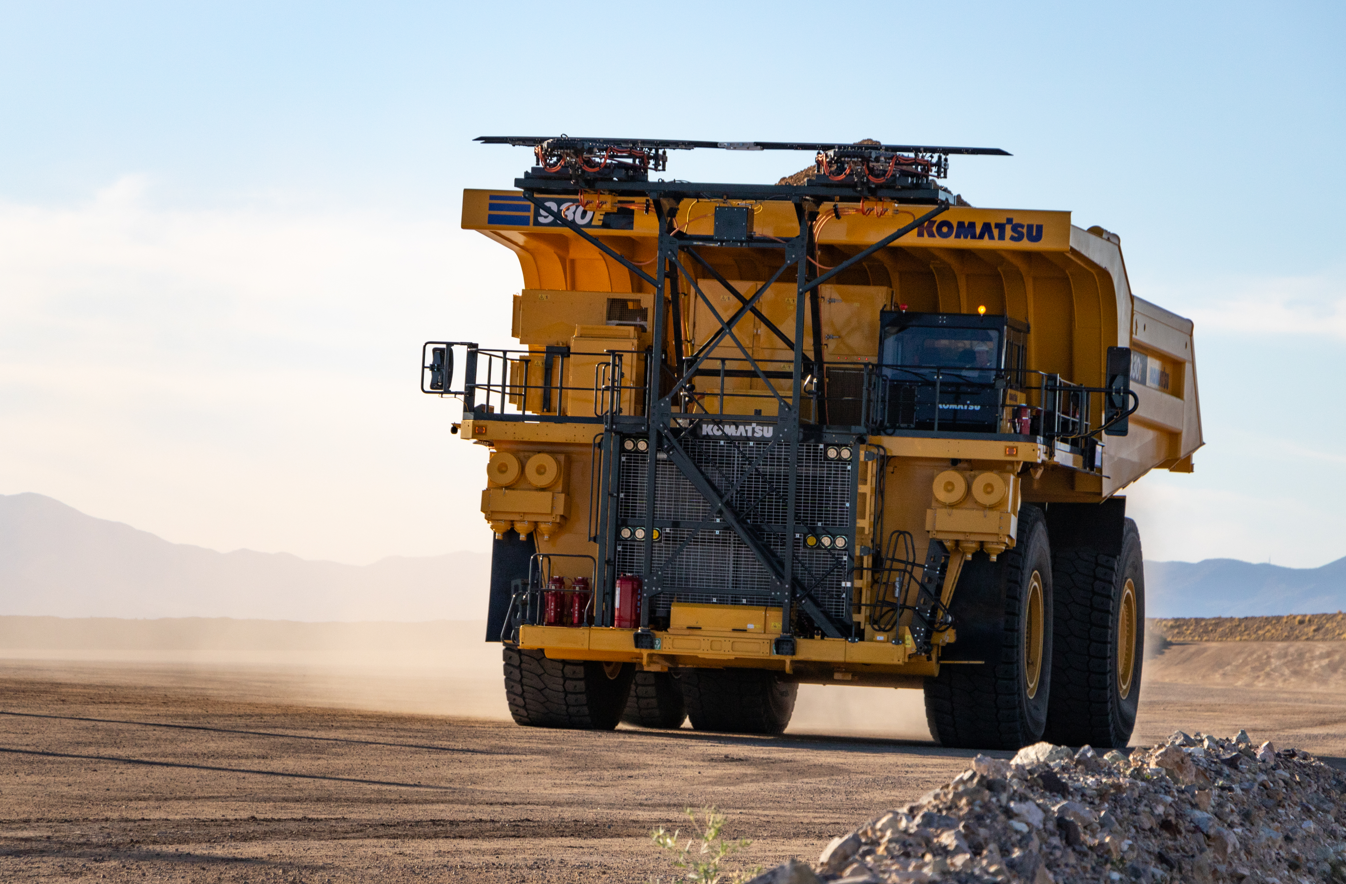
Trolley assist remains a consideration as it was in the previous report. “Taca Taca will prioritise the use of renewable energy, where feasible, which combined with innovation and technology initiatives such as Quantum Electra Haul, is expected to result in a lower carbon intensity of copper production than the company’s existing operations.” It is intended to implement trolley assist for medium and long haulage routes, which is expected to result in lower diesel consumption and operational efficiencies.
The report states: “Trolley assisted haul lanes have been designed for all mid and long-term haulage routes, and the road widths have been optimised to meet the minimum requirements for the selected truck class, always ensuring the availability of double lanes. Regarding the waste dump, it is also anticipated that trolley routes will be available at each of the permanent access ramps situated in the south, the middle, and in the north of the dump.”
As part of a dynamic event simulation by Theia Consulting (March 2025), the adoption of trolley-assisted haulage showed a 10% decrease in truck travel time relative to unassisted travel time for a loaded haul truck coming out of the pit. In FQM practice, trolley ramps require triple lane width (up, down and drop-off lanes) for efficient operation, and to suit the haul trucks applicable to this project, the design pit ramps are mostly not less than 42 m wide and not steeper than 1:10 gradient. “In detailed operational designs it may be possible to incorporate trolley routes in some instances within the smaller stage pit designs, even with curved haulage segments. This aspect is to be further evaluated as the project engineering phase proceeds.”
Distribution of power for mine operations is planned to be implemented using a surface ring main system distributing power at 33 kV around the pit edge to provide power for the electric mining equipment (rope shovels and drills) as well as surface and in-pit dewatering and lighting equipment. Power is planned to be
transmitted to the operating benches by a series of portable substations (approximate capacity of 5 to 7.5 MVA) and associated cables. Each substation will be able to provide power for one shovel and two large drills. Power for the trolley assist system (if adopted) is planned to be distributed by a series of dedicated overhead
power lines on each haulage ramp and associated substations (‘e-houses’) located at approximately 350 m intervals along the haul ramp.
Primary crushers will be located on the north west side of an excavated slot, with a tipping bench situated in the pit. A discharge conveyor will be located within the slot extending up to the crushed ore stockpile, the location of which has changed to suit a revised process plant position. An 8.4 ha area has been set aside adjacent to the crushers for surge stockpiling.
Mining (starting with the pre-strip period) commences in mid-Year 1 whilst processing commences in Year 5. The project life at 40 Mt/y (processing years) is 50 years. Some 422.1 Mt of waste is mined in the pre-strip period, during which time 10.5 Mt of ore is mined onto a stockpile for subsequent active and longer-term reclaim. The total material mined over the life of operations amounts to 5,615.5 Mt (1,737.0 Mbcm) of which 1,990.1 Mt is ore with average grades of 0.42% Cu, 0.012% Mo and 0.09 g/t Au, and 2,903.4 Mt is waste. The overall life of mine strip ratio (waste tonnes: ore tonnes) is 1.46 : 1. The direct feed ore to the plant is 1,268.1 Mt at an average grade of 0.56% Cu, whilst 348.6 Mt at an average grade of 0.26% Cu is ore reclaimed from active stockpiles, and 373.3 Mt at an average grade of 0.13% Cu is ore (marginal ore) reclaimed from longer term stockpiles (mostly after the mine depletion).
Looking at the potential fleet – the latest report uses a Komatsu line-up as an indicator of likely requirements. The fleet will comprise a rope shovel from the outset of mining, with additional units supplemented in the immediately following years. These primary digging units will be supplemented with face shovels and a supporting wheel loader. And the numbers are impressive – by Year 5, the report cites a requirement for 39 290 t class Komatsu 930E diesel-electric drive trucks (increasing further to 48 by Year 9), operating with five Komatsu 4100 XPC rope shovels, plus two Komatsu PC8000 hydraulic face shovels and two Komatsu WE2350 wheel loaders. Drills will include four large blasthole rigs plus five smaller rigs and four pre-split rigs. The rope shovels are listed with an operational productivity of 4,300-5,000 t/h and 85% availability with 3,000-3,500 t/h for the PC8000s and 2,000 t/h for the large wheel loaders.
The process plant facilities have been designed for an annual throughput of up to 120,000 t/d, or 40 Mt/y. Rougher concentrates would be thickened prior to regrind, for density control. Separation of Mo and Cu sulphides would be accomplished by depressing chalcopyrite and floating molybdenum in the molybdenum flotation circuit. Flotation concentrates from this separation would comprise the molybdenum sulphides, and flotation tailings would comprise the copper sulphides. Flotation concentrates would be dewatered prior to being sent off site for further processing. Copper concentrates would be shipped in bulk by train to a coastal port in Chile, and molybdenum concentrates would be filtered, dried and bagged for transport.
The flowsheet in more detail comprises ore delivery by truck to two gyratory crushers then primary crushing of ROM ore to a P80 size of 112 mm and stockpiling of crushed ore on an eight hour live capacity stockpile. This is followed by SAG and ball milling of crushed ore, with size classification by means of hydrocyclones and pebble crushing on scats generated from the SAG mills, with crushed pebbles returned to the mill feed conveyors. Then rougher and scavenger flotation of cyclone overflow slurry and thickening of rougher flotation tails to a high density for water recovery; re-pulping of thickened tailings with brine; and pumping of re-pulped tailings to the tailings storage facility (TSF). Next dewatering of rougher concentrates, prior to regrind, for density control; regrind of dewatered rougher concentrates in high intensity grinding (HIG) mills; and cleaner flotation of the rougher concentrates to improve the copper grade; and cleaner scavenger tails pumped to final tailings. Cu-Mo separation of the bulk cleaner concentrates will take place in a molybdenum differential flotation circuit. Dewatering of copper concentrates is by thickening and filtration, followed by bulk transportation to off-site smelters. Dewatering of molybdenum concentrates is by thickening, filtration and drying, followed by bagging and transportation to off-site smelters.
In terms of potential suppliers, two primary Metso MK-III 60 – 89 gyratory crushers (or equivalent) are cited, operating with a nominal open side setting of 165 mm. These crushers would be located on surface adjacent to the pit rim. The crushing circuit would operate 17 hours daily, although 24 hour operation will be possible for periods. The SAG mill would have an internal shell diameter of 12.19 m (40 ft) and an effective grinding length (EGL) of 8.2 m (26.9 ft) and would be equipped with a 28 MW gearless (wrap-around) drive, providing full variable speed capability for control purposes. Two Metso MP 1250 pebble crushers would be installed for pebble crushing, operating at a close side setting (CSS) of less than 16 mm. The two pebble crushers would have a capacity of about 1,600 t/h at these settings, or about 30% of the mill feed rate. If pebble generation rates from the two mills are lower, the crusher gap could be reduced for more efficient crushing and full utilization of the machines.
The proposed flotation circuit would comprise a standard Cu-Mo flotation flowsheet designs used throughout the industry and in Latin America, including flotation of a bulk rougher flotation concentrate comprising mixed copper and molybdenum sulphides in rougher-scavenger flotation; dewatering of the rougher concentrates for density control prior to regrind; regrind of the clean concentrate to assist in upgrading the concentrates (pyrite liberation from copper
sulphide minerals) and for Mo separation. Cleaning of the bulk concentrate in a single cleaner circuit would comprise two stages of conventional cells
followed by Glencore Technology Jameson or Metso Concorde cells and flotation columns.
Cyclone underflow would gravitate to a single regrind mill feed tank alongside process water for mill feed density control and then pumped through three Metso HIG5000 (or similar) high intensity grinding mills operating in a duty/duty/standby configuration. The third regrind mill and spare cyclones installed on each
cluster will be used when treating high-grade material.
The post New First Quantum Taca Taca technical report again factors in potential trolley assist appeared first on International Mining.