

The mining industry is facing a pivotal moment with the introduction of MSHA’s updated respirable crystalline silica standard, according to BreatheSafe. With the tightening of permissible exposure limits and redefinition of expectations around dust control, the rule is driving a fundamental shift away from reliance on personal protective equipment towards robust, engineered solutions that prevent contamination at the source.
This change casts a spotlight on operator cabins – often assumed to be safe havens from dust but frequently challenged by the fine silica particles generated during mining activities. As a result, mining companies are compelled to reconsider cabin design and air quality management to ensure genuine protection.
BreatheSafe says it has responded with in-cab air filtration solutions that focus on keeping contaminants out at the source, creating sealed and positively pressurised environments that support clean air throughout the shift.
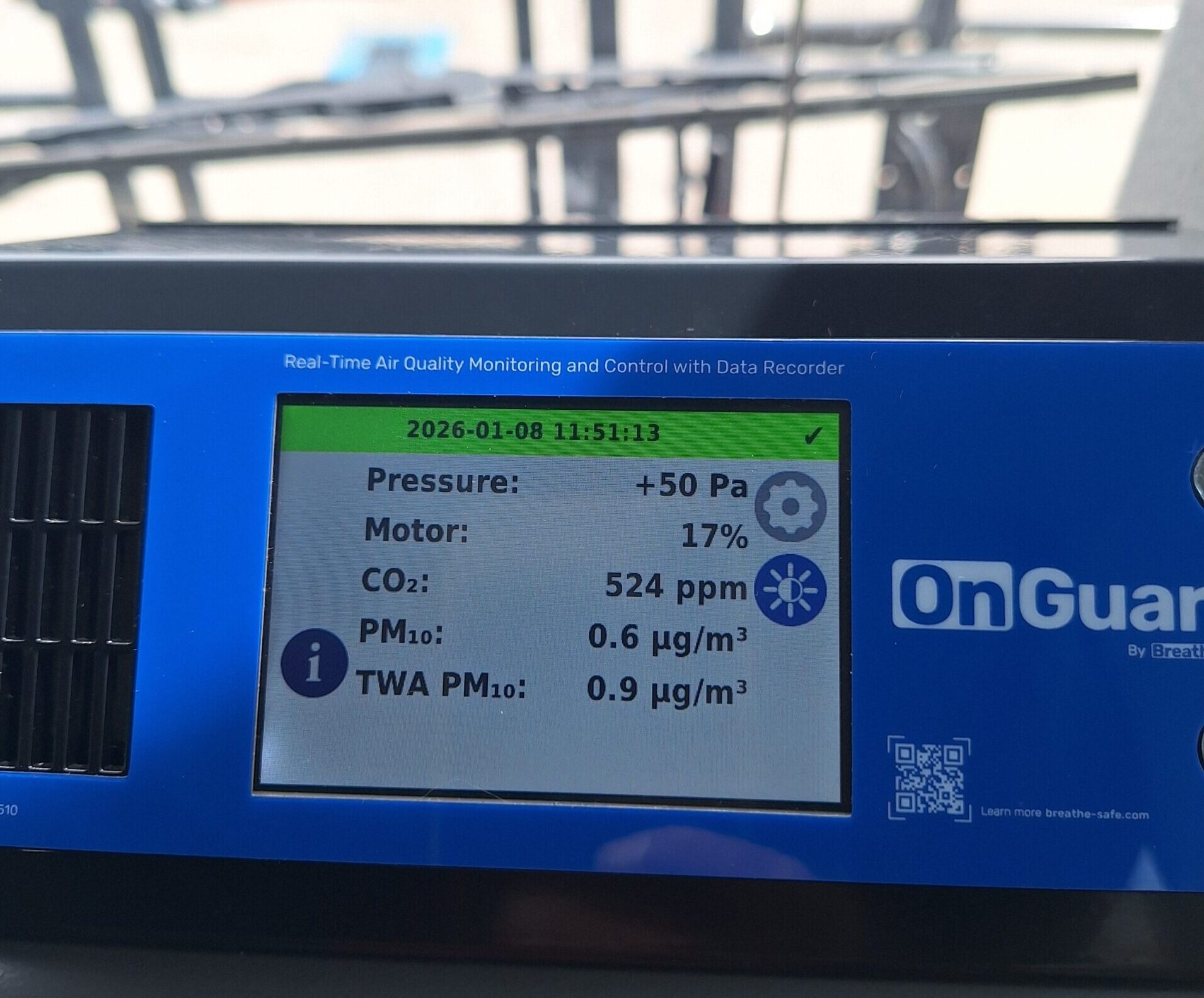
“By combining high-efficiency filtration with intelligent airflow management and real-time monitoring through its OnGuard platform, BreatheSafe enables operators and site teams to maintain consistent cabin air quality without adding complexity to daily operations,” it says.
“The system uses individually tested H14 HEPA filters, integrated with OEM heating and cooling systems, and is supported by custom installation components that maximise airflow and sealing. OnGuard’s real-time air quality monitoring delivers alerts and operational visibility, empowering proactive maintenance and compliance.”
BreatheSafe’s engineered approach provides a reliable, verifiable pathway to full-shift exposure control, protecting workers while supporting operational uptime, adhering to MSHA’s published rule and guidance:
- PEL (Permissible Exposure Limit): 50 µg/m³, averaged over an eight hour TWA.
- Action level: 25 µg/m³, also over an eight hour TWA.
- Additional requirements:
- Mandatory exposure monitoring;
- Use of engineering controls first;
- Updated respiratory protection standard; and
- Medical surveillance for MNM miners.
It is offering up an example from a global client to put colour behind this statement.
“In Tier-1 iron ore regions, environmental conditions present a relentless challenge to both human health and machinery longevity,” it says. “For operators of ultra-class equipment, such as the Hitachi EX3600-7 hydraulic excavator, the primary antagonist isn’t just the hard rock; it’s the invisible, airborne respirable dust that permeates even the most modern cabins.”
Despite rigorous air-conditioning service intervals, a prominent iron ore site found that fine particulates were consistently bypassing standard seals and OEM filtration systems. This posed a dual threat: The site required a solution that could maintain positive cabin pressure and high-level filtration without requiring constant manual intervention or specialised operator training, with a customised BreatheSafe clean-air system being integrated into the cab.
Unlike standard HVAC units that recirculate internal air with limited fresh intake, this system uses a multi-stage approach to atmospheric control, the company says. This includes:
- Positive pressure control: An automated OnGuard monitoring system maintains a consistent pressure barriers ensuring that dust-laden air is physically pushed away from cabin seals;
- HEPA grade filtration: The system incorporates high-efficiency HEPA return air filters, capturing sub-micron particles that standard filters often miss;
- Intelligent monitoring: Real-time telemetry tracks CO2 levels and particulate matter (PM10), providing a data-backed audit trail for safety compliance; and
- Quantifiable impact: maintenance and wellness.
Following the commissioning of the BreatheSafe system, the operational data revealed significant improvements in both cabin environment and maintenance overheads: Maintenance costs fell by 30% related to HVAC-related expenditure, the filter longevity service life extended up to 1,000 hours, dust ingress was reported as zero during technical inspections and there was full alignment with international occupational health standards.
BreatheSafe concluded: “In an industry where the health of those on the front line is paramount, engineered cabin air systems are no longer optional add-ons; they are essential components of modern mine safety and operational excellence.”
The post New MSHA silica rule: Why engineered cabin air solutions are essential appeared first on International Mining.