
OP-ED: The Philippines Is Getting Micromobility Backwards — And The LTO’s Crackdown Proves It

Support CleanTechnica’s work through a Substack subscription or on Stripe.
The new year will open with a clash — an avoidable clash between transport regulators and the very communities the government claims to support.
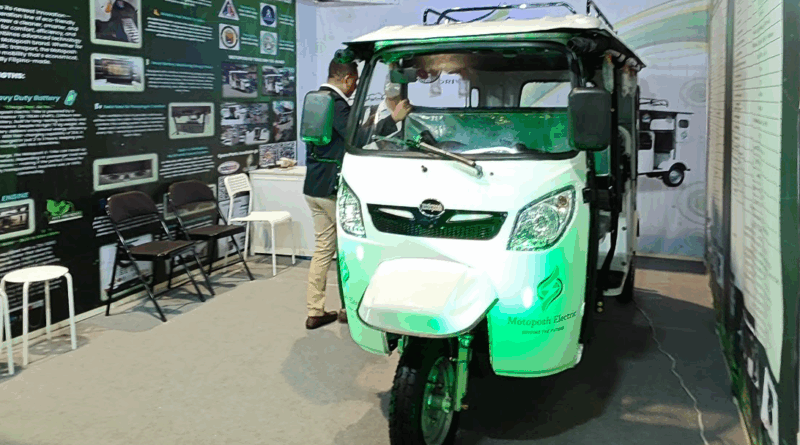
The Philippines’ Land Transportation Office (LTO) has announced a sweeping crackdown on light electric vehicles (LEVs) — including e-bikes and e-trikes — threatening immediate impoundment if they are found on major roads starting January 2. Originally a Christmas gift to light electric vehicle (LEV) owners that was going to be implemented immediately, the transport agency decided to move it to conduct an information campaign, a catch-and-release, to warn the public of the upcoming implementation of road bans.
But lawyers, lawmakers, and even the authors of the country’s own electric vehicle law say the agency is acting without legal basis — and more importantly, without a coherent view of what the energy transition actually looks like for ordinary Filipinos.
This conflict is not simply about enforcement. It is about whether the Philippines understands micromobility as a climate solution — or treats it as a nuisance to be removed from the road.
Using an outdated memo to override a national climate law
The core of the issue is almost absurd in its simplicity: the LTO is using a 35-year-old memorandum — Circular 89-105 — to justify impounding LEVs for being “unregistered.” The law was made before electric vehicles were commercially available. The implementation of the law has been spotty, but the LTO is taking strides to improve on enforcement. This is laudable and will clear the streets of unregistered (therefore, uninsured) vehicles of whatever size and shape.
But the Electric Vehicle Industry Development Act (EVIDA), passed in 2022, explicitly exempts privately owned LEVs from registration. That is not an ambiguity. It is written into law. Why override a national law with an agency circular?
Rep. Terry Ridon, one of EVIDA’s principal authors, did not mince words: “A memorandum circular cannot override a later, specific national law.” If regulators attempt to enforce it anyway, he warned, Congress will intervene.
Atty. Ariel Inton, representing Lawyers for Consumer Safety, put it even more bluntly: you cannot impound a vehicle for failing to comply with a requirement that the law says does not apply.
This is not regulatory discretion. This is regulatory overreach.
The right to the road — and lack of infrastructure to support it
The LTO has hinted that it wants LEVs off of major roads for safety reasons.
And I am all for safety. The phrase is “rule of law,” meaning it applies the same policies that kicked out tricycles from the road because of safety reasons. If e-trikes in particular are a safety concern, then regulate them with registration and licensing, not banning.
But EVIDA already provides the framework: LEVs can use national and local roads so long as they operate in designated lanes or in bicycle lanes where integration is possible. That is another issue. There isn’t enough infrastructure throughout the National Capital Region to support this. Imagine enforcers poised at areas where the bike lanes end, ready to apprehend light electric vehicles.
Micromobility is not supposed to live on side streets forever. It is supposed to be part of a clean, multimodal transport system. The law prioritizes this because LEVs are low-emission, low-cost, and space-efficient — exactly the kinds of vehicles a congested, climate-vulnerable country should be encouraging.
This is not a loophole. It is legislative intent.
Instead, the LTO’s move sends the opposite message: clean mobility is welcome only if it is invisible.
Private vs. for-hire
Ridon and Inton acknowledge what regulators seem unwilling to state clearly: for-hire LEVs must be registered and regulated, just like gasoline-powered tricycles.
The dispute is not about commercial operators. It is about ordinary citizens trying to get to work, school, or the market without burning fossil fuels or paying for increasingly expensive public transport.
Collapsing both categories under blanket enforcement is laziness disguised as public safety, not policymaking.
Hits the poor the hardest
The LTO’s approach shows a remarkable disregard for the economic realities of its own citizens.
E-bikes and e-trikes have grown because they solve a very Filipino problem: mobility is expensive, inconvenient, and often inaccessible. LEVs are the first affordable alternative that genuinely threatens the transport monopolies that have dominated local routes for decades.
Ridon is right to call LEVs a win for marginalized communities. They cut costs, reduce travel times, and provide independence from fare hikes and diesel price shocks. They advance the exact goals EVIDA lays out: reducing oil dependence, expanding clean transport, and making mobility equitable.
If traditional transport sectors feel threatened, the answer is not to penalize the public’s shift to electric mobility. The answer is modernization — cleaner fleets, fair regulation, and business models that do not rely on suppressing competition.
Discharge the moment
The global trend is unmistakable: cities are embracing small electric vehicles as climate tools, congestion solutions, and mobility equalizers. There are exceptions specific to electric scooters. In Singapore, electric scooters are banned from all footpaths and permitted on cycling paths only. This was because of many crashes with pedestrians. However, the island nation has some 440 km of bikeways. In France, a nationwide ban prohibits riding them on sidewalks.
But otherwise, from Germany to Taipei to Jakarta to China to the Netherlands, LEVs are being integrated — not legislated out of existence.
The Philippines risks becoming an outlier, not because it lacks the technology or the law, but because its regulators are stuck enforcing rules written in a different century. If the country wants a real clean transport transformation, it needs regulators who understand that LEVs are not fringe machines — they are the entry point to an electric mobility future.
On January 2, the LTO will choose whether to enforce a fossil-era memo or uphold a climate-era law. Will the implementation violate EVIDA? Will the enforcement undermine the country’s clean transport transition at the very moment it needs it most? Let me insist: micromobility, properly implemented and regulated, is not a threat to public safety. It is a threat to outdated institutions.
Sign up for CleanTechnica’s Weekly Substack for Zach and Scott’s in-depth analyses and high level summaries, sign up for our daily newsletter, and follow us on Google News!
Have a tip for CleanTechnica? Want to advertise? Want to suggest a guest for our CleanTech Talk podcast? Contact us here.
Sign up for our daily newsletter for 15 new cleantech stories a day. Or sign up for our weekly one on top stories of the week if daily is too frequent.
CleanTechnica uses affiliate links. See our policy here.
CleanTechnica’s Comment Policy