

Support CleanTechnica’s work through a Substack subscription or on Stripe.
US President Donald Trump’s easy-peasy takeover of the Venezuelan oil industry is already hitting speed bumps, to the surprise of exactly no-one, except maybe Trump himself. The near-term obstacles include fast-moving security concerns as well as structural issues. However, the real problem is the long-term persistence of the global decarbonization movement, and a fresh wave of perovskite solar cell innovation is adding even more fuel to the fire.
The Tandem Perovskite Solar Cell Solution
If you are among those anticipating that perovskite solar cells are finally about to hit the utility-scale market, run right out and buy yourself a cigar. Perovskites are relatively inexpensive, synthetic versions of a naturally occurring mineral. They are fragile and finicky as standalone solar materials, but when layered onto conventional silicon solar cells, they produce a significant win-win. The tandem perovskite-silicon combo melds the durability of silicon with a low-cost solar conversion efficiency boost from perovskite.
Even before perovskites hit the market, utility-scale solar is already the most cost-effective way to add new capacity to the US grid, with onshore wind along for the ride as well. “Despite facing macro challenges and headwinds, utility-scale solar and onshore wind remain the most cost-effective forms of new-build energy generation on an unsubsidized basis (i.e., without tax subsidies),” the leading asset management firm Lazard reported in June of 2025.
“As such, renewable energy will continue to play a key role in the buildout of new power generation in the U.S. as the lowest-cost and quickest-to-deploy generation,” the firm added.
Ya don’t say. Now imagine what will happen when utility-scale perovskite solar cells are in play. The cost of solar energy has dropped precipitously over the past 20 years even under a scenario dominated by silicon, a material that Bell Labs deployed when it introduced the first practical solar cell all the way back in 1954. Perovskites offer a new opportunity to juice the solar industry with a fresh wave of cost-cutting (see lots more perovskite background here).
More Solar, Less Land
Despite the sharp U-turn in federal energy policy over the past 12 months, perovskite innovators in the US are still pushing the global solar industry forward, as former Energy Secretary Jennifer Granholm reminded everyone last week.
“Utility scale perovskites are here!” Granholm posted on LinkedIn last week.
“I had the pleasure of visiting Tandem PV this week and their solar panels are at 29% efficiency today and will be over 30% within weeks — which means they are 30% more efficient than the average solar panel,” Granholm elaborated.
“That means less land necessary for solar installations, and lots of LCOE savings,” she added, with LCOE being shorthand for levelized cost of energy, a calculation that enables costs to be compared across different energy resources.
If you caught that thing about “less land,” that’s just as significant as the 30% efficiency improvement. Less land translates into lower costs for site acquisition, preparation, and maintenance, and it also provides farmers with more opportunities for agrivoltaic projects, in which solar panels are combined with farming in integrated systems.
Here Comes Tandem PV
Tandem PV has surfaced on the CleanTechnica radar here and there (here’s one recent example). In March of 2025, the California startup nailed down a round of $50 million in Series A financing towards the goal of mass producing its tandem solar panels.
The fresh infusion of cash came a good time. In May of 2024, Tandem PV earned a cost-sharing grant of $4.7 million from the US Department of Energy, such as it was back then. Now that the Energy Department is no longer a reliable funding partner for US solar innovators, private sector dollars are all the more important.
The 2024 award was aimed at enhancing the durability test procedures for perovskites, a late-stage, critically important step leading up to full volume production. “Ultraviolet (UV) light from the sun can cause significant damage to perovskite PV devices, but current simulated outdoor durability testing does not adequately account for its effects,” the Energy Department explained.
“This project aims to engineer UV hardness into critical layers in perovskite PV devices that also increase durability under high temperatures,” the Energy Department elaborated. “The team will perform enhanced durability testing on tandem perovskite-silicon devices with these new layers to ensure they are stable and retain their high efficiency in outdoor conditions.”
With or without federal funding, the durability testing goes on. In July of 2025, the California Energy Commission chipped in with a $4 million grant to push the testing envelope closer to commercial production. “The award will fund extensive third-party testing and validation of the company’s panels, designed to be among the world’s most powerful and durable, to demonstrate their readiness for widespread deployment,” CEC explained.
So Much Winning … For Renewable Energy
Tandem PV is just one example of rising activity in the tandem perovskite-silicon field. The 2024 Energy Department grant was part of a larger funding pot that also included $6 million in cost-share funding for the Massachusetts firm Cubic PV, with the aim of developing a new manufacturing process that avoids interfering with the silicon layer while optimizing the conversion efficiency of the perovskite layer. First Solar and Swift Solar also received grants aimed at improving manufacturing processes.
In the meantime, academic researchers keep tweaking perovskites for maximum efficiency, including a flurry of activity here in the US. Last May, for example, a team of researchers at Cornell University introduced a new, more durable design in which an ultra-thin, 2-D layer of perovskite “clicks” together with a 3-D layer.
Among other breakthroughs, researchers at the University of Toledo in Ohio and the National Renewable Energy Laboratory in Colorado both contributed to a multinational effort that resulted in the identification of a new, durability-enhancing molecule for use in perovskite solar cells. Cubic PV also played an instrumental role in the project.
Also, I Have A Nice Bridge To Sell You …
Much (much) more perovskite solar cell activity is bubbling up around the world. None of this is good news for the global oil industry, as Trump himself discovered when he attempted to secure commitments to exploit Venezuelan oil from ExxonMobil and other leading (and not-so-leading) oil companies during a public event at the White House on January 9.
Venezuela is “uninvestable” at the present time, ExxonMobil CEO Darren Woods stated for all to hear, with political instability adding to the nuts-and-bolts challenges of upgrading the country’s fragile oil infrastructure.
As if on cue, the very next day, Trump’s own Department of State issued a security warning under the blazing headline — in all caps, of course:
SECURITY ALERT VENEZUELA: JANUARY 10, 2026: DO NOT TRAVEL TO VENEZUELA; DEPART IMMEDIATELY
In the hot-off-the-press alert, the State Department reminds everyone that warnings against travel to Venezuela have been in effect since 2019. The new warning adds instructions for US citizens to get out of Venezuela, and that’s going to be difficult.
“There are reports of groups of armed militias, known as colectivos, setting up roadblocks and searching vehicles for evidence of U.S. citizenship or support for the United States,” the State Department advised.
“U.S. citizens in Venezuela should remain vigilant and exercise caution when traveling by road,” they emphasized, further noting that a “Do Not Travel” alert tops the Travel Advisory chart at Level 4, which comes up when US citizens are exposed to “severe risks” including:
“… including wrongful detention, torture in detention, terrorism, kidnapping, arbitrary enforcement of local laws, crime, civil unrest, and poor health infrastructure.”
Weirdly, that kind of sounds like the goings-on stateside, where Trump’s growing cadre of armed thugs has been terrorizing communities, up to and including murder.
All this is by way of saying that if and when (most likely, when) US oil companies eventually ramp up their footprints in Venezuela, they’re going to need a hefty assist from US taxpayers in the form of security guarantees, in addition to the generous public subsidies they have received over the years.
Thoughts? Drop a note in the comment thread. Better yet, find your representatives in Congress and let them know what you think. While you’re at it, ask them what’s holding up the Epstein files….
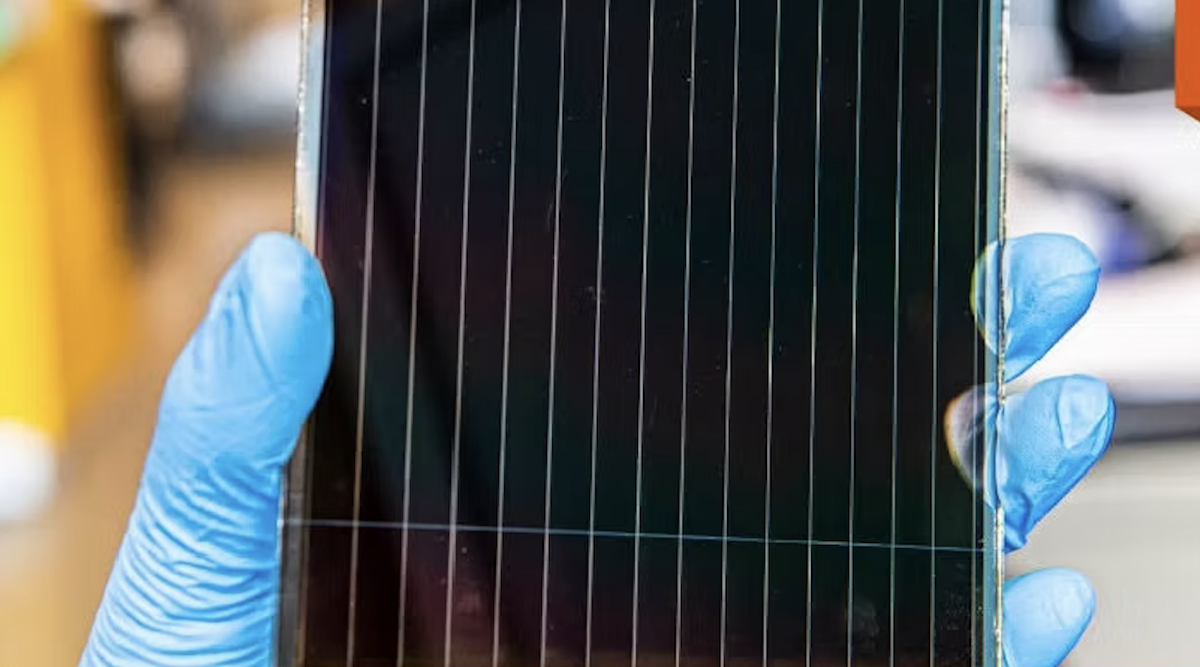
Photo: New, durable tandem perovskite-silicon solar cells can surpass plain silicon on conversion efficiency, pushing the cost of solar power down even farther than it is today (cropped, courtesy of Tandem PV).
Sign up for CleanTechnica’s Weekly Substack for Zach and Scott’s in-depth analyses and high level summaries, sign up for our daily newsletter, and follow us on Google News!
Have a tip for CleanTechnica? Want to advertise? Want to suggest a guest for our CleanTech Talk podcast? Contact us here.
Sign up for our daily newsletter for 15 new cleantech stories a day. Or sign up for our weekly one on top stories of the week if daily is too frequent.
CleanTechnica uses affiliate links. See our policy here.
CleanTechnica’s Comment Policy