
Ramps and Haul Roads: The Lifelines of Efficient and Safe Open Pit Mining

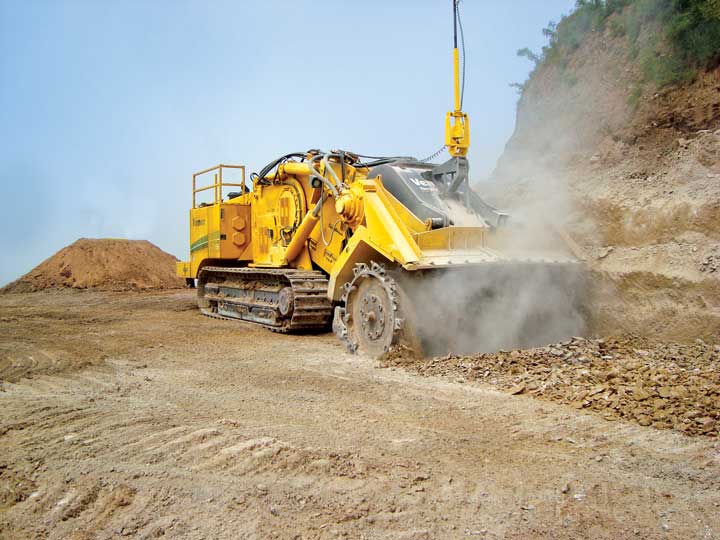
In the high-stakes world of open pit mining, ramps and haul roads are the arteries that ensure seamless ore transport, operational efficiency, and worker safety. As Poniewierski (2021) aptly states, “A good haul road design is one where the operator can drive from the face to the dump with their foot flat to the floor, except for safety speed limits.” These critical infrastructure components are pivotal in managing costs and boosting productivity, particularly in India’s burgeoning mining sector, exemplified by the recent discovery of 35 million tonnes of gold-bearing ore in Jabalpur, Madhya Pradesh, valued at ₹1.5 lakh crore. This article explores the design principles, safety considerations, and economic impacts of ramps and haul roads, highlighting their role in supporting India’s mining ambitions and the Atmanirbhar Bharat initiative as of August 18, 2025.
The Critical Role of Ramps and Haul Roads
Ramps and haul roads are the backbone of open pit mining, facilitating the movement of heavy machinery like rigid trucks and bucket wheel excavators, which can achieve outputs of up to 240,000 tonnes per day in lignite mining. Poorly designed roads lead to increased fuel consumption, equipment wear, and safety risks, while well-engineered systems optimize productivity and reduce operational costs. In the context of Jabalpur’s gold reserves, efficient haul road design is essential to handle the massive scale of ore extraction, ensuring India maximizes the economic benefits of this ₹1.5 lakh crore discovery.
Key design principles, drawn from industry experts like Poniewierski (2021) and Thompson (2015), emphasize gradient, width, switchback design, direction of travel, and drainage. These elements are tailored to the specific needs of the mine, the type of equipment, and the local environment, ensuring both safety and efficiency.
Design Principles for Optimal Performance
Gradient: Balancing Efficiency and Longevity
The gradient of haul roads significantly impacts equipment performance and maintenance costs. In Australia, a 10% gradient is standard for rigid trucks, but North American standards favor 8%. Caterpillar data reveals that reducing the gradient from 10% to 8% can double the lifespan of critical components like differentials and wheel groups, potentially saving millions in maintenance costs. For Jabalpur’s gold mining operations, adopting an 8% gradient could extend equipment life, crucial given the high capital costs of bucket wheel excavators (₹100–200 crore per unit).
Width for Safety
Road width is critical for safe operations. Industry guidelines recommend a minimum width of 3.5 times the truck width for two-way straight sections, increasing to 4 times on corners to accommodate turning radii. Windrows, at least half the tyre height, are essential to prevent vehicles from veering off edges, reducing the risk of accidents. In India’s diverse mining terrains, such as Jabalpur’s Mahakoshal region, wider roads with robust windrows are vital to ensure safety amidst challenging geological conditions.
Switchback Design: Reducing Mechanical Stress
Switchbacks, used in steep terrains, require careful design to minimize drivetrain stress. Flat switchbacks are ideal for mechanical drive trucks, while graded switchbacks should have an inside radius 2–3% flatter than the main ramp to offset rolling resistance. This design is particularly relevant for phosphate and lignite mines in Rajasthan and Tamil Nadu, where switchbacks can optimize truck performance and reduce fuel costs by up to 10%.
Direction of Travel: Enhancing Visibility
Designing ramps so loaded trucks travel clockwise upwards, with the driver’s cab facing the pit wall, improves visibility and reduces the risk of edge failures, which can be catastrophic. This principle is critical in high-output operations like Jabalpur, where continuous truck movement is necessary to extract 35 million tonnes of gold-bearing ore efficiently.
Drainage and Pavement: Ensuring Durability
In wet or tropical climates, such as parts of Madhya Pradesh, proper drainage and pavement thickness (up to 3 meters in poor ground conditions) are essential to maintain road integrity. Effective drainage prevents water accumulation, which can reduce road lifespan by 20–30%, while robust pavement supports heavy loads, ensuring uninterrupted operations. These considerations are vital for sustainable mining, aligning with India’s environmental regulations.
Economic and Safety Impacts
Well-designed ramps and haul roads deliver significant economic and safety benefits:
-
Cost Savings: Optimized gradients and pavement reduce fuel consumption and maintenance costs by 15–20%, critical for large-scale projects like Jabalpur’s gold mine, which could generate ₹1.5 lakh crore in revenue.
-
Productivity Boost: Efficient roads enable faster haul cycles, increasing daily output. For example, a BWE producing 200,000 tons per day relies on robust haul roads to transport ore to processing units without delays.
-
Safety First: As Thompson (2015) notes, “A safe system acknowledges that humans are fallible… the road system must allow for these errors to minimise hazard.” Proper width, windrows, and visibility reduce accident risks, protecting workers and equipment.
In India, where mining contributes 2.5% to GDP, efficient haul roads can enhance the viability of projects like Jabalpur, creating 10,000–15,000 jobs and reducing reliance on gold imports worth $60–70 billion annually.
Alignment with India’s Mining and Tech Ecosystem
The Jabalpur gold discovery has sparked a mining-tech rush, with opportunities for startups in drone-based surveying, AI-powered exploration, and IoT for mine safety. Ramps and haul roads can integrate with these technologies:
-
Drones: Companies like Skylark Drones can map haul road layouts, optimizing gradients and identifying weak points.
-
AI: AI tools from startups like Tathastu AI can analyze traffic patterns to improve road design and reduce congestion.
-
IoT: SenseHawk’s IoT sensors can monitor road conditions, ensuring timely maintenance and enhancing safety.
These innovations align with Atmanirbhar Bharat, promoting indigenous technology and reducing reliance on imported equipment, especially amidst US tariffs of 50% on Indian exports, which threaten $87 billion in trade. Leveraging FTAs with the UK and UAE can facilitate access to advanced road-building technologies, further enhancing India’s mining infrastructure.
Challenges and Opportunities
Challenges
-
High Construction Costs: Building haul roads with proper gradients, width, and drainage requires significant investment, potentially ₹50–100 crore for large mines.
-
Environmental Impact: Excavation and road construction in eco-sensitive areas like Jabalpur’s Mahakoshal region risk biodiversity loss, necessitating sustainable practices.
-
Geopolitical Constraints: US tariffs and supply chain disruptions, similar to those affecting Shandong’s iron ore industry, could impact equipment imports for road construction.
-
Skilled Workforce: Designing and maintaining haul roads requires specialized expertise, necessitating training programs aligned with India’s National Skill Development Mission.
Opportunities
-
Economic Growth: Efficient haul roads can accelerate Jabalpur’s gold extraction, boosting GDP and creating jobs.
-
Tech Integration: Collaboration with mining-tech startups can enhance road design and maintenance, fostering a $1–2 billion market by 2030.
-
Sustainability: Green road-building techniques, like recycled pavement materials, align with India’s environmental goals and Atmanirbhar Bharat.
-
Global Competitiveness: Optimized haul roads position India’s mining sector to compete with global hubs like Shandong, China, which produced 13 million tonnes of iron ore concentrate in 2024.