

Support CleanTechnica’s work through a Substack subscription or on Stripe.
R. J. Scaringe, the founder of Rivian, is making some bold claims about how his company will integrate autonomous driving technology into its vehicles. In an interview with Fortune this week, he said, “you can own a car, but it can drop you at the airport, it can pick your kids up from school, it can go get things from the store for you.”
He also thinks his cars should be able to service themselves. “If the vehicle has an issue, it’s actually not a positive part of the customer experience to have to coordinate a service activity or to coordinate parts, deliver any of those things. We want all that to happen behind the scenes and all that to be powered through AI.”
Right now, if my Tesla Model Y needs service, I need to drive 75 miles to the nearest service center. If repairs cannot be made in one day, I need to stay in a motel and buy my meals until the car is ready to drive home. In Scaringe’s vision, Rivian vehicles will be able to drive themselves to a service center and drive themselves home again when the needed repairs are completed.
In an interview with Business Insider last year, Wassym Bensaid, the head of software development for Rivian, said, “We are not necessarily chasing full self-driving, we’re not chasing robotaxis. Our goal is incremental improvements to the safety and convenience for customers.”
AI Day At Rivian
On December 11, 2025, Rivian held a splashy “AI Day” event at its headquarters in California, where it announced it would not be using computer chips from outside suppliers like Nvidia for its autonomous driving systems. Instead, it is designing its own chip that will be manufactured by Taiwan Semiconductor Manufacturing Company. The company’s stock price immediately plummeted 10% on the news before recovering somewhat by the closing bell.
Two of the new chips will power Rivian’s next generation onboard computer called Autonomy Compute Module 3, which will be capable of processing 5 billion pixels per second and deliver four times the performance of the Nvidia-powered system that is currently offered in Rivian vehicles.
Say Hello To Lidar
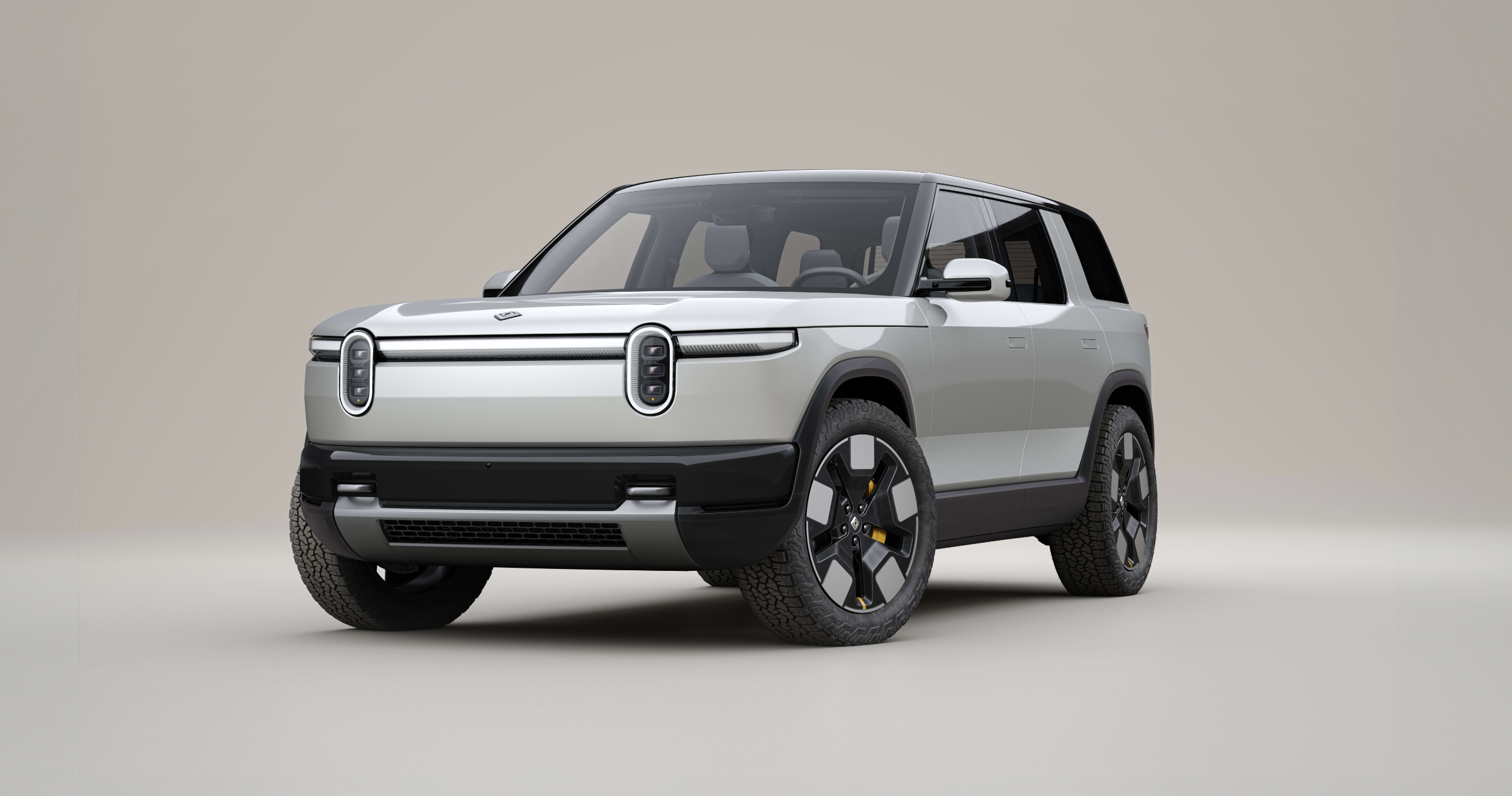
Beginning in 2027, the soon to be launched Rivian R2 — priced at around $45,000 — will also be equipped with a windshield mounted Lidar sensor. Elon Musk has been stubbornly critical of Lidar, claiming it costs too much and leads to unsightly bumps and bubbles the outside of vehicles. A quick glance at a Waymo robotaxi confirms the disfiguration of the exterior of the car those extra sensors cause. Reportedly, the suite of sensors Waymo uses is reported to add $100,000 to the price of the car, so Elon is correct — sort of.
“Lidar has changed a lot,” Scaringe said. “It’s no longer a big expense, it’s a very small percentage of the vehicle’s bill of materials.” And if it is mounted behind the windshield, no unsightly changes to the exterior are required. James Philbin, Rivian’s head of autonomy and AI said, “Adding lidar creates the ultimate sensing combination. It gives the most comprehensive 3D model of the space the vehicle is traveling through. The goal for our onboard sensing stack isn’t just human level, it’s superhuman level.”
“We expect that at launch in late 2026, this will be the most powerful combination of sensors and inference compute in consumer vehicles in North America,” Vidya Rajagopalan, senior vice president of electrical hardware, added. “This is not a bet one takes lightly. This is a huge commitment that’s taken us years,” Scaringe added. “Usually, you can’t lower cost and improve performance. But here, we improved performance dramatically and simultaneously lowered cost by hundreds of dollars per vehicle.”
Point To Point
As the company adds features to its vehicles, they will be able to travel point-to-point without drivers needing to keep their hands on the wheel or eyes on the road. To begin with, the systems will be limited to highway use, with greater capability added over time. Rivian’s ultimate goal is to sell customers and investors on a higher margin software business, where personal vehicles are capable of operating autonomously without anyone in the driver’s seat.
The company will begin charging for its Autonomy+ software platform, starting with existing R1 owners, early in 2026. Customers can either pay $2,500 up front to access new features over the life of the vehicle, or a $49.99 monthly subscription. The first iteration of the platform’s new capabilities will be modest and well short of what Tesla already offers through what it markets as Full Self-Driving, according to Bloomberg Hyperdrive.
Rivian plans to release an expanded version of what it calls Universal Hands Free in the coming weeks to existing owners, allowing for hands-free assisted driving across 3.5 million miles of roads, up from roughly 135,000 miles currently. It still cannot handle navigating or reacting to many traffic situations routinely encountered in everyday urban driving. An updated point-to-point version of the software is expected to be ready next year, where the vehicle will be able to navigate, make turns and change lanes, while still requiring eyes on the road.
It’s The Software, Stupid!
While Rivian’s own cars are still far from driving themselves, Scaringe says he’s open to licensing the technology to other automakers, including Volkswagen. Sharp-eyed readers will note that Volkswagen has already invested nearly $6 billion in Rivian, not for its manufacturing prowess but because of its ever expanding software capabilities. Reportedly, it is hiring talented computer engineers from Tesla, Apple, and anywhere else it can find them.
Last month, we reported that Rivian and Volkswagen are already exploring the possibility of marketing their new vehicle software platform to other manufacturers. “What we are building is so well architected at a platform level,” Scaringe said. “It’s not hard for us to imagine in the next several years that this becomes a platform we also license.”
In California, Scaringe laid out his plans for the future, which includes Level 4 systems that permit drivers to take their eyes off the road ahead. “This gives you your time back. You can be on your phone, or reading a book, no longer needing to be actively involved in the operation of vehicle.” From there, according to TechCrunch, the company intends to offer what it calls “personal L4,” which suggests fully autonomous driving in certain circumstances.
After that, Scaringe hinted Rivian will be looking at competing with the likes of Waymo. “While our initial focus will be on personally owned vehicles, which today represent a vast majority of the miles driven in the United States, this also enables us to pursue opportunities in the ride-share space,” he said.
Production Hell
All of this, of course, hinges on the company being financially viable. There are reports that it has been laying off factory workers at the same time it has been bringing more software engineers on board. A new $5 billion factory in Georgia is supposedly on the way, made possible by the money flowing into its corporate coffers from Volkswagen.
We here at CleanTechnica are not engineers or captains of industry, but we know the upcoming R2 is hugely important to the success of the company. And we wonder whether it is good business to announce in advance the early versions of that car will not have Lidar but later versions will. Surely R.J. Scaringe and his gang of merry pranksters have heard of the Osborne Effect — haven’t they?
For all its claims, the company has yet to scale to the point where it can be considered a viable business. Lots of companies are making grandiose claims about autonomous technology, but as of this moment none are quite there yet. It is a technology that always seems to be just around the corner but never quite ready for prime time. Will Rivian be the one to push it over the finish line? “We’ll see,” said the Zen master.
Sign up for CleanTechnica’s Weekly Substack for Zach and Scott’s in-depth analyses and high level summaries, sign up for our daily newsletter, and follow us on Google News!
Have a tip for CleanTechnica? Want to advertise? Want to suggest a guest for our CleanTech Talk podcast? Contact us here.
Sign up for our daily newsletter for 15 new cleantech stories a day. Or sign up for our weekly one on top stories of the week if daily is too frequent.
CleanTechnica uses affiliate links. See our policy here.
CleanTechnica’s Comment Policy