
Rock Mass Rating: A Key Tool for Assessing Rock Stability in Engineering

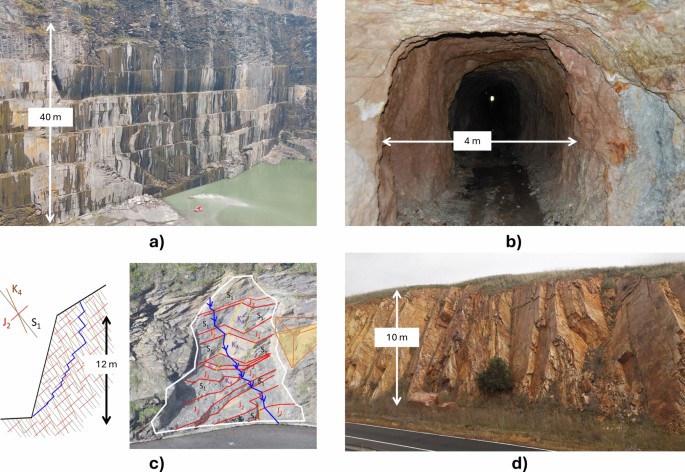
Developed by Z.T. Bieniawski between 1972 and 1973, the Rock Mass Rating (RMR) system is a widely used geomechanical classification tool designed to evaluate the quality, stability, and engineering behavior of rock masses. Updated in versions like RMR89 and RMR14, it assesses six key parameters: Uniaxial Compressive Strength (UCS), Rock Quality Designation (RQD), spacing of discontinuities, condition of discontinuities, groundwater conditions, and orientation of discontinuities relative to engineering structures. Each parameter is assigned a numerical rating, summing to an RMR value from 0 to 100, with higher values indicating more stable rock masses. As a quantitative tool, RMR guides engineers and geologists in designing projects like tunnels, slopes, foundations, and mining excavations, predicting geotechnical challenges and determining support measures. This article explores the RMR system’s framework, applications, implications, challenges, and opportunities in modern engineering.
Context of the RMR System
Development and Evolution
-
Origin: Introduced by Z.T. Bieniawski in 1972–1973 at South Africa’s Council for Scientific and Industrial Research, RMR was designed to standardize rock mass assessment for mining and civil engineering, addressing the need for a reliable, quantitative system.
-
Updates: RMR89 refined the original system by adjusting parameter weightings based on extensive field data, improving accuracy. RMR14 further incorporated advancements in geotechnical testing and data analysis, enhancing applicability to complex projects.
-
Global Adoption: Used worldwide in over 10,000 engineering projects, RMR has become a cornerstone of geotechnical engineering, from Himalayan tunnel projects to African mining operations.
Six Key Parameters
-
Uniaxial Compressive Strength (UCS): Measures the rock material’s strength under compression, rated from 0 to 15 based on laboratory tests (e.g., 100–250 MPa for strong rocks like granite yields higher ratings).
-
Rock Quality Designation (RQD): Assesses rock core quality via drilling, rated 3–20, with higher RQD (e.g., 90–100%) indicating intact rock with fewer fractures.
-
Spacing of Discontinuities: Evaluates the distance between joints or fractures, rated 5–20, where wider spacing (e.g., >2 m) suggests greater stability.
-
Condition of Discontinuities: Considers roughness, weathering, and filling of joints, rated 0–30, with smooth, weathered joints scoring lower due to reduced shear strength.
-
Groundwater Conditions: Assesses water presence and flow, rated 0–15, with dry conditions scoring highest to reflect lower risk of instability.
-
Orientation of Discontinuities: Analyzes joint angles relative to structures, rated -12 to 0, with unfavorable orientations (e.g., parallel to tunnel axes) reducing stability.
RMR Calculation and Interpretation
-
Scoring Process: Each parameter’s rating, derived from field surveys and lab tests, is summed to produce an RMR value (0–100). For example, a score of 81–100 indicates “very good” rock (Class I), while 0–20 denotes “very poor” rock (Class V).
-
Applications: RMR informs support requirements, such as rock bolts or shotcrete for tunnels, and predicts risks like rockfalls or collapses, ensuring safe design.
Implications of the RMR System
Engineering and Safety Impact
-
Project Design: RMR enables precise design of tunnels, slopes, and foundations by quantifying rock stability, reducing risks in projects like India’s Chenab Bridge or Botswana’s diamond mines.
-
Safety Enhancements: By identifying weak rock masses (e.g., RMR < 40), engineers can implement targeted support measures, minimizing accidents, which globally claim 1,000 construction lives annually.
-
Cost Efficiency: Accurate RMR assessments optimize resource allocation, potentially saving 10–20% on construction costs by avoiding over- or under-engineering.
Scientific and Industry Impact
-
Standardized Framework: RMR’s universal adoption fosters collaboration among geologists and engineers, ensuring consistent assessments across projects like China’s Tibet railway expansions.
-
Innovation Driver: The system’s evolution (RMR89, RMR14) encourages advancements in geotechnical testing, such as automated RQD analysis, enhancing precision.
Global and Regional Relevance
-
Infrastructure Development: In regions like the Himalayas, where geological complexity poses challenges, RMR guides safe infrastructure growth, critical for India’s $1 trillion infrastructure push by 2030.
-
Mining Efficiency: In mining-heavy nations like Botswana, RMR supports safer and more efficient excavations, vital amid the 2024 diamond market downturn.
Challenges
Technical Limitations
-
Data Variability: Field surveys and lab tests can yield inconsistent results due to heterogeneous rock conditions, complicating RMR accuracy in complex terrains like the Himalayas.
-
Subjectivity: Parameters like discontinuity condition rely on qualitative judgments, risking variability among assessors, which can affect ratings by up to 10 points.
Operational Constraints
-
Cost and Time: Comprehensive RMR assessments require extensive fieldwork and testing, increasing project costs by 5–10% and delaying timelines, especially for large-scale projects.
-
Complex Terrains: In regions with high seismic activity or groundwater flow, such as Tibet, applying RMR effectively demands advanced expertise and resources.
Adaptation Challenges
-
Evolving Standards: Integrating RMR14’s updates into existing workflows requires retraining engineers, posing logistical hurdles for firms in developing nations.
-
Environmental Impact: Extensive drilling for RQD and UCS can disrupt fragile ecosystems, raising concerns in eco-sensitive areas like Botswana’s tourism zones.
Opportunities
Technological Advancements
-
Automation and AI: Integrating AI-driven imaging for RQD and discontinuity analysis could improve RMR accuracy by 15%, reducing subjectivity and costs.
-
Real-Time Monitoring: IoT-enabled sensors for groundwater and discontinuity changes can enhance RMR’s predictive power, ensuring dynamic stability assessments.
Engineering Optimization
-
Cost Savings: Streamlined RMR processes could cut geotechnical assessment costs by 10%, benefiting projects like India’s high-speed rail corridors.
-
Safety Improvements: Enhanced RMR applications can reduce geotechnical failures, potentially saving 500 lives annually in global construction accidents.
Global and Environmental Benefits
-
Sustainable Design: Incorporating environmental considerations into RMR, such as minimizing drilling impacts, aligns with global sustainability goals, critical for projects in eco-sensitive regions.
-
Capacity Building: Training programs for RMR14 in countries like Botswana and India could upskill engineers, fostering local expertise and supporting infrastructure growth.
PDF Courtesy :- Zulfiqar Ali