


Support CleanTechnica’s work through a Substack subscription or on Stripe.
When Danish-German shipping company Scandlines officially launched Baltic Whale, a zero-direct-emission freight ferry, on March 10, it marked a decisive step forward for electrification in short-sea shipping. Industry coverage focused heavily on the vessel’s all-electric design and onboard technology.
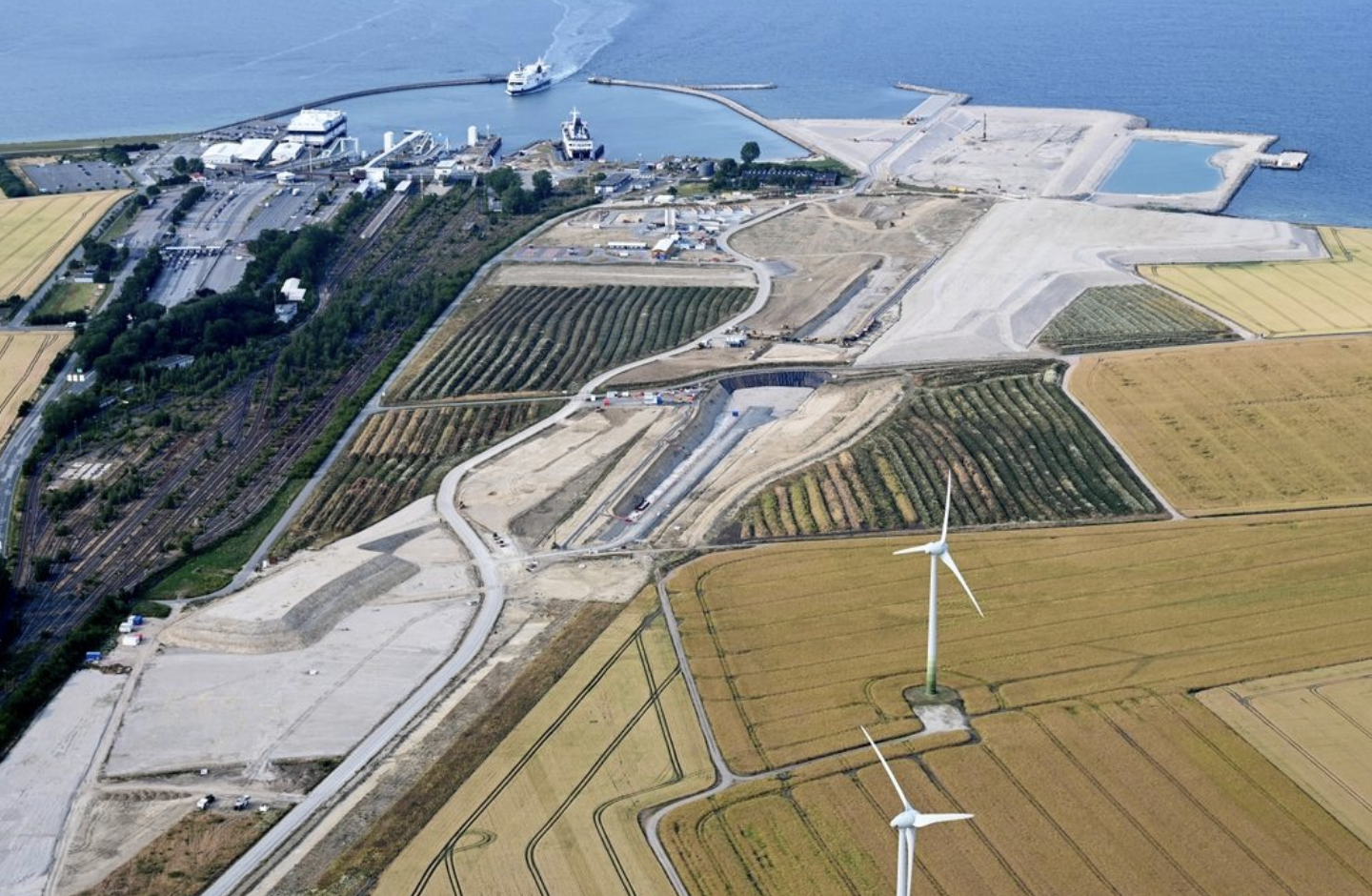
But the deeper story, according to CleanTechnica sources based in Gedser, Denmark, lies in how this vessel fits into Scandlines’ broader strategy: operating high-frequency hybrid ferry routes between Germany and Denmark to create what it calls a “floating bridge” across the Baltic Sea. That vision is now being challenged by what is set to become the world’s longest immersed tunnel crossing — the Fehmarn Belt Fixed Link.
Earlier this month, Scandlines placed Baltic Whale into full service as a dedicated, all-electric freight ferry. Operating on the same route as its hybrid vessels, it enables the company to shift heavy truck traffic away from passenger-car ferries and onto a specialized platform. The four primary hybrid ferries on the route, Deutschland, Schleswig-Holstein, Prins Richard, and Prinsesse Benedikte which are Ro-Pax vessels, carrying a mix of passengers, cars, and freight. This operational adjustment increases total freight capacity on the corridor by 27%, according to company data.
Designed to carry 66 freight trucks, equivalent to approximately 1,200 lane meters across two decks, the vessel delivers a significant capacity boost on the Puttgarden–Rødby route. Its core innovation lies in its energy system: a 10 MWh battery paired with an automated charging tower that connects in under 15 seconds. This enables rapid charging cycles of just 12 to 17 minutes, a requirement for maintaining its high-frequency schedule.
Initial operational feedback suggests measurable efficiency gains, with industry reports indicating reduced truck wait times at both ports despite sustained high freight volumes.
For the logistics sector, however, Baltic Whale represents more than an engineering milestone; it is a strategic asset in an increasingly competitive transport corridor.
While the ferry continues its steady crossings, its main competitor, the Fehmarn Belt Fixed Link, is encountering delays that cast doubt on its original 2029 completion target. This creates a critical window of opportunity for Scandlines.
The 18-kilometer immersed tunnel, designed to carry both road and rail traffic, has long been positioned as the eventual replacement for ferry services. Early projections suggested it would cut crossing times to seven minutes by train and ten minutes by car, significantly reshaping European freight movement.
Recent reports, however, indicate mounting challenges. Construction has been slowed by logistical complications involving specialized immersion vessels tasked with placing massive tunnel segments on the seabed. These issues are compounded by delays in developing the necessary rail connections on the German side.
As a result, the project is now facing at least a two-year delay, pushing its expected opening to 2031 or later. In a notable signal of uncertainty, developer Sund & Bælt recently canceled several major tenders for track and electrical systems, citing the inability to guarantee a firm construction timeline.
This delay has opened a strategic gap that Scandlines is actively exploiting. Rather than waiting for the tunnel to disrupt its business, the company has invested more than €400 million in modernizing and decarbonizing its fleet. Baltic Whale is the most visible outcome of that strategy.
For logistics operators, the decision between ferry and tunnel extends beyond transit time. One of the ferry’s key advantages is regulatory: the 45-minute crossing qualifies as a mandatory driver rest period. By contrast, a tunnel crossing requires continuous driver attention and does not count toward rest requirements.
In an industry constrained by strict hours-of-service rules and persistent driver shortages, this “floating break” provides a meaningful operational benefit. The ferry also offers flexibility in cargo handling, including the transport of hazardous materials, which are often restricted or prohibited in long tunnels.
Scandlines’ electrification strategy extends beyond a single vessel. The company is actively hybridizing its existing fleet, including Deutschland and Schleswig-Holstein, with the goal of achieving zero-direct-emission operations on the Rødby–Puttgarden route by the time the tunnel becomes operational.
Managing the associated energy demand is another challenge the company appears to be addressing effectively. Operational data indicates that Scandlines is handling multi-megawatt charging loads at 45-minute intervals without destabilizing local grids — an important benchmark for port electrification.
Environmental benefits are also emerging. Electric operations significantly reduce underwater noise and vibration, an important factor in the protection of marine life, including harbor porpoises in the region.
Until at least 2031, Baltic Whale and its partially electrified sister vessels are positioned to dominate the Fehmarn Belt corridor, offering a reliable and lower-emission alternative. The longer-term test will come once the tunnel opens. Scandlines is reportedly preparing for aggressive price competition, with some analyses suggesting ferry tolls could be reduced by as much as 25% relative to projected tunnel pricing.
For now, the advantage lies with the ferry — an indication that in logistics, adaptability and operational nuance can rival even the most ambitious infrastructure projects.
The author thanks Gregory T. Bautista, who is now based in Amsterdam, for his contributions to the coverage of the Fehmarn Belt Tunnel and for helping develop the comparative framework used in this analysis.
Sign up for CleanTechnica’s Weekly Substack for Zach and Scott’s in-depth analyses and high level summaries, sign up for our daily newsletter, and follow us on Google News!
Have a tip for CleanTechnica? Want to advertise? Want to suggest a guest for our CleanTech Talk podcast? Contact us here.
Sign up for our daily newsletter for 15 new cleantech stories a day. Or sign up for our weekly one on top stories of the week if daily is too frequent.
CleanTechnica uses affiliate links. See our policy here.
CleanTechnica’s Comment Policy