

Support CleanTechnica’s work through a Substack subscription or on Stripe.
A few years ago, not many people knew what artificial intelligence was, but because the tech industry foresees it as a creator of unimaginable wealth, it has suddenly become a national priority for the US. Unable to compete in manufacturing with the Chinese companies who are bringing cheap electric cars and solar panels to the world, the sexual predator in chief has decreed that winning the battle for AI dominance is a matter of national security, and nothing must be allowed to stand in its way.
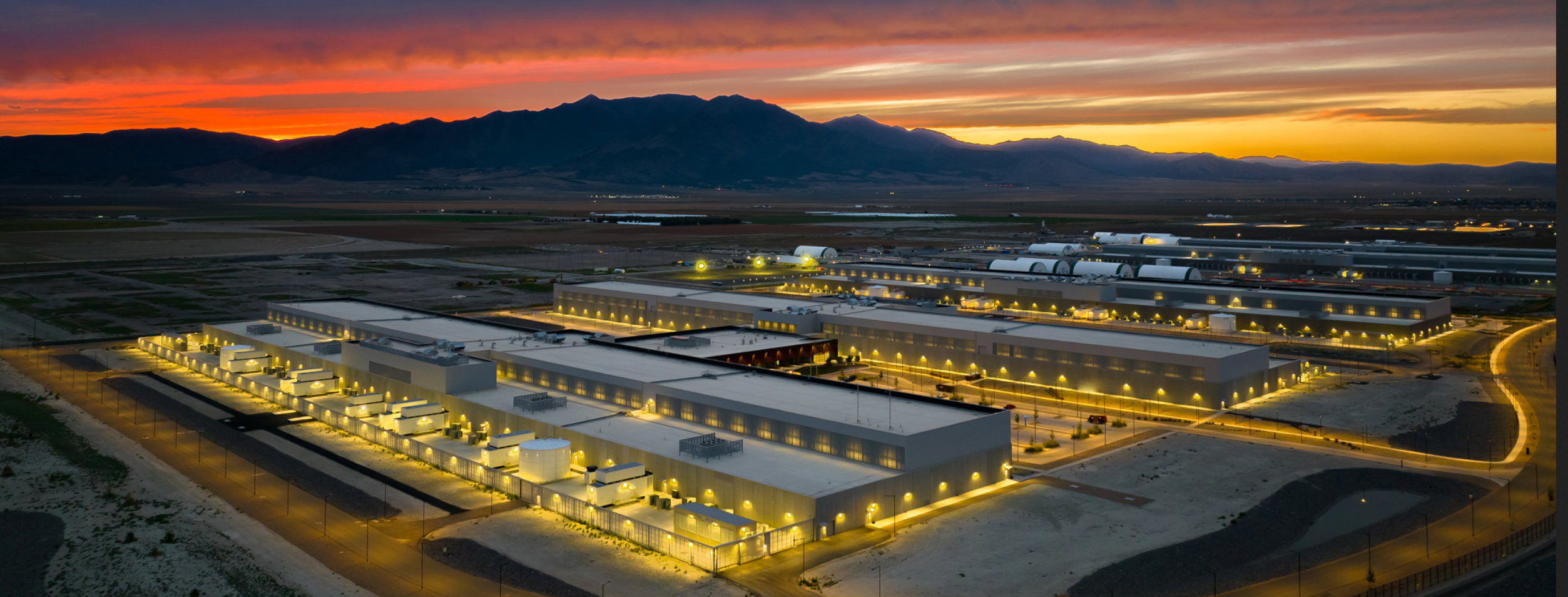
The enormity of the data center expansion in the US is hard for most people to understand. A study by the Lawrence Berkeley National Laboratory estimates that by 2028, 6.7 to 12 percent of all electricity generated within the US could be devoted to powering data centers. Researchers at Cornell University report the emissions from generating that much electricity will equal those from 10 million motor vehicles.
That last statistic has Darren Woods, the CEO of ExxonMobil, seeing visions of sugar plums dancing in his head. Writing for HEATED, Emily Sanders reports that during an October earnings call this year, Woods said, “We can offer a low-carbon data center where more than 90 percent of the emissions are captured and abated.” A few weeks later, he told the Wall Street Journal the same thing and added his plan would “help solve the emissions associated with this short-term need and demand.”
Methane-Powered Campuses
What is Woods talking about? Exxon is pushing data center campuses powered by thermal generators that burn methane. That part of the plan is brilliant. There is huge controversy today about how to supply the electricity to power hungry data centers. It can take years to get permission to connect new power generation to the electrical grid, but AI dominance means making it happen now, not tomorrow. Exxon is proposing a drop-in solution that can be ready almost immediately (if the combined cycle turbines they will need can be obtained).
Unlike Elon Musk, whose Colossus data center is being powered by a dozen or more portable methane generators that spew massive quantities of carbon dioxide into the air, Woods says Exxon’s generating plants would capture up to 90 percent of those emissions. That sounds like good news — until you dig into the details.
The problem, as anyone who has followed the decades of broken promises from Exxon about how they were going to lower emissions with fuels made from algae and other boondoggles, is that none of it works. It is all “pie in the sky” empty promises designed to bamboozle the weak minded into believing that Exxon actually has a conscience. As executive editor Zachary Shahan wrote earlier this year:
“Yes, we need more clean energy, but we also need to take carbon dioxide out of the air with carbon capture technology. The problem is that you can have much more impact for every dollar spent on the former than with every dollar spent on the latter. Some people say, ‘but we can put money into both.’ I never quite get that argument. If you have $100 million to put into carbon capture and storage, then just use that $100 million for more renewables to retire more fossil fuel power plants!”
The New Greenwashing Scam
Anika Juhn, an energy data analyst at the independent think tank Institute for Energy Economics and Financial Analysis, told Sanders, “I’d like to see a commercial scale facility that runs for a period of time that’s actually capturing that level of CO2. But I think we are seeing an example of the great greenwashing that [carbon capture] is, and people jumping on that bandwagon.”
One company jumping in with both feet is NextEra Energy, which told investors last week it plans to collaborate with Exxon to build a “carbon-abated” gas-powered facility at a site in the Southeast, where it will be connected to Exxon’s existing carbon dioxide pipeline network that encompasses Texas, Louisiana, and Mississippi. The facility, which will produce enough electricity to power three quarters of a million homes, will then be sold to a data center operator.
“Everywhere and anywhere it’s been applied, [carbon capture] has been a financial boondoggle,” Tyson Slocum, director of the energy program at Public Citizen, told Sanders. “There’s nothing sustainable about this proposal.”
Since 2016, Exxon has discussed privately how to avoid acknowledging that carbon capture has a limited capacity to reduce emissions, according to internal documents and company whistle blowers. But the company marketed the technology to the public and policymakers as a climate solution anyway, Sanders says.
And taxpayers will be on the hook for a lot of the money Exxon will spend on this project, thanks to section 45Q of the tax code which pays companies like Exxon $85 a ton for any carbon actually captured. Exxon is among those who lobbied for the 45Q tax credit over many years.
Communities Push Back On Data Centers
In Michigan, local organizers are opposing a plan to build a $7 billion data center for Meta in rural Saline Township southwest of Ann Arbor. According to The Guardian, in September, its board of trustees voted against the plan. But then, supporters brought their big guns to bear. Egged on by the so-called president as well as OpenAI, Oracle, DTE Energy, and Stephen Ross, the real-estate billionaire and Trump donor who owns Related Digitgal, a suit was filed against the township, which quickly reversed its decision. Even Gretchen Whitmer, Michigan’s Democratic governor, pitched in to help get the decision reversed.
Elon Musk always whines about “lawfare,” but small rural towns like Saline lack the financial resources to oppose the $1000 an hour Armani-clad lawyers large corporations have on speed dial.
“This is part of an experience that America and the world is having around tech billionaires who are seizing power and widening the gap between those who have much too much … and the working and middle classes,” Yousef Rabhi, a former Democratic state legislative leader and clean energy advocate, told The Guardian. “That’s what these data centers are symbolic of, and they’re the vehicle for the furtherance of this divide.”
NIMBY Meets SPEED
For years, clean energy supporters have been advocating for laws that would blunt the power of NIMBY groups to obstruct renewable energy development. This week, the US House of Representatives passed the SPEED Act, which stands for “Standardizing Permitting and Expediting Economic Development Act.” What it does primarily is defang the National Environmental Policy Act (NEPA) to make it easier for powerful companies to ram their ideas down the throats of local interests.
It is everything renewable energy advocates have wished for, but it will be used to support fossil fuel interests, not clean energy projects. The message for clean energy advocates is: be careful what you wish for, you just might get it.
The proposal is part of the broader “Stargate” project composed of five data centers backed by the Trump administration, which will provide $500 billion in federal subsidies for them. It’s the largest project in Michigan history in terms of investment, and it also received subsidies on taxes that could have gone to roads and schools, among other uses, Rabhi said.
The plan’s supporters say the center will provide essential AI infrastructure, boost national security, and create a few hundred jobs. Huge sums of money are at stake for the tech and utility companies. Isn’t it interesting that the government has money to burn when it comes to propping up people and corporations that are already super wealthy, but none for ordinary Americans who can’t afford their health insurance premiums or need assistance to buy food? America’s priorities are seriously messed up.
A Data Center Moratorium
Last week, more than 230 local and national advocacy groups urged Congress to impose a national moratorium on data centers because of their massive electricity and water consumption, their impact on the environment, and their role in driving up energy prices. Many voters fear these massive data centers could saddle ratepayers with liabilities if the AI investment bubble bursts.
Some, like James Hiatt, a Louisiana resident, say the Exxon deal is an ominous sign of things to come. After decades of fossil fuel development in the state, “Louisiana should have streets paved with gold,” he told The Guardian. “The reality is, we’re subsidizing billion dollar corporations to cause harm to our own communities.”
It doesn’t take a Mensa candidate to recognize that billionaires are getting a gold mine while ordinary Americans are getting the shaft. AI may be the greatest thing since sliced bread, but it is expanding at a dizzying rate and its benefits for ordinary people are far from clear. AI mania reminds many people of the blather at the end of the last century about the dot.com bubble. Some may even remember Alan Greenspan’s dark warnings about “irrational exuberance.”
As we have written many times before, if local people have a stake in such fantastical projects, that can help defuse NIMBY objections. But when the wealthy ride into town and decree that changes need to be made in order to help the US win the artificial intelligence race, skepticism is sure to be the result.
Kate Haushalter and her husband built their home in Saline Township 13 years ago. Now, they are looking at having an enormous new data center as their neighbor. She told The Guardian increased light, noise, and air pollution near her home over the past decade have already had a negative effect on her family. “We are really passionate about nature and teaching our kids about it and I can’t believe the biggest construction project in Michigan is landing literally in my backyard, and there’s no recourse for the little guy. It’s going to crush us.”
In America today, the little guy is being marginalized in ways that no one ever expected, which may result in significant political consequences in the next election cycle. Gretchen Whitmer is hailed as a leading light of the Democratic Party, but her fierce embrace of corporate interests may seriously weaken her political support in the future.
Ultimately, the pertinent questions are, what use is AI, who benefits from it, and does its utility outweigh its social and environmental costs? The current administration is asking none of those questions as it gives its full throated support to artificial intelligence. The country might be better off if there was more widespread use of another kind of AI in Washington — actual intelligence.
Sign up for CleanTechnica’s Weekly Substack for Zach and Scott’s in-depth analyses and high level summaries, sign up for our daily newsletter, and follow us on Google News!
Have a tip for CleanTechnica? Want to advertise? Want to suggest a guest for our CleanTech Talk podcast? Contact us here.
Sign up for our daily newsletter for 15 new cleantech stories a day. Or sign up for our weekly one on top stories of the week if daily is too frequent.
CleanTechnica uses affiliate links. See our policy here.
CleanTechnica’s Comment Policy