
Tesla’s Offensive in South America Continues as the Brand Arrives in Uruguay, Cuts Prices in Chile

Support CleanTechnica’s work through a Substack subscription, on Patreon, or on Stripe. Help us produce all of the high-quality, original content we publish week after week despite the challenges of content-scraping AI, antisocial media, inflation, and other hurdles.
Seven months ago, we announced that Tesla had arrived in the Colombian market looking for blood. With a Model 3 launched below $30,000 and a Model Y below $32,500, the brand was offering a premium feeling for mass market prices, outcompeting pretty much everyone else in the EV landscape, including well known Chinese brands such as BYD and Geely.
And just as we expected, Tesla managed to become the indisputable EV leader, getting 50% of an exploding market for itself (+235% BEV sales so far this year) and gaining the top selling vehicle trophy in the country for the Model Y (mind you, not most sold EV, but most sold vehicle overall).
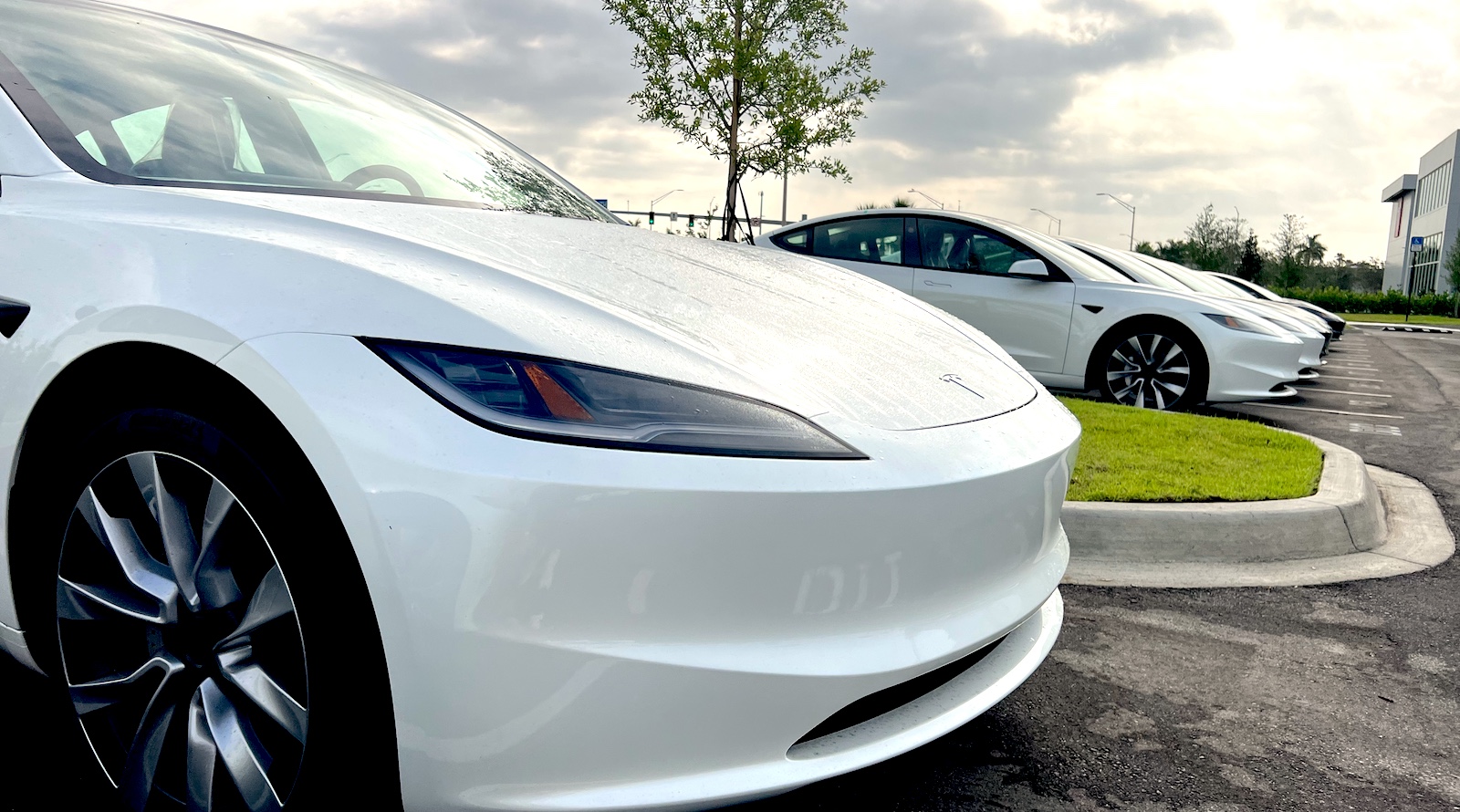
Now, in a double hit, the brand has entered the Uruguayan market at similarly competitive costs, and has reduced its prices in Chile by up to 25%, bringing the Model 3 and Model Y in line with mass-market ICEVs and recharging a transition which was already happening at full speed.
Uruguay
The Uruguayan market has surpassed even the most optimistic of expectations, and, from a frontrunner in late 2025, it has turned into the absolute EV leader in the Americas, surpassing 40% EV market share several months this year (and getting +40% BEV market share in May).
Amidst this rapid pivot away from fossil fuel-based transportation, Tesla has arrived at prices that could supercharge the transition. The Model 3 was announced starting at $32,990, whereas the Model Y starts at $36,490, making them extremely competitive in their respective segments, with the Model 3 for example being cheaper than the entry-level Geely EX5 and the Model Y being cheaper than the BYD Yuan Plus.
Uruguay has also seen the arrival of other very affordable models (most notable of all the Geely EX2, at $20,800), and its overall EV market is more competitive than Colombia’s was back when Tesla announced prices in November 2025, but still, I expect the brand to do well, and even if it lacks the capability to dominate the market as it has done in Colombia, it should get decent sales and perhaps even be the factor to push BEV market share in the country over 50% later this year.
Chile
Tesla arrived in Chile back in 2024 at similar prices as those in the US and European markets, but as Chile has the most affordable vehicles of the continent, this meant its sales were naturally limited: through 2025, the brand sold only 986 units, less than half what it sold in Colombia only last month.
When Tesla announced its arrival in Colombia, I went and checked to see if they lowered their prices in Chile … which they didn’t, meaning we could get a Model 3 here for nearly 30% less than they could there. But it seems at some point in February they started giving generous discounts … and at some point, these became permanent:
- Back in December 2025, a Tesla Model 3 could be purchased for CLP$39’900.000, or some $42,800, and a Model Y would set you back CLP$43’900.000, or $47,000.
- In February, generous discounts of up to 7 million CLP were announced, and you could get a Model 3 now for CLP$32’900.000 and a Model Y for $36’900.000
- Nowadays, it seems those discounts have been made permanent, even increasing them for the Model 3. Today, you can get yourself an entry-level rear-wheel Model 3 for CLP$29’900.000, whereas the rear-wheel drive Model Y stayed at $36’900.000 ($32,000 and $39,500 respectively).
Tesla will have a more difficult time in Chile than in any other country in the region because, as I’ve mentioned several times before, Chile has by far the most affordable vehicles anywhere around here, being one of the few places where you can still drive out of a dealership with a brand-new car for under $10,000. Still, with these new prices, I expect Tesla’s sales to improve, perhaps finally bringing EV market share consistently above 10%.
Final thoughts
Back in 2018, I remember the Model 3 would normally be compared against the BMW 3 Series. Nowadays, it’s much cheaper, closer in price to the Mazda 3*, even though the model itself has improved by quite a bit. (*Except in Chile, of course, where a Mazda 3 is 30% cheaper than the Model 3, because as mentioned, Chile has incredibly competitive vehicle prices. In Uruguay and Colombia, the Model 3 is slightly cheaper than the Mazda 3.)
This ability to lower prices to mass-market levels underpinned Tesla’s gamble in Colombia, which was a complete success and allowed the brand to achieve a level of domination similar to the one it has in the US, something only BYD has also managed so far in the region. It’s possible this motivated their strategy in the other two markets.
However, Tesla is also gripped with significant overcapacity and trying to regain growth after two very mediocre years in 2024 and 2025. Since economies of scale have improved in the overall EV industry, my bet is that they can now manage these lower prices, aiming for more competitive offerings to keep increasing presence in the Latin American market to be able to better utilize their Shanghai factory.
Latin America’s EV market share is growing fast, and at over 6 million overall vehicles sold each year (and growing), the region has significant potential for the EV brands that manage to get a hold of it as ICEVs are phased out. If Tesla manages to get as many sales in Uruguay + Chile as it does in Colombia, that’s 60,000 more vehicles sold every year in the three countries. If they grow from there and also enter larger markets such as Argentina and Brazil, they could easily get 200,000 to 400,000 extra sales a year, enough to bring their overall sales back into robust growth.
At last, nowadays in Mexico you can only get the Model 3 Performance (at almost $60,000) and the rear-wheel drive Model Y (which sits at $45,600), meaning this strategy, for now, seems to be limited to South America.
Sign up for CleanTechnica’s Weekly Substack for Zach and Scott’s in-depth analyses and high level summaries, sign up for our daily newsletter, and follow us on Google News!
Have a tip for CleanTechnica? Want to advertise? Want to suggest a guest for our CleanTech Talk podcast? Contact us here.
Sign up for our daily newsletter for 15 new cleantech stories a day. Or sign up for our weekly one on top stories of the week if daily is too frequent.


CleanTechnica uses affiliate links. See our policy here.
CleanTechnica’s Comment Policy