
The Dawn of the U.S. Oil Industry: Rare Footage Reveals Petroleum’s Humble Beginnings

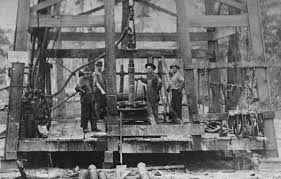
A recently uncovered video from the film library of the Bureau of Mines, U.S. Department of the Interior, offers a rare glimpse into the birth of the U.S. oil industry, capturing the ingenuity, grit, and pioneering spirit that sparked a global energy revolution. This remarkable footage, showcasing the transition from natural oil seeps to the steel derricks that defined modern drilling, highlights key milestones in America’s petroleum history. From Native Americans collecting oil with blankets to Colonel Edwin Drake’s groundbreaking well in 1859, the video traces the early techniques, technologies, and logistics that laid the foundation for today’s multi-trillion-dollar energy sector. This article explores the historical significance of these developments, the innovations that shaped the industry, and their lasting impact on global energy.
The Origins: Oil from Nature’s Seeps
Long before the advent of modern drilling, oil was a resource gathered directly from the Earth’s surface. The Bureau of Mines footage vividly depicts Native Americans collecting oil from natural seeps—shallow pools where petroleum naturally bubbled to the surface—using blankets to soak up the crude. This primitive method, practiced for centuries, underscores the early recognition of oil’s value, primarily as a medicinal salve or waterproofing agent. These seeps, found in regions like western Pennsylvania, were the first signs of the vast underground reservoirs that would soon transform the world.
The footage highlights the simplicity and resourcefulness of these early practices, which relied on manual collection and basic tools. While effective for small-scale use, the limitations of seep collection—low yields and labor-intensive processes—set the stage for the technological breakthroughs that would unlock oil’s potential as a commercial fuel source.
Colonel Edwin Drake’s Game-Changing Well
The pivotal moment in the U.S. oil industry came in 1859 near Titusville, Pennsylvania, when Colonel Edwin Drake drilled the first commercial oil well. The Bureau of Mines video captures the significance of this achievement, showing the modest wooden derrick that marked the dawn of a new era. At just 69 feet deep, Drake’s well was a far cry from today’s deepwater rigs, yet it produced approximately 25 barrels per day—a modest output that ignited a global rush for “black gold.”
Drake’s innovation was not just in drilling but in overcoming technical challenges. The footage illustrates his introduction of the drive pipe, a metal tube hammered into the ground to stabilize the borehole and prevent collapse. This rudimentary ancestor of modern casing was a critical advancement, enabling deeper and more reliable drilling. The well’s success in Titusville triggered an oil boom, attracting prospectors, investors, and entrepreneurs to Pennsylvania’s Oil Creek region, which became the epicenter of early U.S. petroleum production.
Early Technology: Steam Power and the Walking Beam
The Bureau of Mines footage vividly showcases the early technologies that powered the nascent oil industry. Wooden derricks, constructed in the forests of Pennsylvania, were operated using steam engines and the iconic “walking beam”—a seesaw-like mechanism that drove the drill bit into the ground. These steam-powered rigs, as depicted in the video, were a marvel of 19th-century engineering, replacing manual labor with mechanized precision. The walking beam, connected to a cable-tool drilling system, allowed for rhythmic pounding to break through rock layers, a method that remained standard until the advent of rotary drilling decades later.
The footage also highlights the physical demands of early drilling. Workers operated in rugged conditions, surrounded by dense forests and reliant on basic tools. The steam engines, fueled by wood or coal, were prone to breakdowns, yet their reliability marked a significant leap from the hand-dug wells of earlier eras. These innovations, though primitive by today’s standards, laid the groundwork for the mechanized drilling systems that would eventually dominate the industry.
Primitive Logistics: Barrels, Wagons, and Riverboats
Before the development of pipelines, the transportation of oil posed significant logistical challenges, as vividly captured in the Bureau of Mines video. The footage shows oil being stored in wooden barrels, loaded onto horse-drawn wagons, and transported to riverboats for shipment to refineries. This labor-intensive process, reliant on barrels that held 42 gallons (the standard still used today), underscores the industry’s early reliance on existing infrastructure. Riverboats, navigating waterways like the Allegheny River, were critical for moving oil to markets in Pittsburgh and beyond.
The absence of pipelines limited the scalability of early oil production, with barrels often leaking or being lost during transport. The footage illustrates the ingenuity of these early logistics, as well as their inefficiencies, which spurred innovations like the first oil pipelines in the 1860s. These early challenges highlight the resilience of the industry’s pioneers, who overcame logistical hurdles to meet growing demand for kerosene, lubricants, and other petroleum products.
The Ripple Effect: A Global Energy Revolution
The success of Drake’s well in 1859, as depicted in the video, marked the beginning of a global energy revolution. The Titusville well’s modest output of 25 barrels per day proved that oil could be extracted commercially, sparking a frenzy of exploration across Pennsylvania and beyond. By the 1860s, the U.S. oil industry was producing millions of barrels annually, fueling the growth of refining, transportation, and industrial applications. Kerosene, derived from crude oil, became a widely used lighting fuel, displacing whale oil and transforming daily life.
The Bureau of Mines footage serves as a tribute to the bold pioneers who laid the foundation for this transformation. Their innovations—from the drive pipe to steam-powered rigs—enabled the industry to scale rapidly, paving the way for advancements like rotary drilling, steel derricks, and offshore platforms. Today, the legacy of these early efforts is evident in the global oil industry, which supports everything from transportation to petrochemicals and even exploratory drilling concepts for Mars.
Historical and Cultural Significance
The video’s release from the Bureau of Mines film library underscores the importance of preserving historical records to understand the roots of modern industries. The footage not only documents technical achievements but also captures the cultural and economic shifts that accompanied the oil boom. Towns like Titusville and Oil City, Pennsylvania, sprang up as bustling hubs of commerce, drawing workers, investors, and speculators. The industry’s growth reshaped the American economy, fostering urbanization and industrialization while setting the stage for the rise of major oil companies like Standard Oil.
The inclusion of Native American oil collection methods in the footage highlights the deep historical roots of petroleum use, connecting pre-industrial practices to modern extraction. This perspective enriches our understanding of the industry’s evolution, showing how traditional knowledge intersected with technological innovation to create a new economic paradigm.
Modern Relevance and Future Outlook
The Bureau of Mines video serves as a reminder of how far the oil industry has come—and the challenges it faces today. From wooden derricks in Pennsylvania’s forests to offshore platforms in the Gulf of Mexico and experimental drilling concepts for extraterrestrial exploration, the industry has continually adapted to meet global energy demands. However, the rise of renewable energy and the push for decarbonization are reshaping the sector’s future. The footage, while celebrating the industry’s origins, also prompts reflection on its role in a world increasingly focused on sustainability.
For historians, engineers, and energy enthusiasts, the video offers a window into a transformative era. It highlights the ingenuity of early oilmen like Edwin Drake, whose experiments laid the foundation for a global industry. As the world transitions to cleaner energy sources, the lessons from these early days—resilience, innovation, and adaptability—remain relevant for addressing today’s energy challenges.
The rare Bureau of Mines footage capturing the birth of the U.S. oil industry is a powerful testament to the ingenuity and determination of its pioneers. From Native Americans collecting oil with blankets to Colonel Edwin Drake’s groundbreaking well in 1859, the video chronicles the technological and logistical milestones that sparked a global energy revolution. The introduction of the drive pipe, steam-powered rigs, and early transportation methods like barrels and riverboats laid the foundation for an industry that continues to shape the modern world. As we reflect on this pivotal moment in history, the footage serves as both a tribute to the past and a reminder of the innovation required to navigate the future of energy. Watch the video to journey back to where it all began—a story of bold visionaries who turned seeps into steel and ignited an industry that changed the world.