

Support CleanTechnica’s work through a Substack subscription or on Stripe.
Or support our Kickstarter campaign!
The Highlander was still at the show in the hybrid form.
Toyota focused instead on the crowd favorite RAV-4 Hybrid
Toyota’s push toward full electrification took an unusual turn at the 2026 Chicago Auto Show, where the brand’s newest battery-electric SUV — the Highlander BEV — dominated headlines without ever appearing on the show floor.
Unveiled during the event’s media window, the three-row electric SUV is Toyota’s latest global BEV and a key pillar in its “multipath” strategy. Yet inside McCormick Place, showgoers were met not by the new EV, but by the current production Highlander in hybrid and gasoline form, alongside the updated bZ crossover — the only Toyota BEV physically on display.
The absence was deliberate. Rather than using Chicago as a traditional launch venue, Toyota timed the Highlander BEV’s global reveal to the show’s media cycle while keeping its consumer-facing stand focused on the nameplates that deliver the bulk of US sales. The message was clear: the electric Highlander signals where the brand is going, but it isn’t what’s selling today.
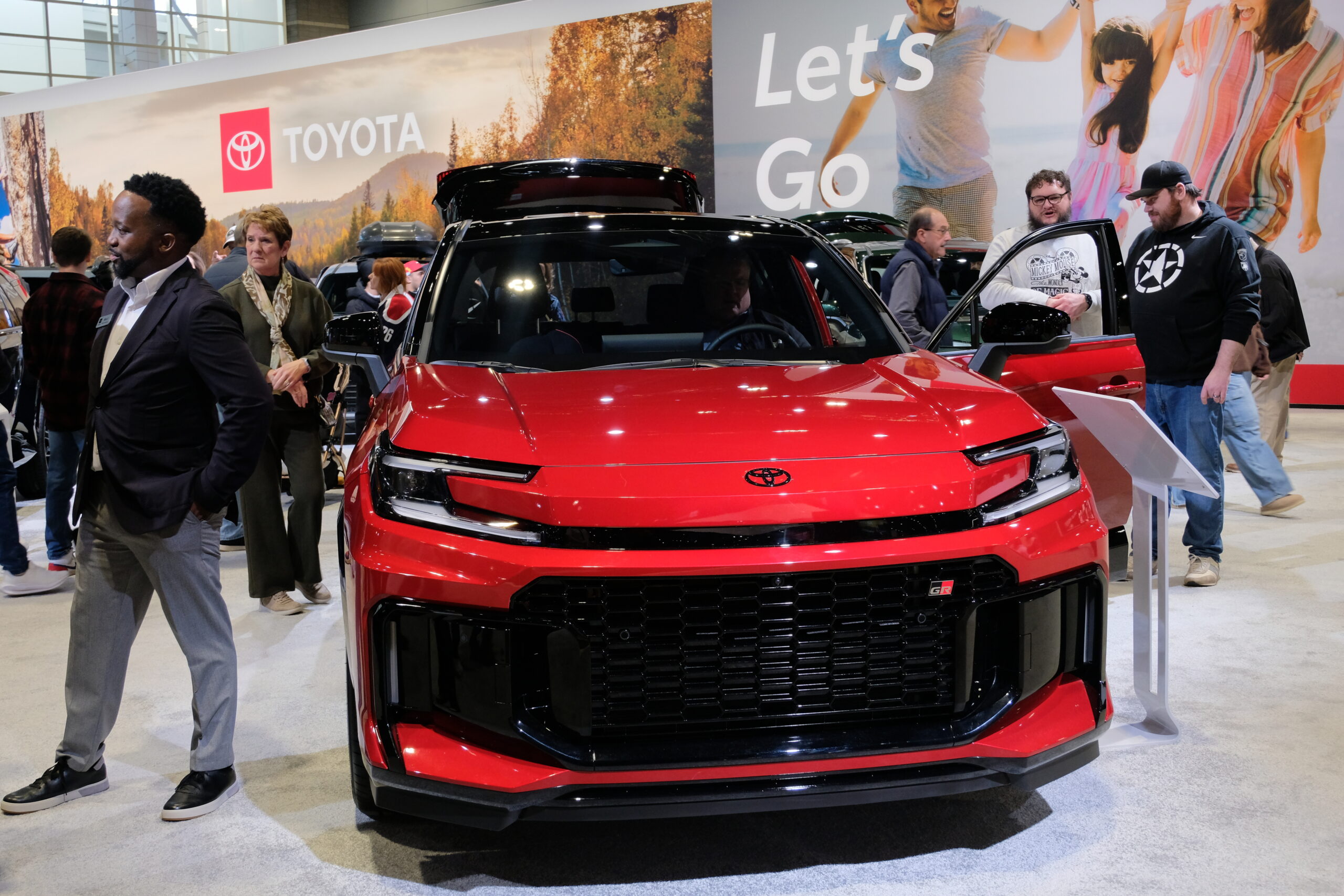
With the new BEV playing a virtual role, the spotlight inside the Toyota display fell squarely on the RAV4. The best-selling SUV in the United States took center stage with its latest updates and full electrified range, drawing the kind of foot traffic that no global reveal can manufacture.
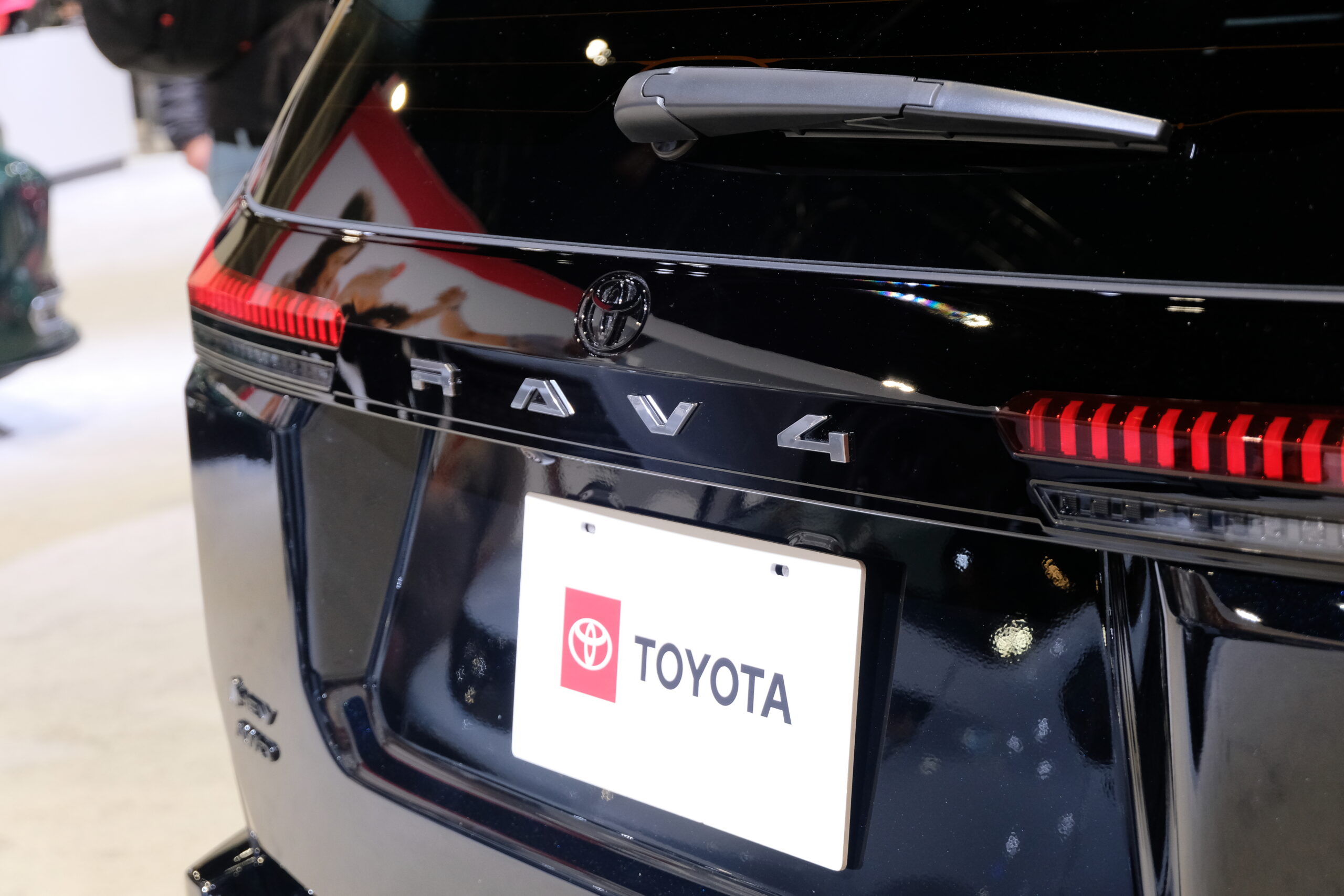

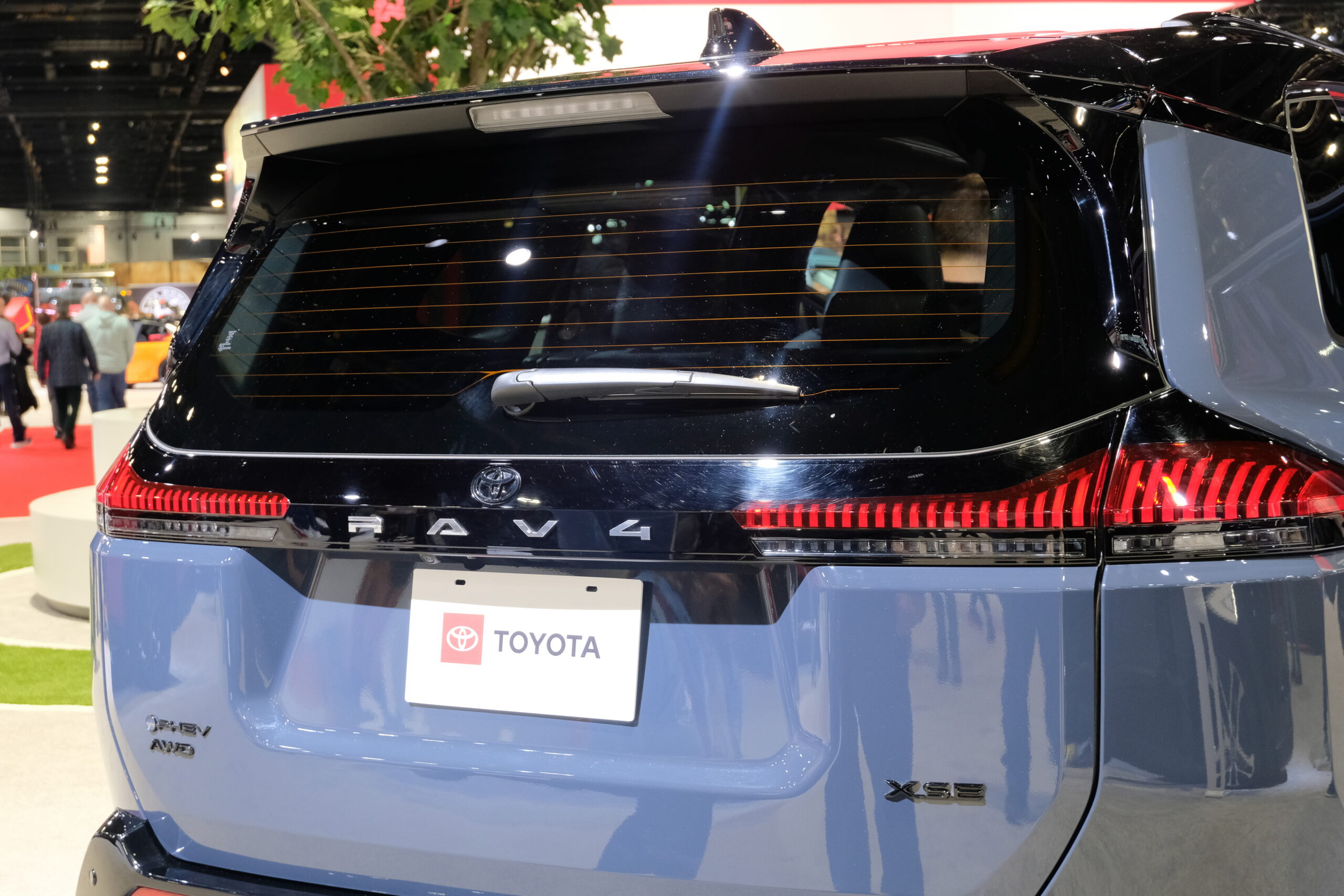
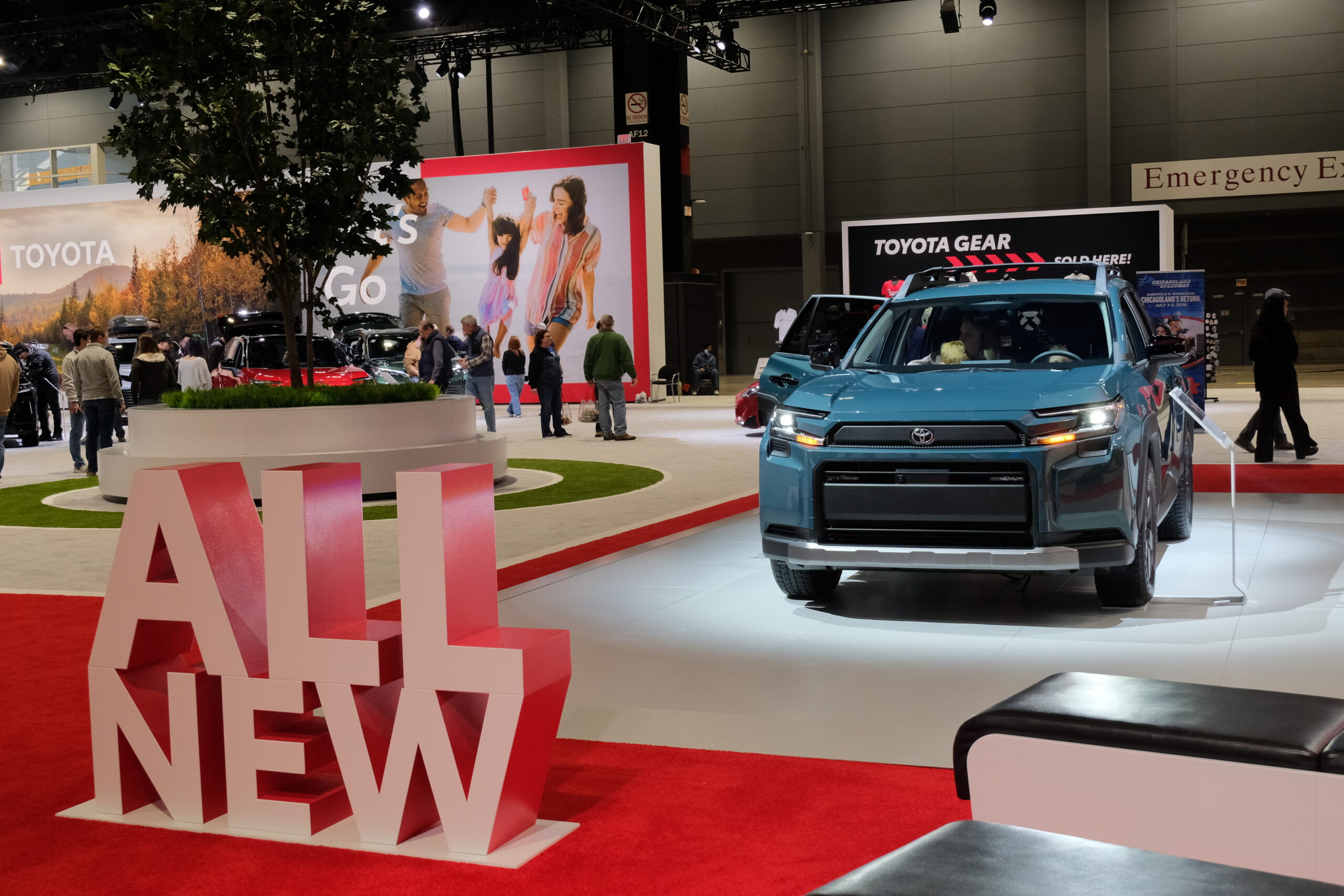
Instead, Toyota leaned into its multiple powertrains. The conventional hybrid as the core model, the RAV4 Prime plug-in as the efficiency and performance flagship, and presenting the vehicle as the clearest real-world expression of its multi-path philosophy. For a show increasingly defined by retail buyers rather than world premieres, that message landed. The RAV4’s familiar design, strong fuel economy, and competitive packaging aligned with buyers navigating high vehicle prices and uneven charging infrastructure.
The contrast between the two SUVs illustrated Toyota’s position in the EV transition precisely. Rather than centering its show presence on a single breakthrough vehicle, the company used Chicago to reinforce the breadth of its lineup while allowing the Highlander BEV to build momentum through global media coverage. In that sense, the missing debut became part of the message.
The debut that wasn’t
The Highlander BEV represents a significant expansion of Toyota’s battery-electric lineup, and not only because it brings a familiar nameplate into the BEV space. Built in Kentucky with batteries sourced from Toyota’s North Carolina plant, it will be the first Toyota BEV assembled in the United States — a localization strategy that aligns the vehicle with domestic supply chains, federal incentives, and the company’s plan to scale EV production in North America.
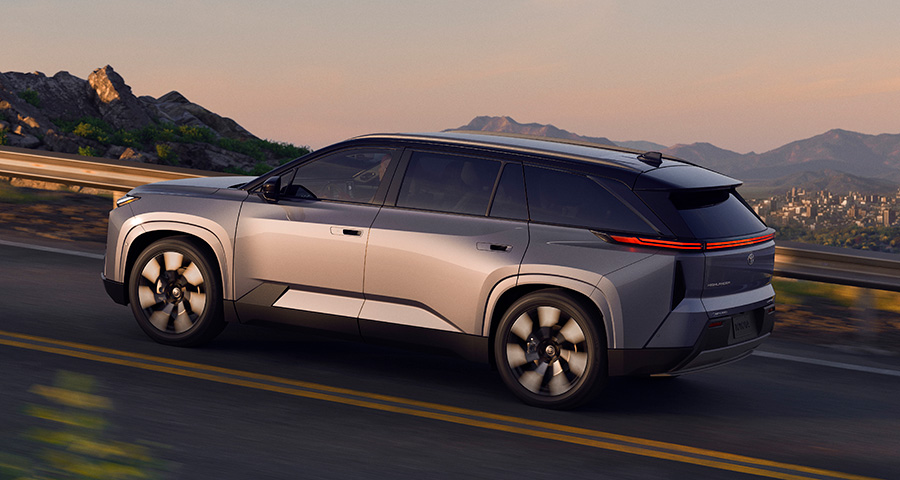
In performance terms, the dual-motor all-wheel-drive configuration produces around 338 horsepower, and Toyota projects a driving range of up to 320 miles — placing it directly in competition with established and upcoming electric SUVs in the same class. Fast-charging is designed around real-world use: DC charging can bring the battery from low to 80 percent in roughly 30 minutes under optimal conditions. The adoption of the North American Charging Standard (NACS) gives owners direct access to the Tesla Supercharger network, a meaningful advantage for buyers considering their first long-distance EV.
Inside, the dedicated electric platform delivers the expected gains: a flat floor, flexible six- or seven-passenger seating, additional cabin and cargo space, a large central display and an expanded driver-assistance suite. The vehicle is also expected to offer bi-directional power capability, enabling it to function as a mobile energy source for tools, appliances, or home backup — a feature that is quickly becoming a differentiator in the family-SUV segment.
The decision to electrify the Highlander nameplate rather than introduce another standalone “bZ” model signals a deliberate shift in Toyota’s EV branding. By attaching battery-electric technology to one of its most recognized SUVs, the company is using existing customer loyalty to accelerate acceptance of full electrification. The timing serves a product purpose as well: Highlander sales have faced pressure from both internal competition — particularly the larger Grand Highlander — and newer three-row electrified rivals. The BEV version resets the model’s position, giving it a distinct identity and a clear path forward.
Within Toyota’s multipath framework, the Highlander BEV becomes the all-electric flagship of its mainstream SUV range — the point at which hybrids deliver volume, plug-ins bridge the gap, and a fully electric three-row SUV stakes out Toyota’s claim in one of the most contested segments in the US market. Even without a physical debut in Chicago, it is one of the company’s most consequential electric launches for North America: a core nameplate, built domestically, with competitive range and access to the continent’s largest fast-charging network, aimed squarely at the mass market.
For the Chicagoans at least, the RAV4 ruled the show floor.
The minds and hearts of America, however, will be enthralled by the Highlander BEV — homebuilt to rule what comes next.
Support CleanTechnica via Kickstarter

Sign up for CleanTechnica’s Weekly Substack for Zach and Scott’s in-depth analyses and high level summaries, sign up for our daily newsletter, and follow us on Google News!
Have a tip for CleanTechnica? Want to advertise? Want to suggest a guest for our CleanTech Talk podcast? Contact us here.
Sign up for our daily newsletter for 15 new cleantech stories a day. Or sign up for our weekly one on top stories of the week if daily is too frequent.
CleanTechnica uses affiliate links. See our policy here.
CleanTechnica’s Comment Policy