

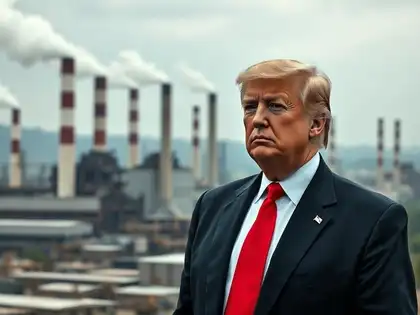
Former US President Donald Trump’s efforts to revive the American coal industry faced a major setback during his tenure, as data shows that coal exports plunged sharply amid escalating trade tensions with key global partners, particularly China.
Despite Trump’s campaign promise to restore coal jobs and “bring back American energy dominance,” the US coal sector struggled under the weight of falling international demand, stricter environmental policies abroad, and declining competitiveness in global markets.
According to trade data, US coal exports dropped by nearly 20% during the height of the US-China trade war, as Beijing imposed tariffs on American coal and sought alternative suppliers from Australia, Russia, and Indonesia. The drop in exports coincided with a broader decline in domestic coal consumption, as utilities increasingly shifted toward natural gas and renewable energy.
Analysts note that while Trump rolled back several environmental regulations and sought to boost domestic mining, those measures were insufficient to offset global market forces. “The trade war accelerated the decline of US coal exports, hurting the very industry Trump aimed to protect,” said an energy economist at Columbia University.
Coal companies in states like West Virginia and Kentucky reported shrinking profit margins and mine closures, even as the administration pushed for subsidies and regulatory relief.
The long-term impact of the trade war continues to reverberate across the US energy sector, with coal production still well below pre-2017 levels. Meanwhile, renewable energy investments and natural gas remain the primary growth drivers in the country’s evolving energy landscape.