
Understanding Chevron and Isoclinal Folds: Geological Markers of Compressional Forces

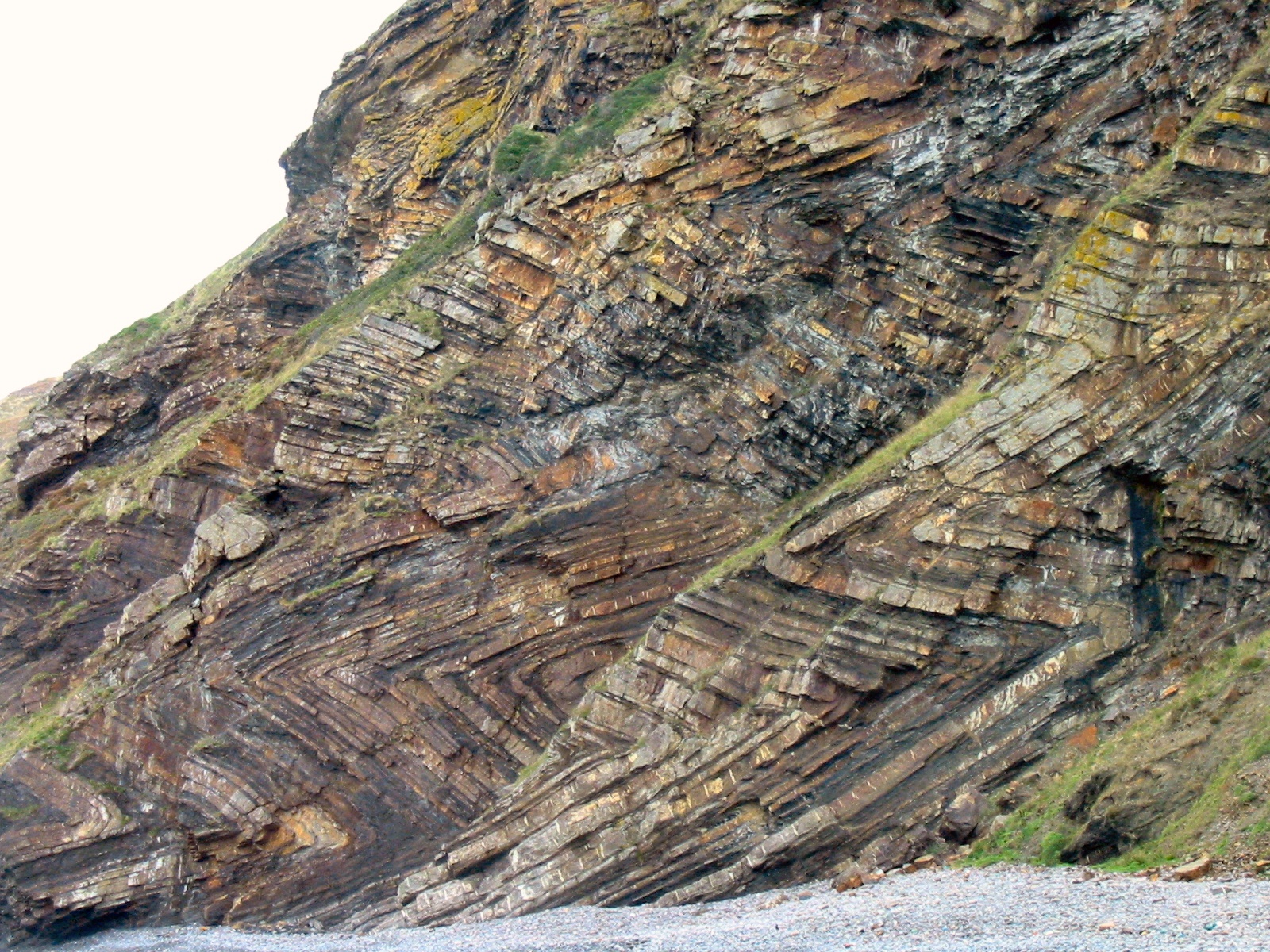
Geological studies continue to rely on the analysis of fold structures to unravel Earth’s tectonic history. Among these, Chevron and Isoclinal folds stand out as critical indicators of compressional forces shaping the planet’s crust. Chevron folds, characterized by repeated “V”-shaped beds with straight limbs and sharp hinges, form under moderate compressive stress, typically with inter-limb angles of 60 degrees or less. Isoclinal folds, by contrast, result from intense compression, forcing their limbs to become parallel and dip at equal angles, reflecting extreme tectonic deformation. Commonly observed in mountain belts and sedimentary basins, these folds provide insights into stress directions and geological processes. This article explores the formation, characteristics, implications, challenges, and opportunities associated with Chevron and Isoclinal folds in modern geological science.
Context of Chevron and Isoclinal Folds
Chevron Folds
-
Structure and Appearance: Chevron folds feature repeated, well-behaved folded beds with straight limbs meeting at sharp hinges, creating a distinctive “V” or “zigzag” pattern. Their inter-limb angles, typically 60 degrees or less, reflect the intensity of folding.
-
Formation Process: These folds develop under compressive stress, often in regions where sedimentary layers alternate between competent (strong) and incompetent (weak) rocks, such as sandstone and shale. The contrast in strength drives the sharp bending at hinges.
-
Geographical Occurrence: Predominantly found in mountain belts like the Himalayas and sedimentary basins such as the Appalachian Basin, Chevron folds help geologists trace the direction of past tectonic compression, aiding in regional stress analysis.
Isoclinal Folds
-
Structure and Appearance: Isoclinal folds are marked by limbs that are parallel and dip at equal angles in the same direction, a result of intense compressional forces. The term “isoclinal,” meaning “same angle,” highlights their symmetrical geometry.
-
Formation Process: Formed by extreme tectonic plate collisions, these folds occur when compressional forces are so strong that the rock layers are squeezed until their limbs align. The axial planes may be upright or inclined, depending on the stress orientation.
-
Geographical Occurrence: Commonly observed in mountain belts created by continental collisions, such as the Alps and the Zagros Mountains, Isoclinal folds indicate significant crustal shortening and are key to understanding orogenic (mountain-building) processes.
Geological Significance
-
Tectonic Insights: Both fold types serve as records of Earth’s deformational history, with Chevron folds indicating moderate compression and Isoclinal folds reflecting severe tectonic events, often linked to plate boundary dynamics.
-
Field Identification: Geologists use these structures, identified through field mapping and seismic data, to reconstruct past tectonic environments, enhancing models of regional geology as of 2025.
Implications of Chevron and Isoclinal Folds
Scientific Impact
-
Tectonic Stress Analysis: Chevron folds’ inter-limb angles and Isoclinal folds’ parallelism provide quantitative data on the magnitude and direction of compressional stress, improving tectonic models for regions like the Himalayas.
-
Geological Mapping: These folds aid in creating detailed geological maps, essential for resource exploration (e.g., oil in sedimentary basins) and hazard assessment in mountainous areas.
Engineering and Economic Impact
-
Infrastructure Safety: Understanding fold stability informs the design of tunnels, dams, and highways in folded terrains, reducing risks of landslides or structural failure in projects like India’s Chenab Bridge.
-
Resource Exploration: Chevron and Isoclinal folds guide mining and hydrocarbon exploration by indicating fault zones and fold traps, critical for Botswana’s diamond industry amid its 2024 market downturn.
Environmental and Societal Impact
-
Hazard Mitigation: In seismic zones, recognizing these folds helps predict earthquake-related deformations, protecting communities in mountain belts like the Andes.
-
Educational Value: These structures enrich geological education, inspiring students and researchers to explore Earth’s dynamic processes.
Challenges
Analytical Challenges
-
Complex Geometry: Chevron folds’ variable inter-limb angles and Isoclinal folds’ parallel limbs can be difficult to measure accurately in highly deformed terrains, leading to errors in stress analysis.
-
Data Interpretation: Distinguishing between fold types in eroded or obscured outcrops requires advanced techniques, challenging field geologists in remote areas.
Operational Constraints
-
Field Accessibility: Mapping these folds in rugged mountain belts, such as the Karakoram, demands significant resources, including helicopters and drones, increasing costs by 15–20%.
-
Scale Limitations: Microscopic folds may not reflect regional tectonics, complicating upscaling from outcrop to basin-scale models.
Environmental and Safety Risks
-
Geohazards: Studying these folds in active tectonic zones poses risks of rockfalls or earthquakes, requiring safety protocols that can delay research.
-
Ecological Disruption: Exploration activities in fold-rich areas may disturb ecosystems, necessitating sustainable practices.
Opportunities
Scientific Advancement
-
Advanced Imaging: Using LiDAR and 3D seismic imaging can enhance fold mapping accuracy by 25%, providing detailed data on limb orientations and hinge zones.
-
Research Collaboration: International partnerships, such as those between Indian and European geologists, can advance fold studies, integrating AI to model tectonic stress.
Engineering Applications
-
Optimized Design: Precise fold analysis can reduce construction costs by 10% in projects like tunnel boring through folded rock masses, improving safety and efficiency.
-
Hazard Prediction: Real-time monitoring of fold deformation using sensors can forecast landslides, saving lives and infrastructure in prone regions.
Environmental and Educational Benefits
-
Sustainable Exploration: Eco-friendly drilling techniques can minimize environmental impact while studying folds, aligning with global sustainability goals.
-
Public Engagement: Virtual reality models of Chevron and Isoclinal folds can educate the public, fostering interest in geology and supporting conservation efforts in mountain ecosystems.