

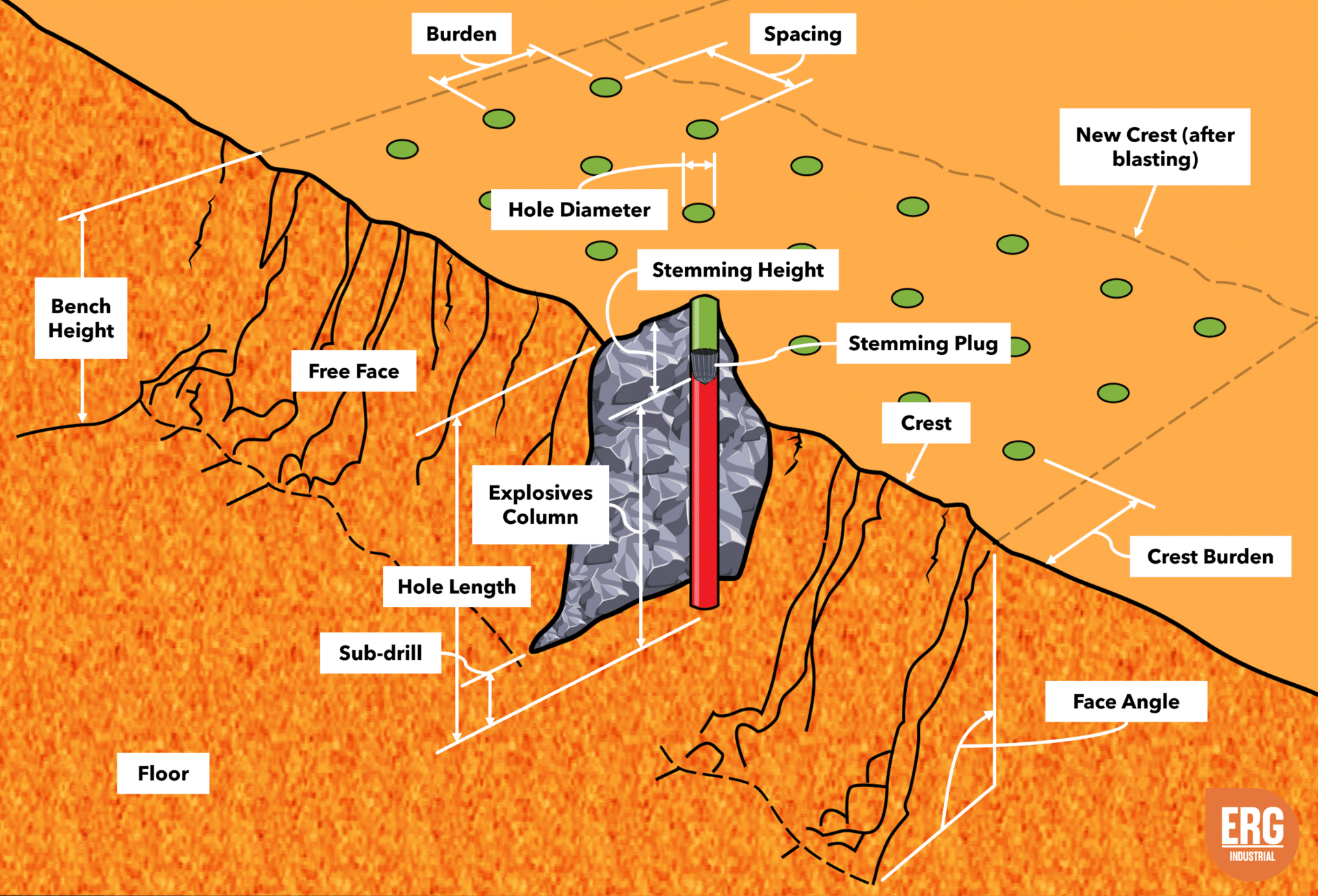
In mining and blasting operations, one of the most critical parameters is the Powder Factor (PF). It is defined as:
PF = Weight of Explosives (kg) / Rock Broken (tonnes)
This simple ratio serves as a key measure to evaluate the efficiency of explosive usage in breaking rock.
Importance of Powder Factor
The Powder Factor directly influences several critical aspects of blasting performance:
-
Fragmentation Size: Determines how fine or coarse the blasted rock will be.
-
Muckpile Shape: Impacts ease of loading and hauling.
-
Productivity: Affects downstream processes including crushing, grinding, and overall mine efficiency.
High vs. Low Powder Factor
-
Higher PF:
-
More explosives per tonne of rock.
-
Results in finer fragmentation.
-
May improve downstream processing but increases costs.
-
-
Lower PF:
-
Less explosives per tonne of rock.
-
Produces coarser fragmentation.
-
Can lead to loading and hauling challenges if rock size is too large.
-
The Engineer’s Role
For mining engineers, understanding Powder Factor is more than a mathematical exercise. It involves:
-
Balancing economics – optimizing costs of explosives against downstream savings.
-
Ensuring safety – preventing overbreak or hazardous flyrock.
-
Maximizing productivity – achieving fragmentation that supports efficient loading, hauling, and processing.
Powder Factor is a vital control parameter in blasting operations. Its careful optimization ensures that mining operations achieve the right balance between cost-effectiveness, safety, and productivity. For engineers, it is not just about numbers—it is about making every blast count.