

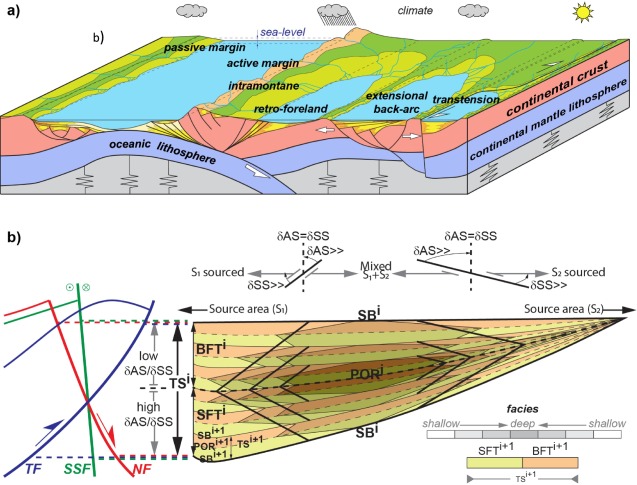
The study of geological faults continues to be a cornerstone of understanding Earth’s dynamic processes. A fault is a fracture or zone of fractures in the Earth’s crust along which displacement of rock has occurred due to tectonic forces. Faults are classified based on the type of movement (displacement) between the two blocks of rock. The three main categories are strike-slip faults, dip-slip faults, and oblique-slip faults. These structures play a critical role in shaping the Earth’s surface, triggering earthquakes, and facilitating mountain building. This article explores the definitions, types, and significance of these faults, along with their implications, challenges, and opportunities in geological science.
Context of Faults in Geology
Introduction
-
Definition and Origin: Faults result from tectonic stresses that fracture the crust, with displacement ranging from centimeters to kilometers, driven by plate tectonics.
-
Classification Basis: The classification into strike-slip, dip-slip, and oblique-slip faults depends on the direction and nature of movement, observable through field studies and seismic data.
1. Strike-Slip Faults
-
Definition: A fault where the displacement is primarily horizontal, parallel to the strike (the line of intersection between the fault plane and the surface).
-
Movement: One block moves sideways relative to the other, with no significant vertical movement.
-
Types:
-
Left-lateral displacement: The opposite block moves to the left.
-
Right-lateral displacement: The opposite block moves to the right.
-
-
Examples: The San Andreas Fault in California exemplifies right-lateral movement, shaping regional landscapes over millions of years.
2. Dip-Slip Faults
-
Definition: A fault where movement is mainly vertical, parallel to the dip (slope) of the fault plane.
-
Components: The block above the fault is called the hanging wall, and the block below is the footwall.
-
Types:
-
Normal fault: Hanging wall moves downward relative to the footwall, caused by extensional forces. Common in rift zones like the East African Rift.
-
Reverse fault: Hanging wall moves upward relative to the footwall, caused by compressional forces (steep slope). Prevalent in fold-and-thrust belts like the Himalayas.
-
Thrust fault: A type of reverse fault with a gentle slope. Notable in the Appalachian Mountains.
-
-
Geological Role: These faults accommodate crustal stretching or shortening, influencing topography.
3. Oblique-Slip Faults
-
Definition: A combination of both strike-slip and dip-slip movement, resulting in diagonal displacement.
-
Types:
-
Reverse plus left-lateral displacement.
-
Normal plus right-lateral displacement.
-
-
Examples: The Alpine Fault in New Zealand exhibits oblique-slip, reflecting complex tectonic interactions.
-
Significance: Faults play a major role in shaping the Earth’s surface and are directly linked to tectonic activity, earthquakes, and mountain building. Understanding their types and movements helps in geological mapping, seismic studies, and resource exploration.
Implications of Faults
Scientific Impact
-
Tectonic Insights: Fault movements provide data on plate interactions, aiding models of continental drift and seismic hazard assessment.
-
Earthquake Prediction: Fault analysis enhances early warning systems, critical in regions like Japan, where 20% of global earthquakes occur.
Engineering and Economic Impact
-
Infrastructure Safety: Identifying fault zones informs the design of dams, bridges, and tunnels, reducing risks in earthquake-prone areas like the Himalayas.
-
Resource Exploration: Faults often host mineral deposits (e.g., gold along strike-slip faults), guiding mining efforts in Canada and Australia.
Environmental and Societal Impact
-
Landscape Evolution: Faults shape mountains and valleys, influencing ecosystems and human settlement patterns.
-
Hazard Mitigation: Understanding fault behavior mitigates landslide and tsunami risks, protecting millions in coastal zones.
Challenges
Analytical Challenges
-
Complexity of Mapping: Faults in deep crust or obscured by sediment require advanced geophysical techniques, risking inaccurate assessments.
-
Movement Variability: Oblique-slip faults’ combined motions complicate stress analysis, with errors up to 10% in some models.
Operational Constraints
-
Field Accessibility: Studying faults in remote or tectonically active regions like the Andes demands costly expeditions, increasing research budgets by 15–20%.
-
Data Gaps: Limited historical seismic data hinders precise fault characterization, especially for thrust faults.
Environmental and Safety Risks
-
Geohazards: Fault zones pose risks of sudden earthquakes or landslides, requiring safety protocols that can delay fieldwork.
-
Ecological Disruption: Drilling to study faults may disturb fragile ecosystems, necessitating sustainable practices.
Opportunities
Scientific Advancement
-
Advanced Imaging: LiDAR and satellite interferometry can improve fault mapping accuracy by 25%, enhancing tectonic models.
-
Interdisciplinary Research: Collaboration with seismologists and geochemists could refine fault movement predictions using AI.
Engineering Applications
-
Resilient Design: Fault data can optimize earthquake-resistant structures, potentially saving 500 lives annually in India’s seismic zones.
-
Resource Optimization: Targeted exploration along fault lines could boost mineral yields by 10–15%, supporting global demand.
Environmental and Educational Benefits
-
Sustainable Mitigation: Eco-friendly fault monitoring (e.g., fiber-optic sensors) aligns with global sustainability goals, reducing environmental impact.
-
Public Awareness: Virtual simulations of fault movements can educate communities, fostering preparedness in earthquake-prone regions.