


Support CleanTechnica’s work through a Substack subscription or on Stripe.
When attending presentations from XPENG in China, one thing stood out for its absence: they really didn’t talk about their cars being EVs. No selling the audience on the benefits of electrification. They talked about technologies and EV-related systems, but having an electric vehicle was the expectation.
I spent a lot of time with Norwegians attending the events. When I asked one of them about this, they said it was the same in their home country. Nobody talks about cars being EVs in Norway anymore because almost all new car sales are already electric. They were at over 98% market share in October.
Chinese EV sales are growing rapidly and make up the majority of new vehicles in the country. However, China is a geographically diverse country, and market share within Tier 1 cities, like Guangzhou, tends to be over 80%. For comparison, Guangzhou’s population is multiple times the size of Norway. And it is just part of the Pearl River Delta Megalopolis, the largest continuous urban area in the world, with roughly twice the population of the Nordic countries and Benelux combined. Think of it like the San Francisco Bay Area, but with a population larger than the West Coast and Rocky Mountain states combined.
I also spent a lot of time with Tom and Joy from “Ludicrous Feed.” For Tom, his Tesla Model S was a revelation when it came out, leading to the name of his YouTube channel. At the time, there was nothing like it. But now, Tesla continues to coast on its historical first mover reputation while its products grow older. They are still good cars, but there are many arguably better options, particularly for the money. And especially in China, where the competition has massively stepped up their game. Tesla cars no longer stand out, but it is also getting more difficult for every automaker in the largest and most competitive market to break through with customers.
In China, Almost All EVs Are Good
When looking at the EVs on the road from major Chinese brands, almost all of them are good vehicles. A lot of this has to do with the fundamental benefits of electrification. I am sure that there are some cars that are not up to par, but competitive pressure and consolidation will weed them out soon if it hasn’t happened already. Fit and finish tends to be excellent. Materials feel high quality. Cabins are silent and free of shakes and rattles. Technology is abundant. Comfort features are available on entry-level models that luxury cars from a couple of decades ago could only dream about. Some may be a little better in one area or the other, but it is increasingly hard to find a bad EV. The market has matured to the point where good EVs are the expectation, reflected by it no longer being a focus in China’s latest 5 year plan.
Overall, EVs are affordable in China. Entry level EVs cost roughly half what a base ICE car costs in the US. When you get to the $25,000–30,000 range, the cars become excellent. Even with the price war, automakers like BYD, Leapmotor, Li Auto, Xiaomi, etc., are now net profitable. Meanwhile, automakers like XPENG have healthy gross margins, but, like many tech companies, put so much into R&D that they basically break even in net. With industry reforms (it is illegal to sell below cost in China) and industry consolidation on the horizon, prices are set to stabilize at an affordable level. While the industry is not there yet, it is maturing to a level where those that survive can expect sustainable but not amazing financial performance. Costs are still being engineered out of products, but we are reaching the point of diminishing returns. It is becoming harder to differentiate on just price. So, automakers must look elsewhere.
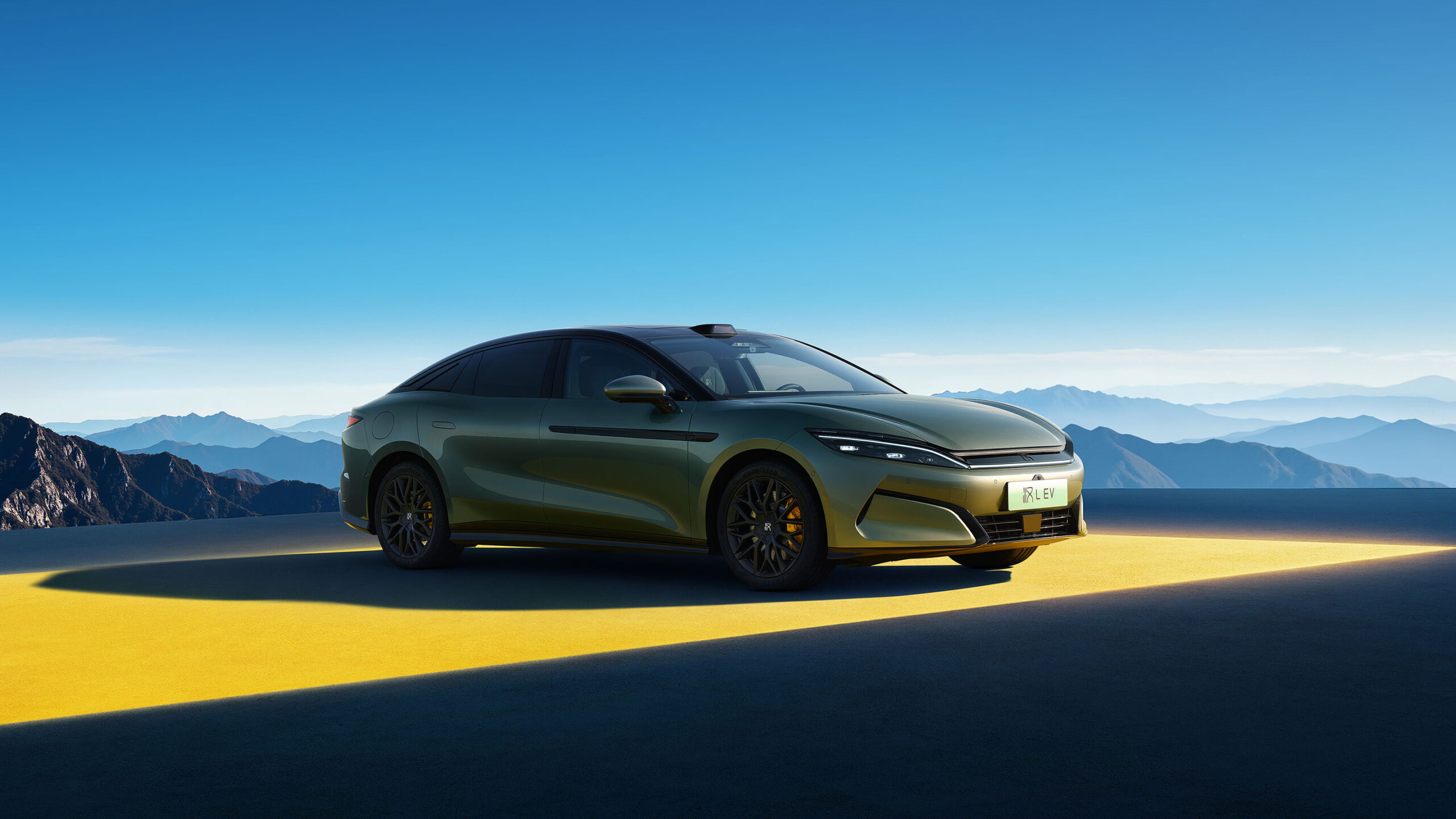
In terms of performance, from the perspective of someone who grew up in the ’80s, entry-level EVs tend to accelerate faster than Magnum P.I.’s Ferrari 308. For more mainstream vehicles, China is looking to limit the default acceleration setting to 5 seconds 0–100 km/h, faster than Sonny Crocket’s V12 Ferrari Testarossa on Miami Vice. Jumping forward, the $1.5 million Ferrari LaFerrari supercar of 2013 is now slower than the 2.85 second 0–100 km/h time of the almost 1100 hp BYD Han L EV, a comfortable $30,000 family sedan. And that car could potentially go even more unnecessarily fast with performance tires and lower gearing, as it doesn’t even reach peak power until 140 km/h, above the speed limit in China. After a few drag races for fun, this level of power will be of limited use to most drivers. Even if you had access to a track, few have the skill and talent needed to really put that much power to use. So how can you differentiate beyond power?
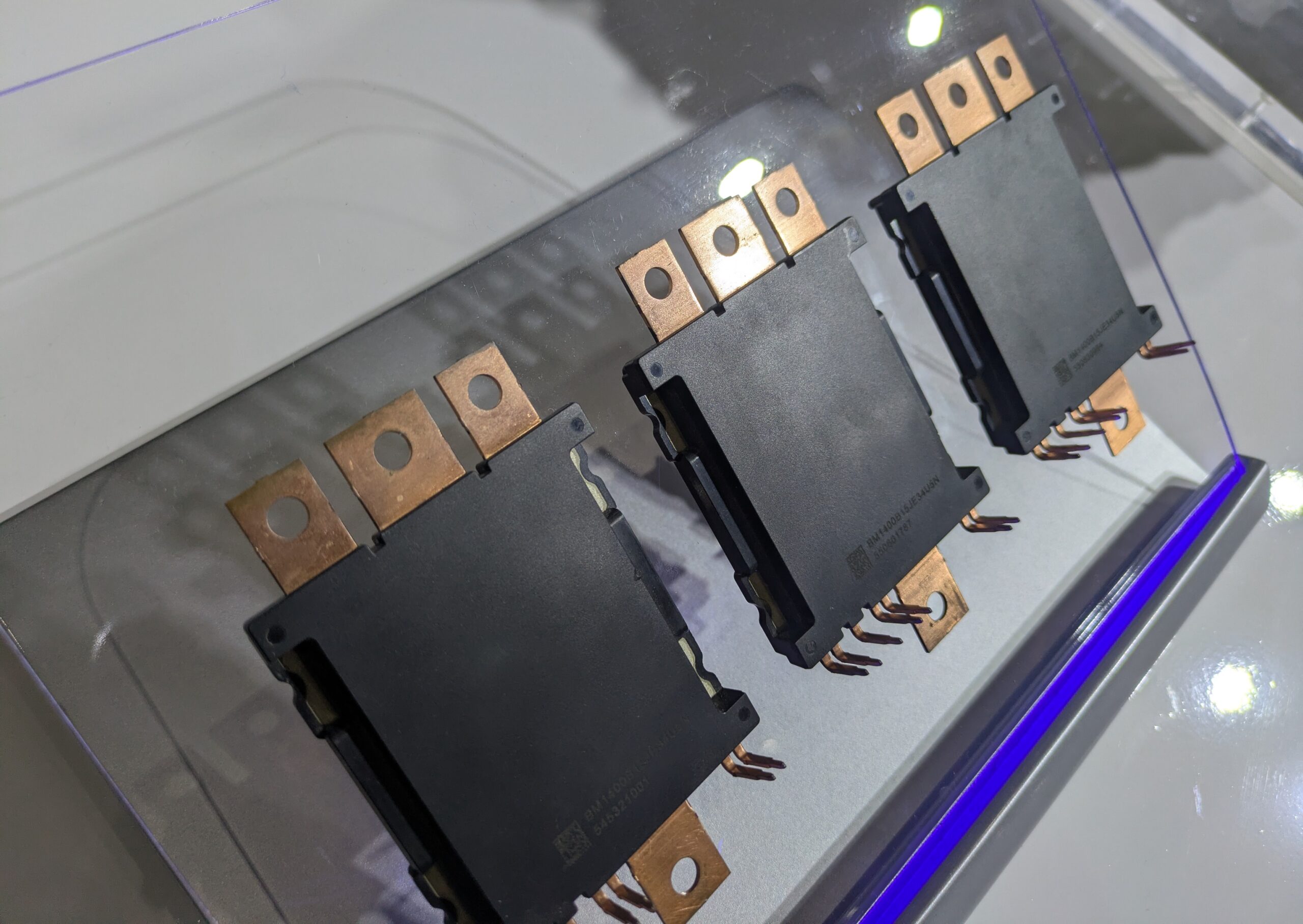
You could try to differentiate on charging speed. That Han L is on a 1000V platform that charges roughly as fast as it takes to fill up a gasoline car. Arguably, BYD has an advantage from its in-house SiC power electronics with increasing voltages. However, competitors are also increasing charge speeds. As charging times become shorter than it takes to use the bathroom, is that going to still be a differentiator?
You could also try to differentiate on range, but longer range becomes less compelling when there are millions of public DC fast chargers, like in China. The cost/benefit between a larger, more expensive battery and longer range is reaching a natural balance. Solid-state batteries might shift that balance, but how long will they be a differentiator in the market? PHEVs and EREVs can address the edge cases for remote areas with underdeveloped charging, but capable models that can cover daily usage on battery power are becoming prolific. Beyond longer range, how else can automakers differentiate?
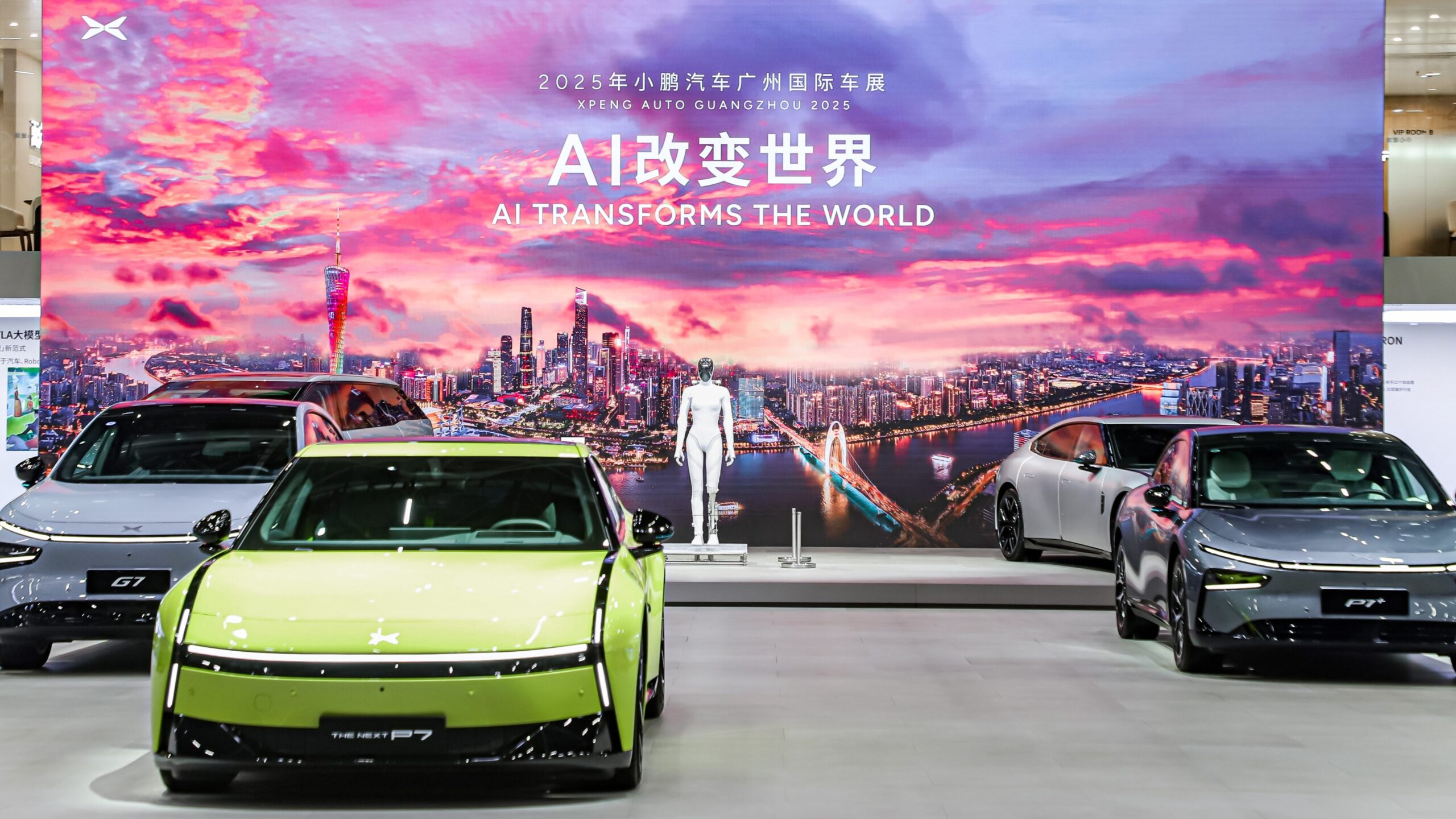
Companies like XPENG focus on technology, stating that “processing power is the new horsepower.” Their cars are still powerful, but use technology as a point of differentiation. XPENG’s XNGP system is, from my experience, far more capable in the challenging traffic patterns of Guangzhou compared to Tesla’s FSD on the relatively mundane roads of Long Island suburbs. However, ADAS systems are currently still largely limited to Level 2 (hands on the wheel) by regulations in China, limiting how much the system can show off. Having seen XPENG’s technology and approach to AI, including VLA 2.0, I have a feeling that they will stay at the front of the self-driving pack. But the competition is fierce. And not everyone can or should be focused on just that one area, with licensing being a solution for many. XPENG’s vehicles are also stylish, particularly the new P7. Could design be the point of differentiation?
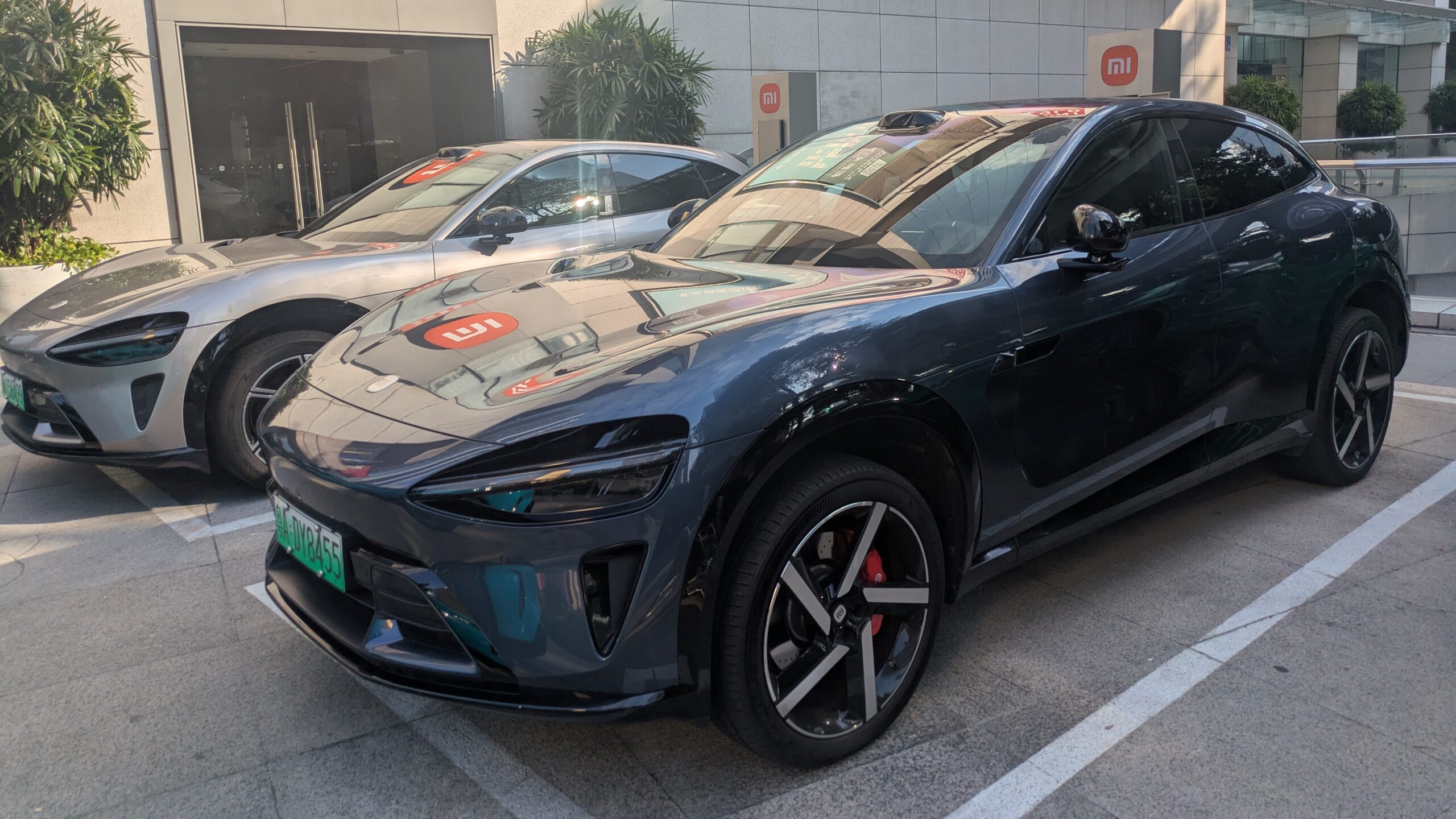
Looking at the Xiaomi SU7 and YU7, it is hard to imagine anyone thinking that they do not look great. And they look better in person. They have performance, driving dynamics, tech, and a relatively affordable price. But the attractive design makes them immediately stand out. However, design only makes a company differentiate if it is not copied. With so much competition, can companies like Xiaomi stay differentiated on design and still stay relevant to consumers?
Relevant Differentiation
In the world of marketing, we often talk about the concept of relevant differentiation. A product needs to be different in look, feel, performance, etc. to stand out from the competition. However, it also needs to be relevant to the customer to be compelling, providing a solution for both psychological and physical needs — a brand they can identify with.
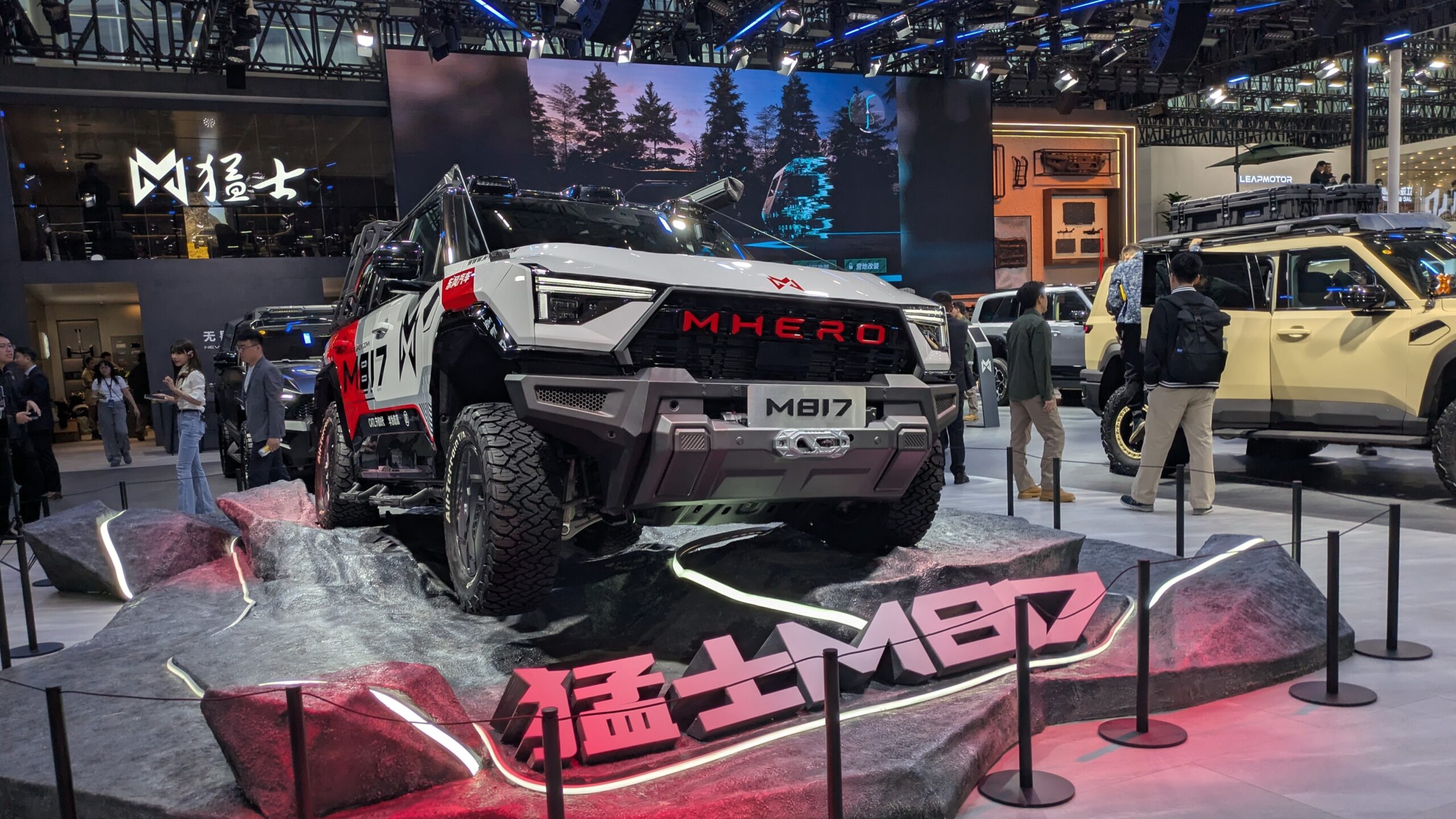
At Auto Guangzhou, I saw several cars that were different, but not necessarily relevant to a large pool of buyers. For example, Dongfeng’s MHERO is an angular extreme off-road SUV. Styling could only be described as polarizing. However, you get the feeling that the potential market cannot be too large for something like this. And even this vehicle had a number of extreme off-road competitors.
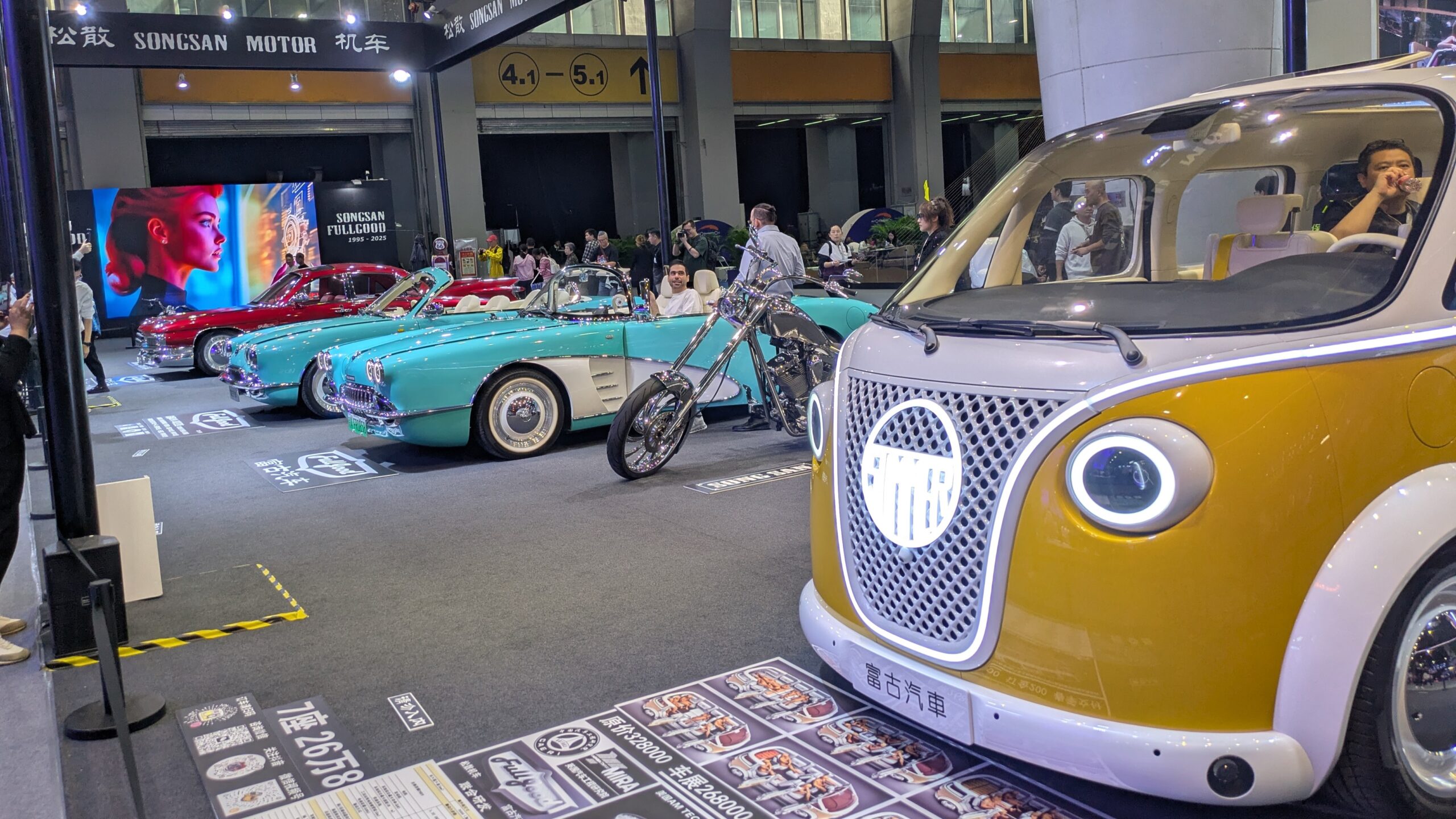
To take it in another direction, SongSang Motors showed several vehicles that look like cartoon caricatures of classic cars. Different, but not relevant to the mass market. However, their vehicles do show the potential for EVs to explore new ideas.
Which brings up more questions: What other ideas can we explore? The flexibility of EV platforms enables form factors that were simply not possible with ICE vehicles. How can we better address customer needs? What emerging latent needs do customers not realize that they have yet? Needs that customers will increasingly have, like touchscreen usability before smartphones proliferated. How can we address different market needs and preferences with differentiated products? When cookie cutter simplicity is no longer needed for efficiency, what kind of customization and personalization is possible? Where can different companies find their niche that specific consumers will find compelling?
Overall, it will take a lot of work to get there. I have some ideas about a few potential directions, but there is not going to be one universal answer to reach every customer. China has a wealth of skilled engineers, but some engineers find it challenging to develop the empathy required to understand the needs of others, especially when those needs are psychological rather than rational. While engineers can solve many of the world’s problems, the customer problems need to be defined. To effectively develop a relevant and differentiated solution, different perspectives will have to come together. Perspectives from different disciplines and backgrounds. Perspectives shared, ideally, across borders.
A Good Problem to Have
Overall, having to figure out how to stand out in a sea of great, affordable EVs is a good problem to have. It will take many parts of the world years to be in a similar position. In the US, with our rate of EV adoption, we would be lucky to be where China is today a decade from now.
However, over the next decade, innovators in China and people collaborating with the leading market will develop answers to many of the questions arising today. And they will have developed new questions to stimulate new and even better solutions. And it will not be one solution, but a range of solutions as diverse as the needs of their customers.
I turn 50 years old today. When I was young, I thought I would have all the answers by now. However, I have found that the answer is often the boring part. Asking the questions and exploring the possibilities is usually more exciting. If you ask the right questions, the solution becomes obvious. I now look forward to exploring the next questions more than seeing the next answers.
Over my five decades, I have seen innovators rise and fall. In many cases, the decline is due to complacency in thinking they have the answer. Those who are relentless in asking new questions and exploring new solutions to the evolving needs of their customers tend to rise to the top. Even if the EV market is a bit discouraging in the US right now, many people are asking exciting questions globally. The solutions to those questions are leading to some compelling products. But the questions that come next, looking for the next breakthrough, could be even more exciting.
Sign up for CleanTechnica’s Weekly Substack for Zach and Scott’s in-depth analyses and high level summaries, sign up for our daily newsletter, and follow us on Google News!
Have a tip for CleanTechnica? Want to advertise? Want to suggest a guest for our CleanTech Talk podcast? Contact us here.
Sign up for our daily newsletter for 15 new cleantech stories a day. Or sign up for our weekly one on top stories of the week if daily is too frequent.
CleanTechnica uses affiliate links. See our policy here.
CleanTechnica’s Comment Policy