

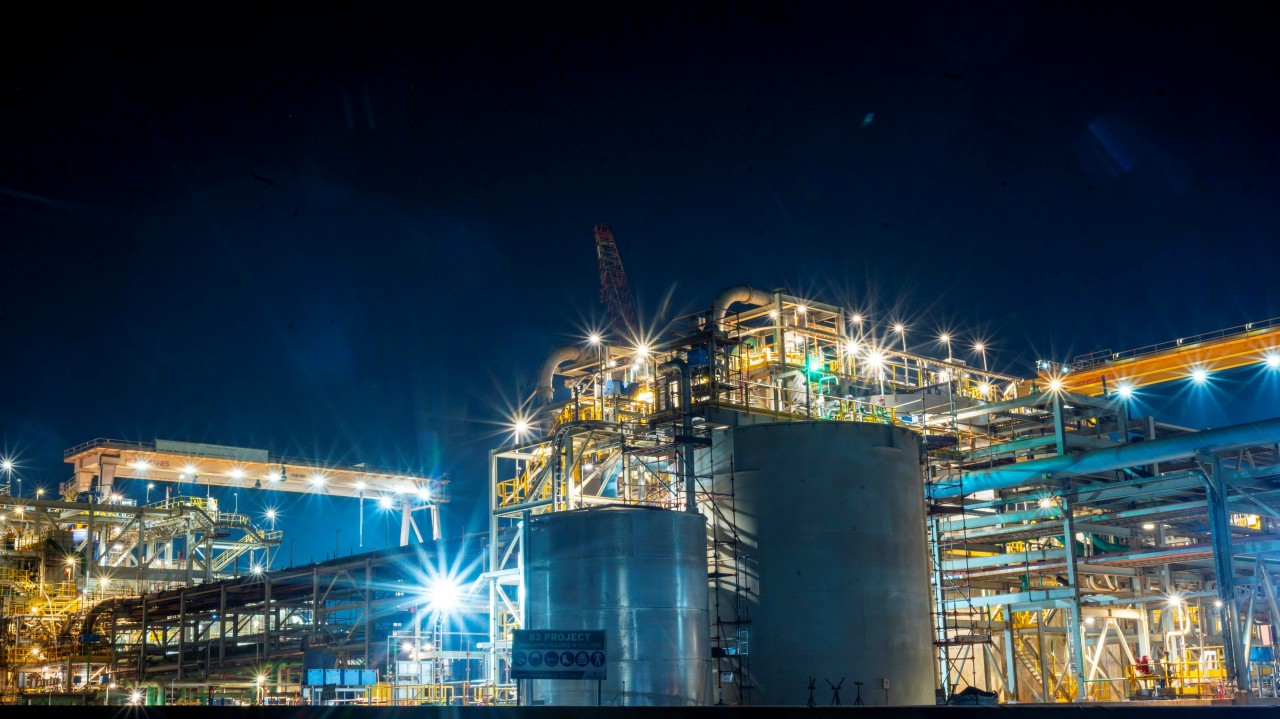
Zambia has marked a historic milestone with President Hakainde Hichilema officially commissioning the $1.25 billion Kansanshi S3 Expansion by First Quantum Minerals (FQM). This landmark investment, launched this week, is set to transform Zambia’s mining sector, extend the life of Africa’s largest copper mine into the 2040s, and power economic growth for decades to come. Featuring the opening of a new mining pit known as the South East Dome, the S3 Expansion promises to significantly boost copper output. This article explores the context of this development, its implications, challenges, and opportunities for Zambia’s economic and industrial landscape.
Context of the Development
Event Details
-
Inauguration: President Hakainde Hichilema officially commissioned the $1.25 billion Kansanshi S3 Expansion this week, with the event taking place on August 19–21, 2025, in Solwezi, North-Western Province (web:0, web:1).
-
Investment Scope: The project, led by FQM, represents one of the largest private-sector investments in Zambia’s history, aimed at enhancing the Kansanshi Mine’s operations.
-
Key Feature: The opening of the South East Dome mining pit is a critical component, expanding the mine’s resource base.
Strategic Background
-
Economic Vision: The expansion aligns with Zambia’s ambition to triple annual copper production to 3 million tonnes by 2031, as stated by President Hichilema during the commissioning (web:5).
-
Partnership: FQM CEO Tristan Pascall underscored the 30-year partnership with Zambia, with the $1.25 billion investment reflecting confidence in the country’s leadership and policies (web:2).
-
Historical Context: The project, first proposed in 2012 and approved in 2022, overcame prior delays, highlighting improved investment climate under the New Dawn administration (web:6).
Global Context
-
Copper Demand: With global copper demand rising 5–7% annually due to renewable energy and electrification, Zambia’s output increase to 450,000–500,000 tonnes yearly (web:1) supports the green transition.
-
Regional Role: The Kansanshi Mine, Africa’s largest copper producer, contributes over 50% of Zambia’s copper output, reinforcing its economic backbone (web:9).
Implications of the Development
Economic Impact
-
Investment Boost: The $1.25 billion infusion, expected to attract further capital, supports Zambia’s $9 billion mining investment since 2021 (web:19).
-
Job Creation: The project created 1,800 jobs during construction and will generate 800 permanent positions, plus engage 430 Zambian-owned companies (web:3).
-
Revenue Growth: Increased copper output could add $1–2 billion annually to Zambia’s export earnings, stabilizing its balance of payments (web:4).
Environmental and Industry Impact
-
Sustainable Mining: FQM’s adherence to environmental standards, including tailings management and emissions reduction, aligns with global best practices (web:7).
-
Processing Capacity: The new processing plant, handling 25 million tonnes of ore yearly, nearly doubles capacity to 53 million tonnes, enhancing in-country value addition (web:2).
-
Community Development: Skills training for 2,500 Zambians during construction and education initiatives bolster local empowerment (web:8).
Social and National Impact
-
Regional Prosperity: Solwezi’s economic growth, with over 7,100 direct jobs and 7,800 contractor roles (web:0), uplifts North-Western Province.
-
Policy Confidence: The investment signals trust in Zambia’s stable policy environment, projected to achieve 6% economic growth in 2025 (web:1).
Challenges
Implementation Hurdles
-
Execution Delays: Coordinating the South East Dome pit and plant upgrades may face logistical challenges, potentially delaying full operation by 3–6 months (web:5).
-
Regulatory Compliance: Environmental and labor regulations require stringent oversight to avoid penalties, adding 5–10% to costs (web:9).
Environmental Concerns
-
Ecological Impact: Expanded mining risks deforestation and water use in Solwezi, necessitating robust mitigation plans (web:7).
-
Tailings Management: Upgrading the Kansanshi smelter ($115 million) must address tailings safety to prevent incidents like past global failures (web:2).
Economic Risks
-
Market Volatility: Copper price fluctuations (e.g., $4.50/lb in August 2025) could affect profitability if demand softens (web:6).
-
Debt Pressure: FQM’s $1 billion bond issuance in 2025 (web:6) raises concerns about debt servicing amid project costs.
Opportunities
Economic Advancement
-
Export Growth: Increased output could boost Zambia’s $10 billion copper export target by 2030, tapping Asian markets like China (web:3).
-
Infrastructure Development: The project’s $115 million smelter upgrade could spur regional logistics, cutting transport costs by 10% (web:2).
Sustainability and Innovation
-
Green Mining: Automation and emissions-reducing technologies could position Zambia as a leader in sustainable copper production (web:1).
-
Skills Enhancement: Training programs could upskill 5,000 more workers, supporting long-term employability (web:8).
Global and Regional Leadership
-
Copper Hub Status: Zambia could rival Chile and Peru, aiming for 5% of global copper supply by 2040 (web:5).
-
Investment Magnet: Success could attract $5–10 billion more in mining investments, reinforcing Zambia’s economic recovery (web:19).